look news india

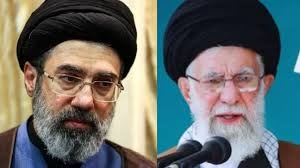
News India Live, Digital Desk: Amidst the ongoing fierce war in West Asia, Iran has announced the name of its new ‘Rahanbar’ (Supreme Leader). After the death of Ayatollah Ali Khamenei, his son Mojtaba Khamenei Has been elected the third supreme leader of the country. However, this journey is not going to be easy for Mojtaba. On the one hand, external enemies are standing on the battlefield, while on the other hand, a wave of dissatisfaction has started rising against them inside the house itself.
Who is Mojtaba Khamenei?
56-year-old Mojtaba Khamenei has long been influencing Iran’s regime from behind the scenes. He has been given the title of ‘Ayatollah’ and is considered very close to the Revolutionary Guards (IRGC). Mojtaba has been selected by the ‘Assembly of Experts’ at a time when Iran is going through the biggest crisis in its history.
3 biggest challenges before Mojtaba
Opposition to hereditary rule: The Islamic Revolution of 1979 led to the abolition of monarchy (rule of the Shah). Now many fundamentalists and the general public are unhappy with Khamenei’s son occupying the highest post. Critics say that this is like turning the ‘Islamic Republic’ into a ‘Monarchy’ again.
External war and Trump’s warning: Iran is in direct conflict with America and Israel. US President Donald Trump has already described Mojtaba as “unacceptable”. External attacks have caused huge damage to Iran’s military and economic infrastructure.
The ‘loyal’ base is weakening: The fundamentalist section which remained the shield of the government for decades is now showing cracks. Faced with economic ruin, inflation, and harsh sanctions, ordinary Iranians as well as lower-level regime loyalists are now demanding change.
Iran’s future: ‘Iron fist’ or compromise?
Experts believe that Mojtaba will have no option but to show ‘iron fist’ (strictness) to save his power. To strengthen their hold, they can make major changes (purge) in the security forces and bring new policies to crush the opponents.