 look news india

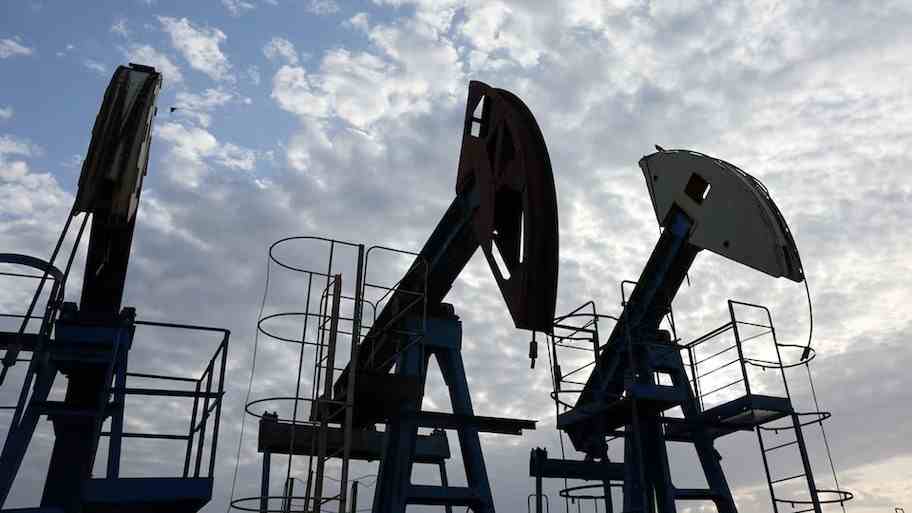
The war that has been smoldering in the Middle East for several months has now reached a very dangerous and decisive point. After the ongoing ceasefire and diplomatic peace talks between America and Iran ended inconclusively, Tehran has given an official indication of adopting a ‘fully offensive’ stance on the military front. This latest geopolitical tension has roiled international financial markets, commodity exchanges and the global energy supply chain. Crude oil prices are witnessing an unexpected surge due to the threat to the movement of ships in the world’s most important oil waterway ‘Strait of Hormuz’. Global benchmark Brent crude has crossed the level of $ 91 per barrel in no time, while American West Texas Intermediate (WTI) has also reached above $ 85 per barrel. Trillions of dollars of investors from Wall Street to Dalal Street have been lost due to fear of energy crisis and possible world war.
Iran’s ‘fully offensive’ stance and deepening crisis in the Strait of Hormuz
According to international media and intelligence reports, no agreement has been reached on carrying forward the ceasefire agreement with the US in the Gulf region. Tehran has made it clear that it will not tolerate any kind of Western sanctions or military blockade on its oil exports and maritime borders. The aggressive statements of Iranian military commanders and intensified naval maneuvers in the Gulf have made the security situation of ships in strategic sea routes like the Strait of Hormuz and Bab al-Mandeb extremely delicate.
The Strait of Hormuz is the world’s narrowest and most important oil chokepoint, passing through about 20% of the total seaborne crude oil consumed globally every day. Due to fear of possible missile and drone attacks on oil tankers here, shipping companies have started switching off transponders (signals) of their ships, making it difficult to track the ships. Marine insurance companies have increased the ‘war risk premium’ for ships passing through the Gulf region manifold, leading to a huge increase in global transportation and freight costs.
Crude oil on fire: Brent crude crosses $91, will the price go up to $100?
Due to fear of supply stoppage in the energy markets, huge buying is being seen in futures trading. As soon as trading started on Singapore and London Commodity Exchange, Brent crude futures reached $ 91.14 per barrel, while US WTI crude is trading at $ 85.04 per barrel. In the last one week alone, a cumulative jump of more than 6% has been recorded in crude oil prices.
Commodity analysts believe that if a direct military conflict between Iran and America increases and the supply through Hormuz is completely disrupted, then crude oil prices may very soon cross $ 100 to 115 per barrel. The reluctance shown by OPEC countries to increase additional production and the already existing shortage of refined products (diesel and petrol) due to the Russia-Ukraine conflict have deepened the crisis. Energy experts are considering this as the biggest possible energy shock after 2022.
Outcry in global stock markets: Indices in red from New York to Tokyo
The threat of increasing war in the Middle East has had a direct impact on stock markets around the world. On America’s main market Wall Street, a sharp decline has been recorded in Dow Jones Industrial Average, S&P 500 and tech-heavy Nasdaq. Heavy selling was seen in shares of aviation, tourism, logistics and automobile companies due to the rise in crude oil. Shares of big companies like United Airlines, Carmival Cruises fell by 4% to 5%.
Its strong impact was also seen in Asian markets. Japan’s Nikkei, Hong Kong’s Hang Seng and South Korea’s Kospi closed in the red under selling pressure. In Europe, Germany’s DAX and France’s CAC 40 also remained in loss. Investors are shifting their money from risky equity assets to safe havens amid uncertainty.
Double blow on Indian economy and stock market: Pressure on Sensex-Nifty
India imports more than 85% of its total crude oil needs from abroad. In such a situation, every $10 increase in crude oil prices in the international market directly increases India’s current account deficit (CAD) and fiscal deficit. Selling by foreign institutional investors (FIIs) has intensified in the Indian stock market (BSE Sensex and NSE Nifty).
At the sectoral level, its worst impact is on aviation (Indigo, SpiceJet), paint companies (Asian Paints, Berger Paints), tire and chemical manufacturers, because crude oil is the primary raw material for them. On the other hand, shares of domestic oil producing companies like ONGC and Oil India are getting immediate benefits due to oil becoming expensive. However, if crude remains above $90 for a long time, there may be pressure to increase the prices of petrol, diesel and CNG at the domestic level, which will make freight transportation expensive and retail inflation may rise again. In case of rising inflation, the chances of cutting policy interest rates by the Reserve Bank of India (RBI) will be dealt a deep blow.
Rupee weakness and dollar index strength
Rising crude oil prices have led to a huge increase in demand for US dollars by Indian importers. Due to this, the Indian Rupee has come under pressure against the US Dollar. Globally, the US Dollar Index (DXY) has strengthened as the dollar is considered the world’s safest currency during times of crisis. The US 10-year Treasury yield has risen to 4.68%, giving a clear indication that fears of inflation and prolonged high interest rates are dominating the bond market.
Refuge in safe haven: Strong rise in gold and silver
Whenever there is a war or major geopolitical crisis in the world, investors consider gold as the safest investment and invest money in it. There is a strong rise in the prices of 24 carat gold and silver in the international and domestic bullion markets. The price of gold is trading with an increase in the international market. Analysts estimate that this rise in gold prices may continue until tensions in the Middle East calm down.
The failure of diplomacy and the way forward: Can the Great War be avoided?
Countries like Qatar, Oman and Pakistan are trying to reduce tension between America and Iran through back-channel diplomacy. Despite this, due to the tough stance of both the parties, hopes of any permanent agreement seem bleak at the moment. The US military presence and the deployment of Iranian missile batteries in the Gulf have turned the entire region into a minefield.
The coming days are going to be extremely important not only for the future of the Middle East but also for the economic stability of the entire world. The direction of global trade, supply chains and inflation will depend on whether the international community can prevent military conflict or whether the tensions will push the world into a new and catastrophic economic crisis.