 look news india

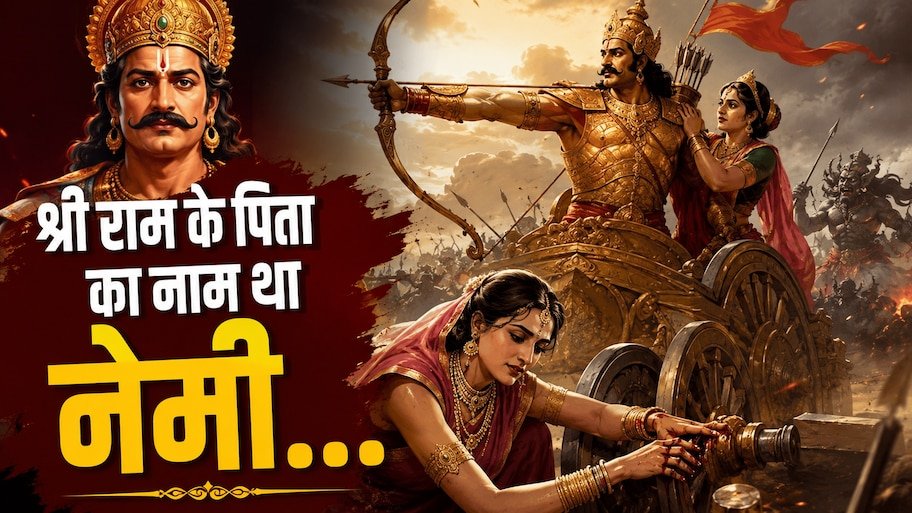
In the saga of Sanatan Dharma and Valmiki Ramayana, the character of Maryada Purushottam Lord Shri Ram and his father, the glorious Suryavanshi King Dasharatha of Ayodhya, has been considered the supreme symbol of sacrifice, piety and integrity. The whole world knows and worships him by the name of ‘Maharaja Dashrath’. However, very few people are aware of this interesting and spiritual secret that ‘Dasaratha’ was not his original or birth name, but it was a noble title. The real name of this stunning Prince of Ayodhya at birth according to ancient mythological texts, Vishnu Purana and Valmiki Ramayana ‘Nemi’ Was kept. Let us know how Prince Nemi got the name ‘Maharaja Dashrath’ on the basis of his unique fighting skills and bravery.
Birth and naming of Prince ‘Nemi’ in Suryavansh
According to the genealogy of the Ikshvaku dynasty (Surya dynasty), an extremely brilliant son was born to King Aja, the Chakravartin emperor of Ayodhya, and his queen Indumati.
-
Wheel axle stiffness: In Sanskrit language, the outer circle of the chariot wheel or the axis of the wheel is called ‘Nemi’.
-
Symbol of unwavering determination: Acharyas and Vice-Chancellor Maharishi Vashishtha, seeing the child’s bright appearance and unwavering determination, named him ‘Nemi’, which meant a person who holds the wheel of religion without getting distracted and whose determination never wavers.
Devasura Sangram and Shambhasur’s rampage: When the gods asked for help
According to the legend, during that period, an extremely elusive and powerful demon named ‘Shambhasura’ (Timidhwaj) had attacked the heavenly world.
-
Defeat of the Gods: Shambhasura had illusive weapons and miraculous knowledge of fighting in the dark, in front of which Devraj Indra and other gods became helpless.
-
Call from Ayodhya: To protect themselves, the gods prayed to the mightiest Suryavanshi king on earth, Nemi (Dasaratha), for help. King Nemi arrived at the battlefield riding on a divine chariot along with his beloved wife Queen Kaikeyi to solve the problem of the gods.
Chariot movement in ten directions: This is how the name ‘Dasaratha’ got
Such a fierce and unique form of King Nemi was seen on the battlefield which astonished all the three worlds:
-
Simultaneous control of 10 directions: King Nemi could move his chariot without stopping and shower arrows in all the ten directions at the same time—East, West, North, South, North-East, South-West, North-West, Agneya, Sky (above) and Patala (below).
-
There was a stampede among the demons: Their speed was so fast that it seemed to the demons as if ten different chariots and warriors were attacking them at the same time.
-
Title by Indra: Seeing this unique skill of King Nemi, Devraj Indra and all the gods praised him. Due to the wonderful combination of ‘Dash’ (ten) and ‘Rath’ (chariot driving), he was given the title of ‘Dasharatha – the invincible warrior who drives the chariot in ten directions. After this he became famous all over the world by the name of ‘Maharaja Dashrath’.
Background of Queen Kaikeyi’s bravery in war and two boons
During the same Devasura battle, when King Dashrath was surrounded by Shambhasura’s army, the axle of his chariot’s wheel was broken due to the enemy’s attack.
-
He handled the chariot with his finger: At that time, Queen Kaikeyi displayed her indomitable courage and maintained the balance of the chariot by sticking her finger in the axle of the chariot, due to which King Dasharatha continued fighting the war safely and killed the demon.
-
Promise of two blessings: After winning the battle, when King Dasharatha came to know about Kaikeyi’s great sacrifice and injury, he became extremely happy and asked Kaikeyi to ask for two boons. These were the two boons that were sought years later during Lord Rama’s 14-year exile in Ayodhya and Bharat’s coronation.
Deep spiritual meaning of the name Dasharatha
According to Indian philosophy and saints, ‘Dasaratha’ is not just a name but also a deep spiritual message:
-
Control of ten senses: There are 5 sense organs and 5 action organs in the human body. The seeker who achieves complete control (control) over his ten senses, the horses and the chariot, is the true ‘Dasaratha’.
-
Appearance of God: When a man controls all his senses and his conscience becomes pure, then only the incarnation of ‘Prabhu Shri Ram’ (Supreme Consciousness) is possible in his heart.