 look news india

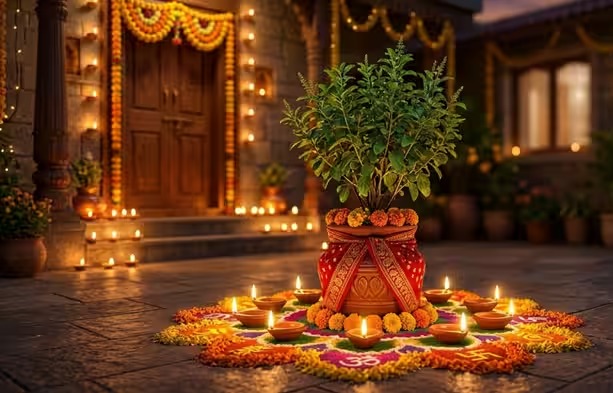
In Sanatan tradition, Ekadashi of Shukla Paksha of Kartik month i.e. Devuthani Ekadashi is considered a very sacred festival, which is also known as Devutthan Ekadashi and Prabodhini Ekadashi. According to religious belief, on this day Lord Vishnu wakes up from four months of Yoga Nidra and with the end of Chaturmas, the process of marriage and other auspicious functions starts again. According to Smarta tradition in the year 2026, Devuthani Ekadashi is being celebrated on 20th November, and special enthusiasm is being seen among the devotees for lighting lamps at various auspicious places in the house in the evening. Preparations for evening puja, Tulsi archana and lamp donation are in full swing in homes across the country including Uttar Pradesh’s Kanpur, Lucknow, Prayagraj, Varanasi and Ayodhya.
Lighting a ghee lamp near the Tulsi plant on the evening of Devuthani Ekadashi is one of the most important beliefs. According to tradition, in the evening, a parikrama is done by lighting a lamp of pure ghee near the Tulsi Chaura or pot and prayers for happiness and prosperity are offered to Lord Vishnu and Mother Tulsi. In many families, Tulsi Vivah is also organized on this day or on the occasion of Dwadashi, which is associated with the belief of infusing devotion and positive energy in the home environment.
In Vaastu and folk traditions, the main entrance of the house is considered the entry point for positive energy and prosperity. There is a tradition of lighting a lamp near the main door on the evening of Devuthani Ekadashi and lighting a ghee lamp in front of Lord Vishnu and Mother Lakshmi in the home temple. During this time, devotees welcome Shri Hari with bhajan-kirtan, conch-bell and chanting of ‘Om Namo Bhagwate Vasudevaya’ mantra, and take special care of the direction and cleanliness of the flame of the lamp.
According to religious beliefs, the kitchen is considered the place of Annapurna, hence there is a custom of lighting a lamp in the kitchen on the evening of Devuthani Ekadashi so that there is food and blessings in the house. Apart from this, in many places, the tradition of lighting lamps under the Peepal or Amla tree is also prevalent, which are considered sacred and auspicious from the religious point of view. Emphasis is laid on avoiding broken lamps and following traditional rules during the puja.
In cities like Kanpur, Lucknow and Varanasi of Uttar Pradesh, with Devuthani Ekadashi, new energy starts appearing in homes and markets. After four months of Chaturmas, preparations for marriage, housewarming and other auspicious events intensify, due to which the hustle and bustle in the markets also increases. According to the local calendar, evening puja is performed during Twilight Muhurta and Pradosh Kaal, while the devotees observing fast perform Parana at the scheduled time on Dwadashi Tithi the next day.
Devuthani Ekadashi is not just a day of lighting lamps or observing fast, but it is also an occasion for restraint, devotion and preserving family traditions. Whether a person fasts without water or eats fruits, or simply lights a lamp in the evening and prays, simplicity and harmony are considered important in the faith. With the beginning of Tulsi Vivah and auspicious functions in the coming days, this festival will bring an atmosphere of celebration and enthusiasm in the entire society.