 look news india

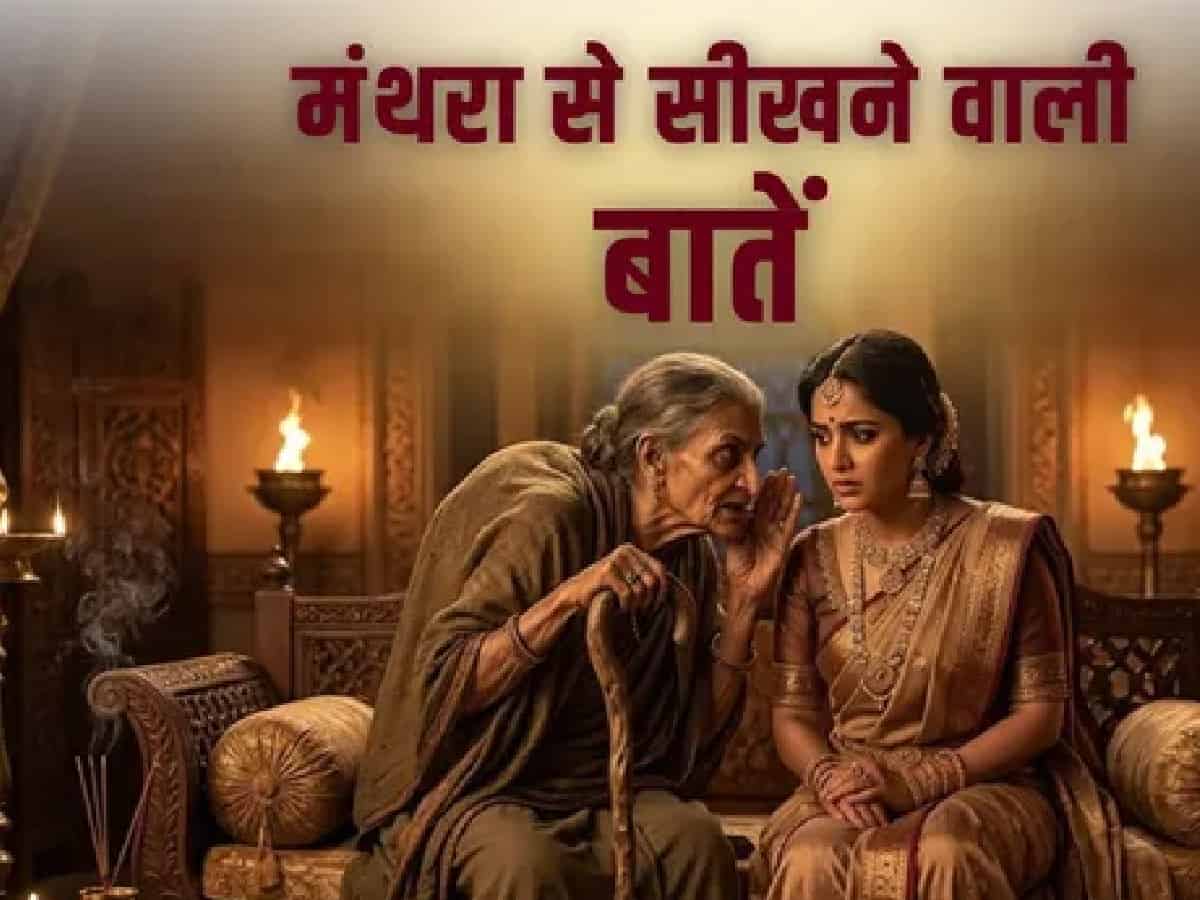
Whenever the saga of the mythological epic Ramayana is repeated among the public, its characters are mainly seen divided into two categories – on the one hand, they are the embodiment of dignity, sacrifice and religion, and on the other hand, they are symbols of deviousness, deceit and negativity. In this entire story, Manthara’s name is recorded as a villain who is considered to be the main architect of the rift in the royal family of Ayodhya and the 14-year exile of Maryada Purushottam Lord Shri Ram. History recorded the incident of maid Manthara filling Queen Kaikeyi’s ears and instigating her to ask for two boons from King Dasharatha as a symbol of betrayal and jealousy. However, it is a basic principle of modern management studies, organizational behavior and human psychology that positive and practical lessons can be drawn by objectively analyzing the behavior and working style of every historical or mythological character. If we keep aside Manthara’s malicious intentions and just look at his methodology, communication skills and strategic alertness, a working professional in today’s highly competitive corporate era can learn many important life mantras from him to enhance his career.
One thing is clearly visible in the entire context of Ramayana that Manthara’s entire existence and loyalty was completely dedicated to the interests of her mistress Queen Kaikeyi and Prince Bharat. Even though the direction of his approach was destructive and unfair, his dedication to his assigned responsibility was unwavering. This quality makes any employee a trustworthy and indispensable asset in the modern workplace. As a professional, when you remain 100% loyal to your work, your team and assigned projects, deliver results within deadlines and stand like a rock with your team in times of crisis, your superiors and management have unwavering faith in you. Credibility is the first and basic condition for climbing the corporate ladder.
The biggest strength of Manthara’s character was her extraordinary communication skills and persuasive communication. It was not an easy task to completely change the mind of Kaikeyi, who loved Shri Ram more than her own son Bharat. Manthara presented his views wrapped in so much logic, emotional connection and far-reaching apprehensions that Kaikeyi was forced to accept everything he said as true. In today’s corporate environment, it is not enough to do good work, one must also be able to present one’s ideas, proposals and plans effectively in the boardroom or client meetings. When you present your point with facts, figures and logical analysis, you are successful in getting superiors and colleagues to agree with your point of view without putting unnecessary pressure on anyone.
Manthara did not just work like an ordinary maid within the palace, but like a very alert strategist, she kept a close eye on every small and big activity, power equations and changing mood of the court. She was adept at predicting future situations by linking situations together. In modern careers it is called ‘Environmental Scanning’ and Strategic Thinking. A successful professional should always keep a close eye on the trends in his/her industry, emerging new technologies (like Artificial Intelligence), internal company restructuring and market needs. The deeper and more accurate your observations are, the more robustly you will be able to plan your career and projects before a crisis strikes.
As soon as preparations for the coronation of Shri Ram began in Ayodhya and a festive atmosphere was created, Manthara did not waste a single moment and immediately became active. Instead of becoming a mute spectator and waiting for the events to pass, she moved forward and started turning the circumstances in her favor. This proactive mindset is extremely essential in today’s fast-changing corporate world. Employees who only respond to change are often left behind; Those who recognize the call of change and learn new skills, push themselves for new responsibilities and change their strategy according to the direction of the industry, they always emerge as leaders.
Manthara had no ministerial post, administrative authority or formal title in the governance system of Ayodhya; She was an ordinary palace hostess. Despite this, the scope of his influence was so profound that it changed the future of the entire empire and the succession to the throne. In the corporate world this is called ‘Leadership without Title’ i.e. effectiveness without any title. It is not necessary for every effective person to be a team leader, manager or director. If your ideas are clear, your policies are practical and your vision is solid, you can inspire and influence your entire department and team in the right direction, even while being at a junior level. Ultimately, skill is never bad or good; Its result depends on with what purpose and intention you are using that skill. If these five strategic competencies of Manthara are adopted with positive values, professional integrity and creative approach, then they can prove to be extremely helpful in taking any person to the pinnacle of his career.