 look news india

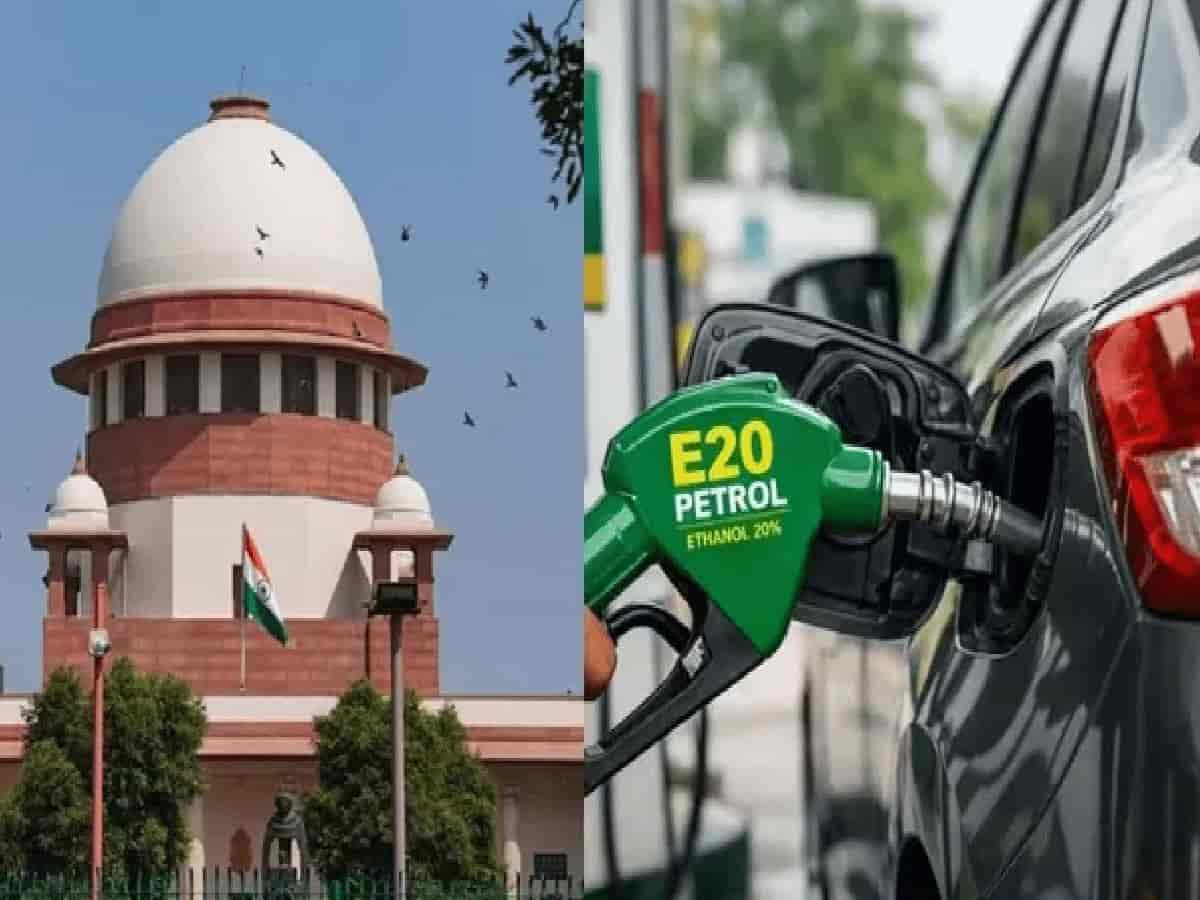
Many big and far-reaching steps are being taken continuously by the Central Government to protect the environment, reduce carbon emissions and take the country towards green energy. Under this policy, the blending of ethanol in petrol sold in the country is being continuously increased, in which currently special emphasis is being given to E20 (20% ethanol blended fuel). However, as important as this initiative is from the environmental point of view, it is also linked to the safety of the rights, wallets and engines of crores of common drivers, car owners and two-wheeler users of the country. Now the doors of the highest court of the country i.e. Supreme Court have been approached regarding this increasing mixing of ethanol with petrol. This legal battle is not just related to fuel figures, but it is a question of curiosity, longevity of the vehicle and protection of consumer rights of every common citizen who buys a car with his hard-earned money. This important matter will be heard in the Supreme Court on Monday, 31 August by Justice M.M. Sundaresh and Justice Prasanna B. The hearing will be conducted by Varale’s bench, on which the entire nation’s eyes are fixed.
The interests of common drivers are at the center of this PIL filed regarding the quality of fuel in the country and the right of consumers to transparency. In this petition filed by petitioner Narendra Kumar Goswami, the main demand has been raised that at all the petrol pumps across the country, consumers should have a complete and clear right to know what is the actual chemical composition of the petrol they are filling in the tank of their vehicle and what is the percentage of ethanol in it. At present, when the government has set a target to increase the level of ethanol blending across the country in a phased manner, the drivers are always confused whether their vehicle is compatible with this new type of fuel or not. The Supreme Court bench will hear in detail on this important legal and practical aspect on Monday. The basic objective of the petition is to bring complete transparency in the fuel delivery system and provide uninterrupted freedom to consumers to choose the right and safe fuel for their vehicle.
Nowadays, while filling petrol in the car at any petrol pump in the country, it is impossible to find out the exact amount of ethanol that has been mixed in that fuel. To solve this problem, very practical and strict demands have been made in the petition. According to the petition, it should be mandatorily and clearly displayed on every dispensing nozzle supplying fuel at every petrol pump in the country as to what percentage of ethanol is present in the petrol dispensed from that nozzle. Apart from this, it has also been strongly urged in the petition that the percentage of ethanol mixture should be clearly printed on the digital or paper fuel receipt (invoice) given to the drivers after filling the petrol. If this rule is implemented, vehicle owners will be able to know exactly what type of fuel they are using in their vehicle during every purchase, which will completely eliminate all doubts in their mind.
There has been a long standing debate between the automobile industry and common drivers regarding the increasing percentage of ethanol. There are strong concerns about its long-term effects on engines, especially in older model vehicles or vehicles that are not specifically designed for high ethanol blends (such as E20). The nature of ethanol is such that it attracts more moisture and if the parts of the engine’s fuel system are not compatible with it, they can quickly deteriorate, which can reduce the mileage of the vehicle and lead to huge maintenance costs. Keeping this technical and mechanical concern in mind, several very important and visionary demands have been presented in the petition:
-
Public Vehicle Compatibility Database: It has been sought to direct the Central Government and the concerned Petroleum Ministries to create a comprehensive and accessible online database based on the vehicle manufacturer, model, engine type and its year of manufacture. From this database, any common citizen will be able to easily get information that his vehicle is completely safe and suitable for a certain ethanol mixture.
-
Formation of Expert Committee: A high-level and impartial committee should be constituted comprising renowned petroleum experts of the country, officials of the Road Transport Ministry, representatives of the Bureau of Indian Standards (BIS) and independent automobile engineers. This committee should conduct a scientific study of what actual impact different ethanol blends are having on the engine life of vehicles, maintenance cost, fuel efficiency (mileage) and the environment of the country.
-
National Consumer Protection Protocol: In collaboration with the Central Consumer Protection Authority (CCPA), a transparent policy should be made so that the economic and technical interests of consumers can be completely protected. There should be clear guidelines in place if the wrong fuel or lack of compatibility causes damage to a vehicle’s engine.
Overall, this hearing in the Supreme Court is not limited to just a legal process, but it is an opportunity to establish an important balance between the country’s energy transition and the consumer rights of the common citizen. The government’s objective of ethanol blending may be to reduce dependence on imported crude oil and to clean the environment, but at the same time, the interests of crores of vehicle owners in the country who are concerned about the safety of their vehicles cannot be ignored. The directions coming during this hearing to be held in the court on Monday will decide what will be the level of transparency at petrol pumps in the country in future and whether the drivers will get full legal right to know about their fuel or not. This initiative can prove to be a milestone for both consumer awareness and the future of the automobile sector in the country.