look news india

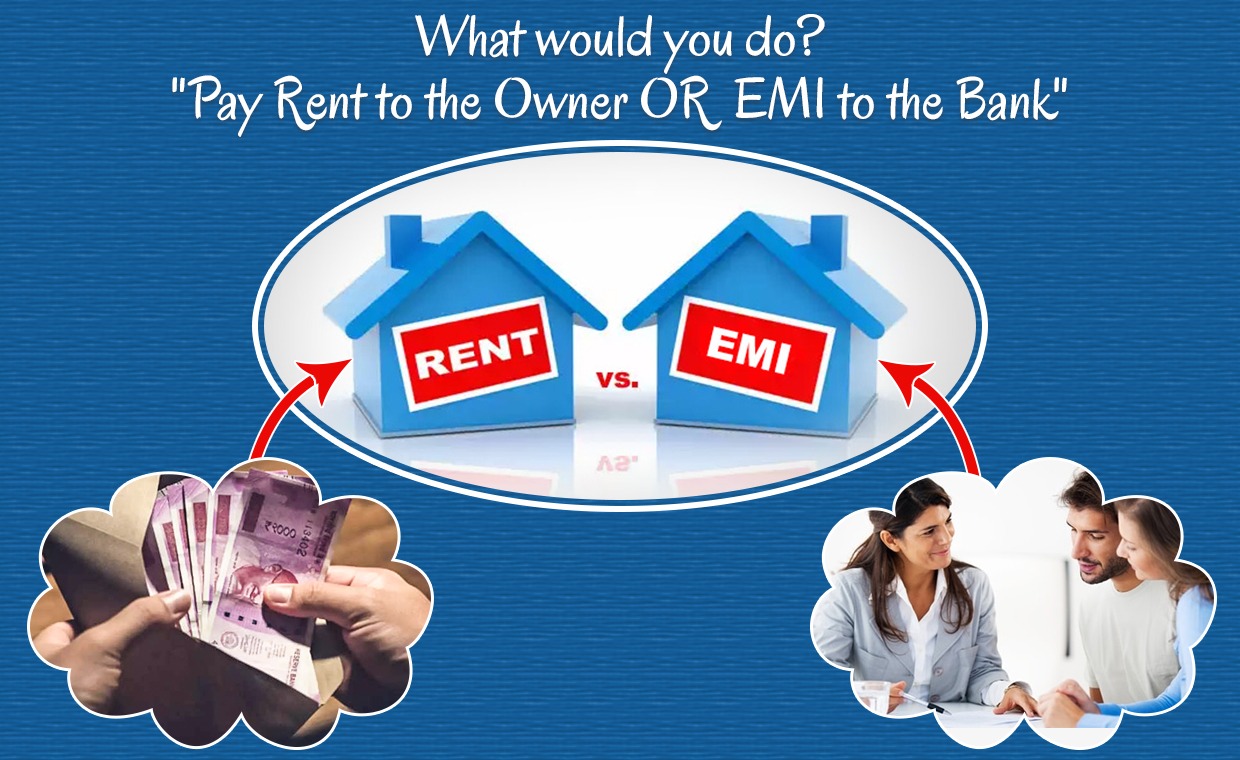
“Apna Ghar” … This is not just a sentence of three words, but the biggest dream of every Indian. A roof that is its own, where every brick has its hard work and where the future security is realized. But the biggest and most difficult question that arises in the way of turning this dream into reality is – it is – Should I take a home loan and buy my house or do I want to stay in a rented house?
This is probably the biggest financial decision of any person’s life. On the one hand, while buying a house gives an opportunity to create an emotional security and a permanent property, on the other hand, staying on the other side gives you freedom to live life with financial flexibility and less responsibilities.
Nowadays, especially in metro cities where property prices are skyrocketing, this debate has become even faster. So let’s go beyond emotions today, a wide and logical analysis of the advantages and disadvantages of both options so that you can take a correct and informed decision for yourself.
Why does everyone want ‘your home’? (Benefits of buying a house)
Buying a house in India has always been considered a symbol of a major achievement and understanding. There are many strong reasons behind this:
- Asset Creation: This is the biggest advantage. The EMI you fill every month increases the equity of your home. After 20-25 years, you have a completely property of your own, millions of crores. While the money given in the rent never comes back.
- Financial discipline and forced savings: Home loan EMI forces you to save and stay disciplined every month. It is a kind of ‘forced savings’ that makes a huge wealth for you in the long term.
- Heavy savings in tax: The government gives a good tax discount on home loans to encourage home buyers. Income tax on home loan interest Up to Rs 2 lakh under section 24 (b) And on the principal Up to Rs 1.5 lakh under Section 80C There is a freedom, which reduces your tax liability significantly.
- Stability and emotional security: Due to its home, the hassle of changing the house repeatedly, renewing rent agreement and living on the terms of the landlord ends. This gives you and your family a sense of stability and security.
- Prevention of inflation: Property prices in the long term often beat and grow inflation. Your house can act as a strong shield against inflation in future.
Why can there be a ‘smart’ option to stay on rent? (Benefits of rent)
Now let’s look at the second aspect of the coin. Many financial planners now consider rent to be a smart financial strategy. It also has its own strong arguments:
- Flexibility (flexibility): This is the biggest advantage of staying on rent. If your job changes, the city has to be changed, or you want to shift to better location, then you can easily do this. This flexibility is almost over after purchasing the house.
- Low starting cost: To buy a house, you have to pay a huge amount (usually 20%) as a down payment, as well as millions on registration and stamp duty. To stay on rent, you have to pay only 2-3 months deposit.
- No mess of maintenance: The landlord costs big repair, painting, property tax or maintenance of society. You are free from all these troubles and sudden incoming expenses.
- Better investment opportunities: If you invest a hefty amount in down payment, if you invest in a mutual fund (SIP), stock or any other better return option while staying on rent, then you may have earned more returns than the price hike of the house.
What does mathematics say? – Understand with an example
Let’s do a direct calculation. Suppose you are in a city where there is a 2bhk flat of 50 lakh rupees.
Option 1: Buying a house
- Property Price: ₹ 50,00,000
- Down Payment (20%): ₹ 10,00,000
- Other expenses (registration etc.): ₹ 4,00,000 (approx)
- Total early expenses: ₹ 14,00,000
- Home Loan (80%): ₹ 40,00,000
- EMI (20 years, 8.5% interest): About ₹ 34,700 per month
Option 2: Living and investing on rent
- The same house rent: About ₹ 15,000 per month
- Savings in early expenses: ₹ 14,00,000
- Savings in monthly expenses (EMI – Fare): ₹ 34,700 – ₹ 15,000 = ₹ 19,700 per month
Now think if you ₹ 14 lakh lump sum And SIP every month on ₹ 19,700 Through a good mutual fund in investing for 20 years, and you get an annual return of 12% on an average, then after 20 years your total invested amount will become a huge corpus that may be more than the increased price of your house!
So what is the final decision?
There is no right or wrong answer to this. It completely depends on your personal conditions, financial goals and lifestyle.
- If you should buy a house: Your job is stable, you are planning to live in the same city for a long time (at least 10–15 years), you have enough savings for down payment, and emotional security for you is paramount.
- If you should stay on rent: You are in the early stages of your career, there is a possibility of transfer in your job, you do not have a large amount for down payment, and you want to make your money fast by investing in more returns options.
Before taking a decision, assess your financial situation honestly, understand the mathematics of both options and then choose what is best suited for the future of you and your family.