 look news india

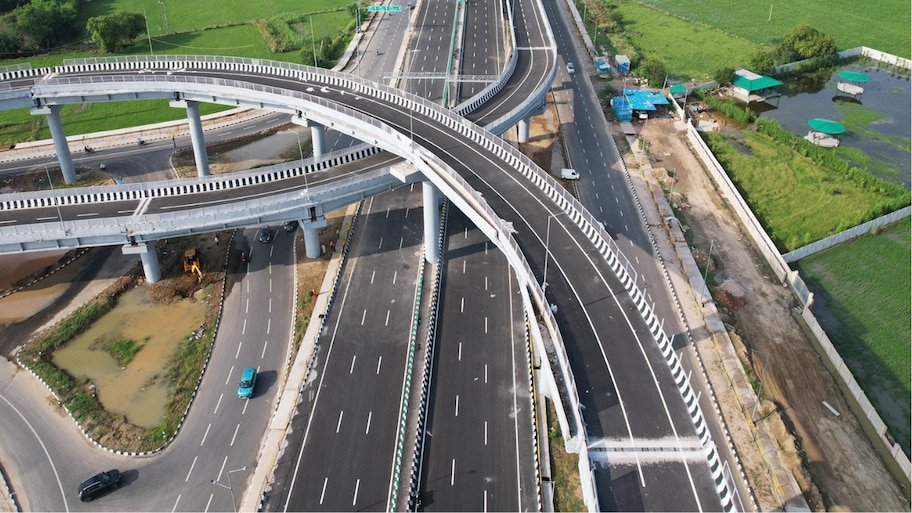
Infrastructure transformation is underway to make India a $5 trillion economy and the world’s leading manufacturing hub. Under the Central Government’s ambitious scheme PM GatiShakti National Master Plan (PM GatiShakti NMP), so far 396 major infrastructure projects with a total estimated investment of ₹18.66 lakh crore have been included in the scope of review. According to the latest assessment conducted by the Department for Promotion of Industry and Internal Trade (DPIIT) and Network Planning Group (NPG), out of these 396 projects, 256 mega projects have been formally approved, while the ground level construction work on 198 projects is going on at a fast pace. The government is keeping a close eye on the timelines and costs of these projects so that delays caused by lack of coordination between departments can be eliminated forever.
On this day i.e. 13 October 2021, Prime Minister Narendra Modi formally launched the PM Gatishakti National Master Plan. In this journey of exactly 5 years, this initiative is no longer just a scheme but has become the main digital basis of the entire infrastructure plan of the country. Earlier in India, the work of laying roads, railways, gas pipelines, electric poles and optical fiber was done by different ministries at different times, due to which newly constructed roads often had to be dug repeatedly and there was huge loss of manpower. PM Gatishakti has completely eliminated this ‘silo culture’ by integrating data from various ministries, departments, states and union territories on a common GIS based digital platform.
The biggest backbone of PM Gatishakti is its state-of-the-art institutional and technological infrastructure, which provides satellite imagery, geospatial data and analytical tools to planners across the country. As of October 12, more than 23,493 data layers have been made live on this shared GIS platform. 58 major ministries and departments of the Central Government and all 36 states and union territories have been fully involved in this master plan. 230 approved datasets have been made available for public use. Whenever the alignment of a new road, railway line or bridge has to be decided, engineers can see on the computer screen itself where forest areas, wildlife corridors, rivers, power transmission lines or private lands come on the proposed route. This has reduced the time for preparing Detailed Project Report (DPR) from months to just a few days.
PM Gatishakti National Master Plan fundamentally rests on six strong pillars—Comprehensiveness, Prioritization, Optimization, Synchronization, Analytical and Dynamic. Along with this, this framework is being driven by seven major engines of development:
-
Roads & Highways
-
Railways Network
-
Airports
-
Ports
-
Waterways
-
Mass Transport/Urban Transport
-
Logistics Infrastructure
Multimodal connectivity is being created by connecting these seven engines together, so that goods can be transported from factory to port and from port to international markets without any hindrance.
Under this master plan, major economic hubs, textile clusters, pharmaceutical parks, defense corridors, electronics manufacturing zones, fishing clusters and agri-food parks across the country are being directly mapped to the transport network. For example, the Khagaria-Purnia corridor in Bihar is being connected to 5 major economic centers (Mega Food Park, Textile Cluster and Seafood Park) and 11 logistics nodes of PM Gatishakti, so that the produce of farmers and traders can reach the big markets within a few hours without any wastage. On the same lines, more than 100 important logistics nodes across the country are being connected to the railway network and expressways.
Currently, logistics cost in India is estimated to be around 13 to 14 percent of the Gross Domestic Product (GDP), whereas in developed countries like the US, Germany and Singapore, this cost is only 7 to 8 percent. Indian goods become costlier in international markets due to higher logistics expenses. The primary economic objective of PM Gatishakti is to reduce this logistics cost to single digit level i.e. 8 to 9 percent. When trains run faster on dedicated freight corridors, trucks do not have to stop at tolls and turnaround time at ports decreases, not only will the cost of doing business within the country reduce, but Indian exporters will also gain a strategic economic edge globally.
The government has also recently started opening up selected data and tools of the PM Gatishakti portal to the private sector and industry. Its direct benefit is that private companies are able to analyze accurate connectivity data before setting up their new warehouses, logistics parks, cold storage and manufacturing units. Regular high-level monitoring of these 396 projects worth ₹18.66 lakh crore is ensuring that India is able to timely complete the creation of modern, seamless and world-class infrastructure required to realize the vision of ‘Developed India’ by 2047.