 look news india

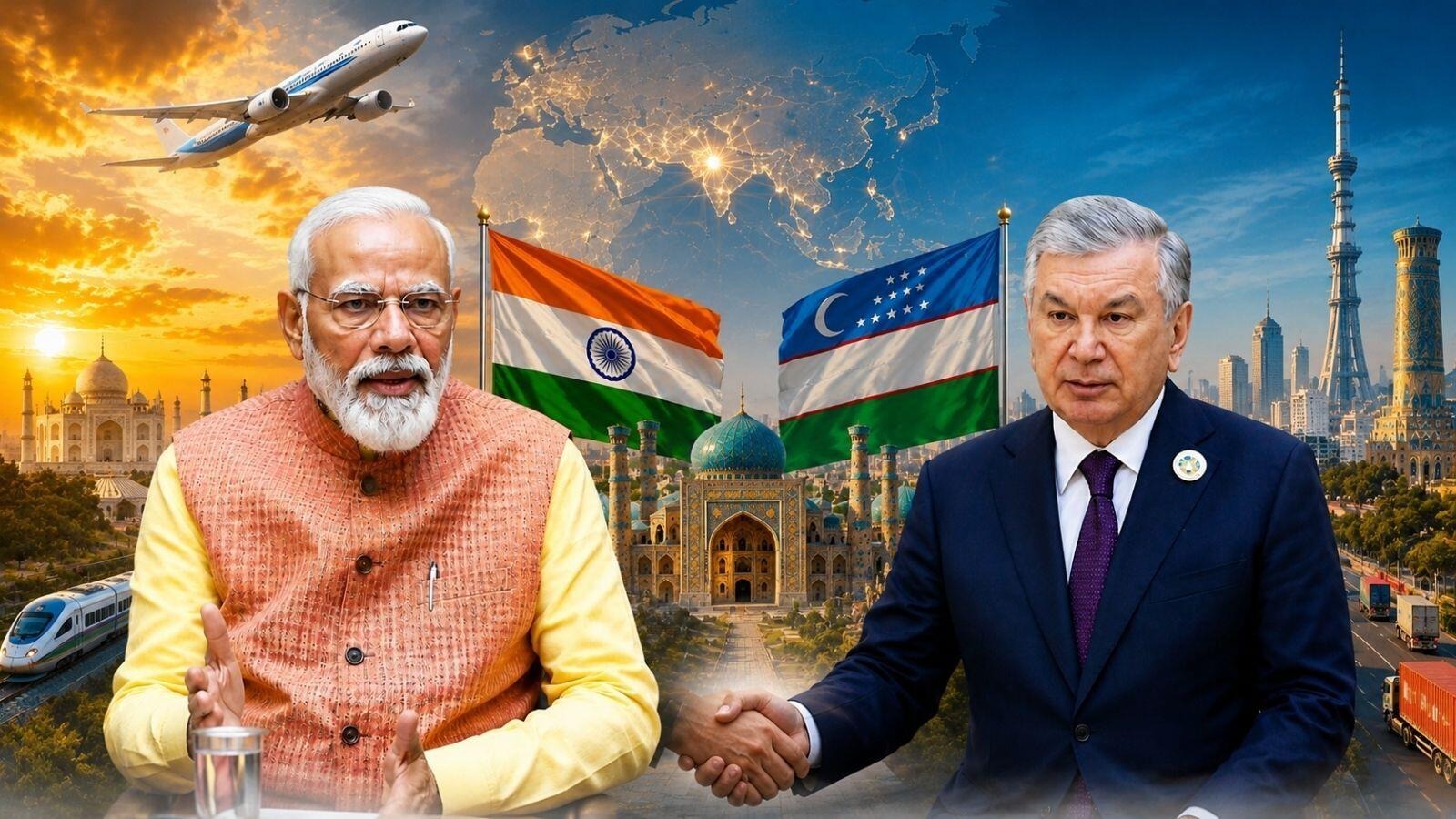
In the current era of global geopolitics, Indian Prime Minister Narendra Modi’s diplomacy is continuously creating new dimensions, and in this context, his Tashkent mission has become the center of discussion for strategic analysts all over the world. This visit to Tashkent, the capital of Uzbekistan, which is called the heart of Central Asia, is part of India’s larger strategic thinking, through which New Delhi wants to further strengthen its hold in the Eurasia region. This visit is not just limited to furthering the bilateral relations between the two countries, but its strategic and economic implications have the potential to influence the global order in the far future.
India’s increasing diplomatic activity in Central Asia
India’s historical and cultural links with Central Asia go back centuries, but in modern times the importance of the region has increased manifold in terms of energy security, trade routes and regional stability. Prime Minister Narendra Modi’s foreign policy has always been focused on ‘Neighborhood First’ as well as ‘Extended Neighbourhood’. The countries of Central Asia, in which Uzbekistan has a geographically strategic position, are of utmost strategic importance for India. Through the Tashkent Mission, India is taking concrete steps towards balancing the growing influence of China and Pakistan in the region as well as ensuring energy security and its unhindered access to Central Asian markets.
New equation of energy security and trade corridors
In today’s globalized era, the economic progress of any country depends on its energy security and Central Asia has immense reserves of important resources like natural gas and uranium. The main objective of Prime Minister Modi’s visit to Tashkent is to take the energy cooperation between India and Uzbekistan to a new level. Additionally, through initiatives such as the North-South International Transport Corridor (INSTC) and the Ashgabat Agreement, India is exploring new and cheaper trade routes to connect Russia, Europe and other markets in Central Asia through Tashkent. By reducing the dependence on sea routes, this trade expansion through land route has every possibility of giving a new strength to the Indian economy.
Regional security and common strategy against terrorism
Terrorism, radicalism and cross-border instability remain a major and common challenge facing Central Asia and South Asia. In the high-level meetings and talks being held in Tashkent, special emphasis is being laid on how both the countries can jointly strengthen regional security. The current situation in Afghanistan and the political uncertainty there impacts the entire Central Asian region, hence India and Uzbekistan are agreeing to share intelligence and jointly sharpen counter-terrorism operations. This strategic coordination is not only beneficial for the internal security of both the countries, but is also considered essential for maintaining peace in the entire region.
Expanding cultural diplomacy and people-to-people contacts
Beyond just the political and economic dimensions of diplomacy, Prime Minister Modi has always emphasized on strengthening cultural ties and people-to-people ties. India’s relations with Uzbekistan are very deep through Bollywood, Yoga, Ayurveda and historical heritage. The attraction of people towards Indian culture in Tashkent and the increasing interest in the study of Hindi language there acts as a human fiber in the relations between the two countries. During this visit, new agreements on cultural exchange are expected to be signed, which will bring the youth and professionals of both the countries closer to each other and make the foundation of future partnerships more solid.
Geopolitical balance and India’s global stature
The present time is being considered a period of great change in international politics, where traditional partnerships are changing and new equations are taking shape. At such a time, Prime Minister Narendra Modi’s visit to Tashkent gives a clear message that India is no longer playing its role as a silent spectator in global affairs, but as a ‘key player’. This activism of India in a strategically sensitive region like Central Asia is attracting the attention of both western countries and eastern powers. In the times to come, this strategic bet will prove helpful in giving India an unassailable lead on the energy, trade and diplomacy fronts, which will further strengthen India’s leadership position even among the countries of the Global South.