 look news india

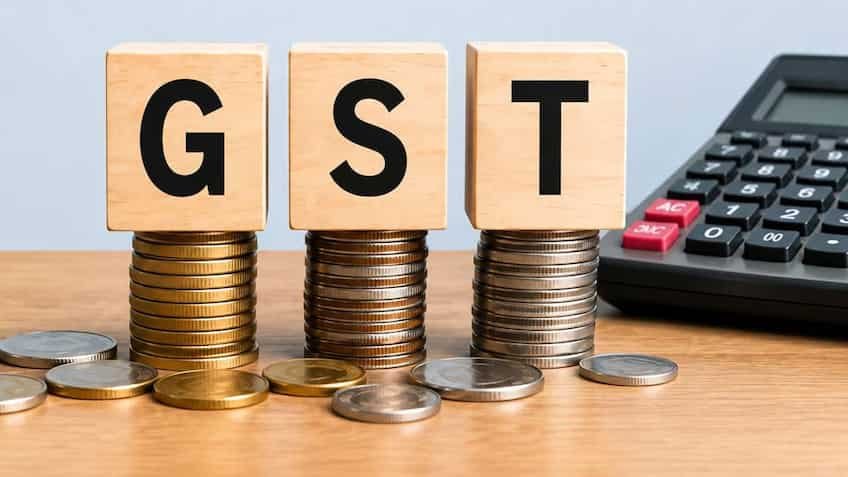
The Goods and Services Tax (GST) system, implemented on July 1, 2017, has played a historic role in bringing the country’s indirect tax structure into the formula of ‘one country, one tax’. After record monthly revenue collection and strong digital compliance, the Government of India and the GST Council are now planning to implement the next phase of this system i.e. ‘GST 2.0’. There has been a long standing demand from traders, MSME sector and tax experts to streamline the anomalies in the existing tax structure, complex Input Tax Credit (ITC) rules and multiplicity of tax slabs. Major NITI Aayogs, CII, FICCI and tax experts have presented 6 path-breaking reform proposals before the GST Council, which will take the Ease of Doing Business to new heights.
In the current GST regime, there are mainly four standard tax slabs (5%, 12%, 18% and 28%), due to which disputes arise over the classification of many products. Experts have suggested that it be reduced to a balanced ‘3-tier tax structure’. Under this, two medium slabs of 12% and 18% can be combined to form a unified ‘standard slab’ of 14% to 15%. The concessional rate of 5% for essential goods and 28% slab for luxury and demerit goods (tobacco, luxury cars etc.) can be retained. Reducing the number of slabs will put an end to product classification disputes and the tax system will become highly transparent.
One of the oldest grievances of the industry has been the ‘inverted duty structure’, where the tax on finished goods is lower than the tax on raw materials and input services. Due to this, huge input tax credit of businessmen in sectors like textiles, footwear, fertilizers and solar equipment gets blocked by the government. GST 2.0 proposes to completely eliminate this anomaly, which will free up the working capital of companies and provide a permanent solution to the cash flow problem of domestic manufacturing units.
At present the conditions for claiming input tax credit are very stringent. If a supplier does not file the return (GSTR-1) on time due to technical error or default, the buyer’s ITC gets blocked. Experts have proposed that the genuine buyer should not be penalized merely on the basis of the seller’s default. Additionally, it has been recommended to implement an automated AI-based reconciliation system to provide business relief to the ITC claim deadline (Section 16(4)) after the end of the financial year and to reduce disputes related to credit reversal.
Keeping energy products out of the purview of GST has been considered a major hurdle in making the Indian economy more globally competitive. Experts and economists have submitted a roadmap to bring petrol, diesel, ATF (aviation fuel) and natural gas under GST in a phased manner. This will lead to a direct reduction in logistics and transportation costs and will provide seamless flow of input tax to the states. Also, a unified tax regime on overall land-building sales has been suggested to eliminate the double impact of stamp duty and GST on under-construction and completed properties in the real estate sector.
Even years after the implementation of GST, non-activation of full benches of Independent Appellate Tribunals (GSTAT) in the states remains a major reason for the increasing number of cases. Due to this, even small traders have to approach the High Court for simple disputes, which is extremely costly and time consuming. Under GST 2.0, it is proposed to operate the National and State level Appellate Tribunals in a fully digitalised, paperless and fast-track mode, so that the pending cases can be disposed of within the stipulated time frame of 3 to 6 months.
On the lines of Income Tax Department, it has been recommended to make ‘Faceless Scrutiny and Assessment’ system mandatory in GST administration to completely eliminate the scope for human intervention and inspector raj. Under this, the work of issuing notices, verification of documents and tax assessment will be allotted to officers on random basis through centralized algorithms and machine learning tools. This will protect taxpayers from unnecessary summons or harassment in the name of audit by local authorities and reduce the cost of tax compliance.
If the GST Council approves these 6 major reforms under the GST 2.0 framework, it will not only significantly reduce the compliance costs of businesses but will also give a new impetus to the formalization of the economy. Simplification of slabs will make many items of daily consumption cheaper, which will increase the purchasing power of common citizens. A transparent and dispute-free tax regime will also encourage foreign investors to set up manufacturing plants in India, helping the country rapidly achieve its goal of becoming a $5 trillion economy.