 look news india

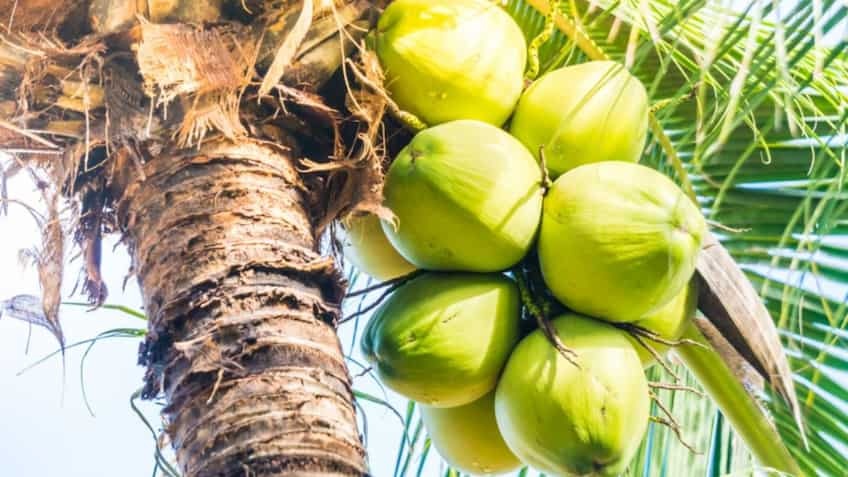
Agriculture-oriented India has achieved another historic milestone on the global stage. According to official government data and reports from the Union Agriculture Ministry, India has become the world’s largest coconut producing country. India’s share in the total coconut production worldwide has been recorded at 31.24 percent. At the same time, in terms of total area under cultivation, India occupies the third position globally with 17.90 percent share. India has not only led the way in production, leaving behind traditional coconut producing countries like Indonesia and the Philippines, but has also set a new record in global exports of coconut-based value-added products. Coconut, which is called ‘Kalpavriksha’ in the country’s rural economy, cultural heritage and coastal livelihood, has today become the main basis of income of millions of farmers.
Which state is at the forefront in coconut production and area?
Within India, there is a very interesting and positive competition among the states regarding the total production of coconut, area under cultivation and productivity. Tamil Nadu remains the leading state in the country in terms of total production. Tamil Nadu’s fertile climate, advanced irrigation technology and farmers adopting modern farming methods are resulting in record production of coconut there. On the other hand, Karnataka is also giving tough competition to Tamil Nadu in the race for top producing states.
Talking about the total area of cultivation, Kerala, which is called the ‘land of coconut’, has the largest area. Coconut plantations are spread over about 7.54 lakh hectares of land in Kerala, from where more than 5,149 million coconuts are obtained annually. At the same time, in terms of highest yield per hectare i.e. productivity, Andhra Pradesh ranks first in the entire country, followed by West Bengal and Tamil Nadu.
Bumper production of more than 20,300 million coconuts in the country
According to recent agricultural data, India has recorded an annual production of more than 20,301 million coconuts from an area of 2.19 million hectares. During this period, the average productivity of the country has been 9,249 coconuts per hectare. The government has expanded coconut cultivation beyond the traditional coastal states to non-traditional areas such as Chhattisgarh, North-Eastern states and new areas of Odisha through the Coconut Development Board (CDB). Financial assistance has been provided for revival of plantations and new plantation, which has directly benefited thousands of small and marginal farmers.
Livelihood of 3 crore people and backbone of rural economy
India’s coconut sector is not limited to just one agricultural crop, but it operates a huge socio-economic system. About 1 crore farmers of the country are directly involved in its cultivation, while the livelihood of more than 3 crore people depends on the coconut industry, including processing, transportation, packaging and retail business. Every part of the coconut—be it the fruit, coconut water, coir, or shell—is used as a raw material in some industry, leading to the growth of large-scale micro and small enterprises at the rural level.
Beyond traditional copra: The rise of virgin coconut oil and activated carbon
India is no longer recognized only as a supplier of raw coconut or dried copra in global trade. India has modernized its export basket to focus on high-value products. Today, there is a huge demand for Indian Virgin Coconut Oil (VCO), packaged coconut water, coconut milk powder, coconut flour and ‘activated carbon’ made from coconut shells in the international markets. Activated carbon is used extensively globally in water purification, air filters and industrial processes, of which India has emerged as a major global exporter.
62% jump in exports: Foreign trade crosses ₹7,000 crore
The direct impact of the emphasis given on value addition is clearly visible on India’s export figures. Annual exports of coconut and its co-products have crossed the level of ₹7,038 crore (about $794 million), marking a spectacular growth of 62 per cent over the previous financial year. While India’s coconut exports were only around ₹25 crore in 2001-02, it has now become an organized and rapidly growing industry with more than 8,700 registered exporters. The Government of India aims to take global trade in the coconut sector to new heights in the coming years, aligning with the country’s overall agricultural and manufacturing exports.
‘Coconut Promotion Scheme’ and policy support
To double the income of farmers and protect the plantations from pests and diseases, the government has launched ‘Coconut Promotion Scheme’ in the Union Budget. Under this scheme, subsidy is being given for removing old and low yielding trees and planting high quality hybrid varieties, adopting drip irrigation for water conservation and setting up processing units directly by forming Farmers Producer Organization (FPO). Additionally, farmers are being provided financial protection from market fluctuations by maintaining the minimum support price (MSP) for copra. With continued policy support, strong scientific research and global demand, India’s coconut sector is poised to play an even bigger role in the country’s agricultural GDP in the times to come.