 look news india

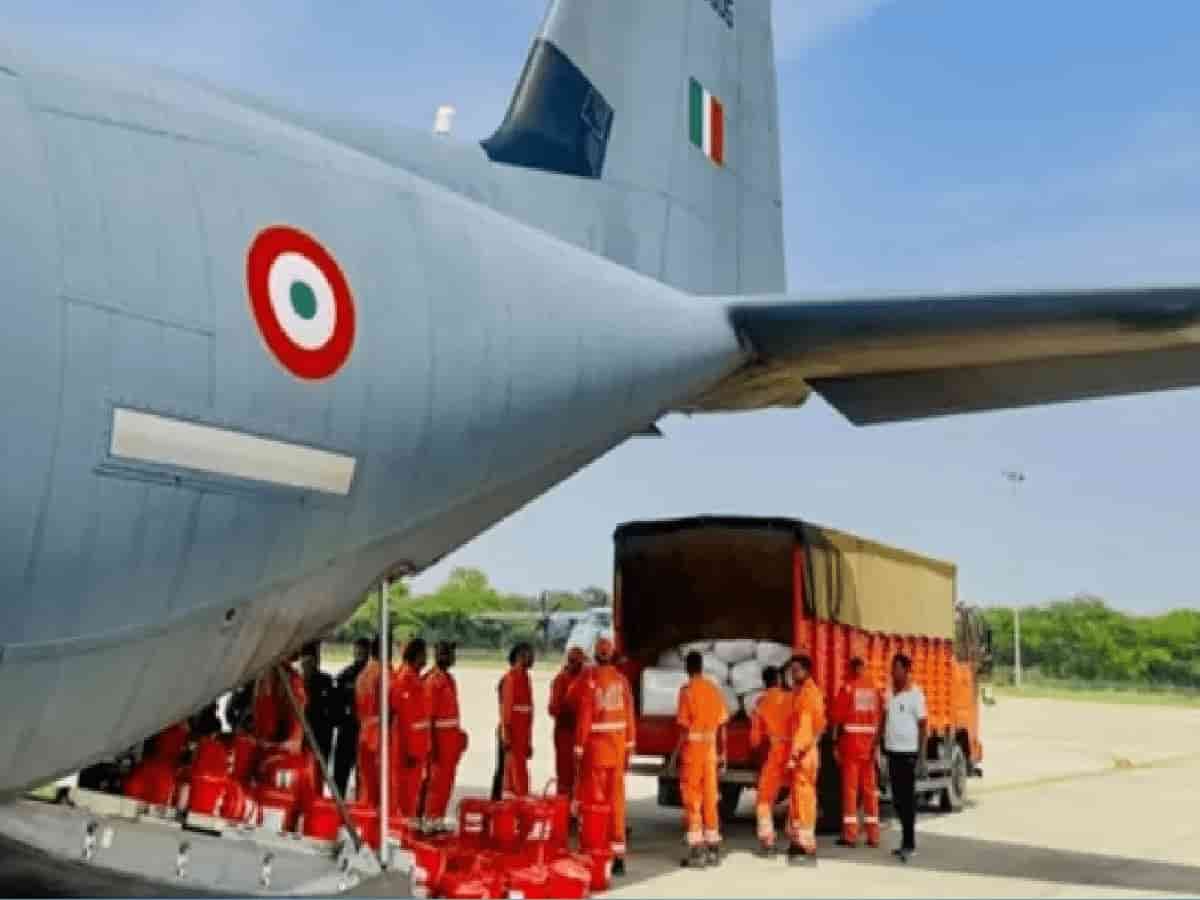
Neighboring country Nepal is currently facing the wrath of nature, where floods and severe landslides following continuous torrential rains have caused huge devastation. In such a situation, once again proving its ‘Neighborhood First’ policy, India has started considering a big relief package for Nepal in this hour of crisis. Life has been completely disrupted in many parts of Nepal and people are struggling for basic needs. In this difficult time, New Delhi, without wasting a moment, has started sending relief material, rescue teams and technical experts to help its neighboring country. Immediately after this natural disaster, Prime Minister Narendra Modi had spoken to Nepal’s Prime Minister Balen Shah on telephone and assured him of all possible assistance, after which relief and rescue operations are continuing on a war footing.
Teams of 68.5 tonnes of relief material and specialist doctors leave for Kathmandu
Indian Air Force planes are continuously flying to Kathmandu carrying relief and rescue material. So far, more than 68.5 tonnes of essential relief material has been delivered to Nepal through several flights of the Indian Air Force. This relief material includes tents, warm blankets, sleeping bags, tarpaulins, hygiene kits, solar lamps, life-saving medicines, ready-to-eat food packets, generators, water purifying tablets and modern pumps for drainage for the disaster affected. Not only material goods, but India has also fielded teams of its most experienced experts to help Nepal. Many hydroelectric projects in Trishuli district have been badly affected by this disaster and it is feared that a large number of employees are trapped in the tunnels of these projects. Considering the seriousness of the situation, special rescue teams of the Indian Army and NDRF along with doctors, paramedical staff, technical teams searching for people trapped in the tunnels and forensic experts for DNA testing have also been sent to Nepal so that relief can be provided as soon as possible.
Bailey bridge for search of people trapped in tunnels and restoration of communication routes.
Due to the disaster, many important connectivity routes and bridges of Nepal have been completely broken, causing major hindrance in relief operations. To deal with this problem, India has also sent the material of Bailey Bridge and a team of technical experts associated with its construction to Nepal for immediate restoration of roads and routes. According to official sources of the Ministry of External Affairs, India is currently completely focused on providing humanitarian aid, medical help and rapid rescue support. So far, about 149 Indian citizens have been safely evacuated from the disaster affected areas of Nepal and the list of their names has also been shared by the government on social media so that their relatives can be worry free. As soon as the full assessment of the damage is revealed and a formal demand is made from Kathmandu’s side, there is every possibility of a big financial and reconstruction package being announced.
Memories of 2015 earthquake and help being provided on the lines of ‘Operation Maitri’
This is not the first time that India has helped crisis-hit Nepal on such a large scale. Earlier in the year 2015, when there was a devastating earthquake in Nepal, India was the first country to extend a helping hand and launched a historic campaign of relief and rescue operations under ‘Operation Maitri’. During that time, along with providing financial assistance of one billion dollars as relief from the earthquake, India also did large-scale reconstruction work so that the people of Nepal could be put on their feet again. Apart from this, additional assistance of one billion dollars was also given for other development projects. This time too the situation is equally serious and as soon as Prime Minister Narendra Modi returns from his foreign tour, a final and major decision regarding this big relief package and rehabilitation scheme can be taken. This step of the Indian government is working to further strengthen the centuries-old cultural, social and strategic relations between the two countries.