 look news india

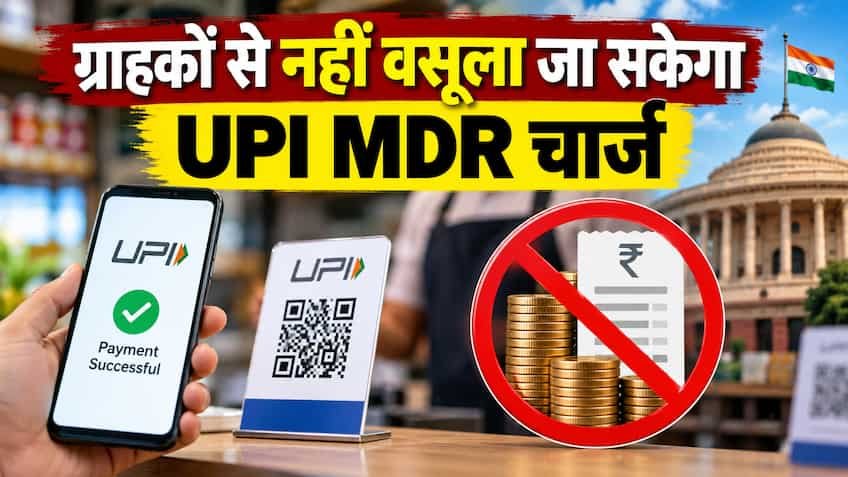
Following the decision to impose 0.4% merchant discount rate (MDR) on select merchant transactions (P2M) above ₹2,000 on Unified Payments Interface (UPI), which has become the backbone of Digital India, the government and National Payments Corporation of India (NPCI) have taken stringent steps to protect the interests of consumers. The Finance Ministry has taken a strict stance on complaints of shopkeepers at some places demanding 1-2% ‘commission’ or ‘extra surcharge’ from customers for making payments through UPI.
The government has made it clear that charging even Rs 1 extra fee from any common citizen using UPI is completely illegal. If any merchant adds extra money to the buyer’s bill instead of accepting digital payment, punitive action will be taken against him.
Official guidelines issued by the Finance Ministry and NPCI make it clear that the new rules are only for financial settlements between large merchants and banks and not for consumers:
-
Passing merchant charge on customer prohibited: A strict advisory has been issued to banks and payment aggregators (PhonePe, Google Pay, Paytm, etc.) to include a mandatory condition in their merchant agreements that merchants cannot ‘pass-on’ the cost of MDR to customers.
-
Personal Transfers are completely free: There will be no charges for sending money from person to person (P2P)—be it ₹100 or ₹1 lakh.
-
Zero MDR on daily purchases: Zero MDR will be applicable on all payments up to ₹ 2,000 for daily needs like milk, vegetables, fruits, grocery or tea-snacks.
-
Small street vendors safe: Small shopkeepers and street vendors with digital turnover up to ₹1 lakh per month have also been kept out of this purview.
It is often seen that many retailers ask for 2% additional charge on swiping debit or credit cards and they try to repeat the same habit on UPI as well. If a shopkeeper asks you for extra money when you pay through UPI, use these legal rights:
-
Explicitly refuse: Let the shopkeeper know that charging any merchant surcharge from the customer is illegal under RBI and NPCI rules.
-
Ask for a fixed bill: If the shopkeeper adds additional amount to the bill, ask him for details of that charge in writing on the bill.
-
Report on payment app: Go to the Help/Support section of the app on which the UPI QR code (PhonePe/Paytm/GPay/BharatPe) has made the payment and lodge a complaint of ‘Overcharging’ against that QR merchant.
-
Complaint on NPCI portal: Complaints can be filed under the merchant transaction category by visiting the ‘Dispute Redressal Mechanism’ section of NPCI’s official portal npci.org.in.
-
Consumer Forum (National Consumer Helpline): Under the Consumer Protection Act, this falls under the category of ‘Unfair Trade Practice’. Customer Toll-Free Number 1915 You can lodge a complaint by calling or on the consumer helpline portal.
The government is working with banks and fintech companies to prepare a framework to immediately crack down on guilty merchants:
-
QR code and merchant account will be blocked: If repeated charging of additional charges is confirmed, the bank will immediately freeze or blacklist the merchant ID and QR code of that shopkeeper.
-
Heavy penalty on banks: If a bank fails to stop illegal extortion from customers by its merchants, a penalty can be imposed on that bank by the banking regulator.
-
Compensation from Consumer Court: If the customer takes the matter to the consumer forum, the merchant will have to return the extra recovered amount along with interest and may also have to face legal damages.
The government has given a clear message that public trust is of utmost importance to promote digital payments, and under no circumstances will the cost of digital transactions be recovered from the consumers’ pockets.