 look news india

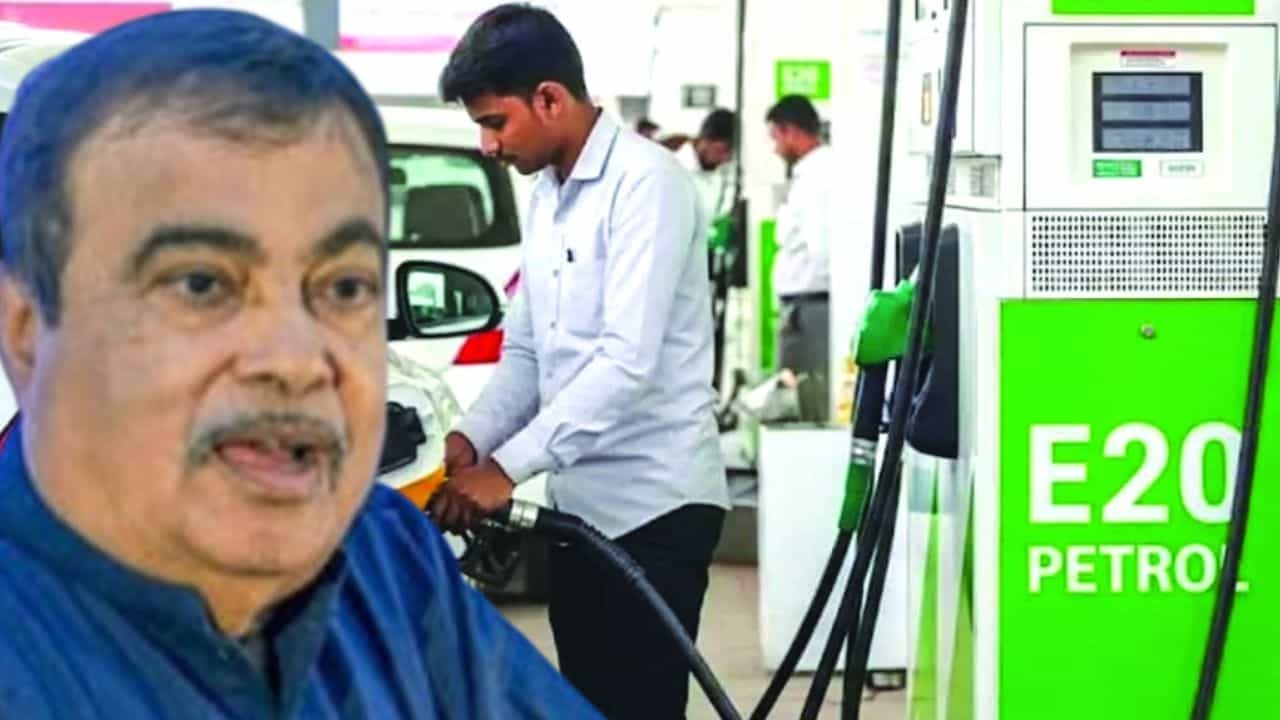
Union Road Transport and Highways Minister Nitin Gadkari has given a big statement challenging those criticizing Ethanol-Blended Petrol on an open platform. During a conference, Gadkari launched a scathing attack on his opponents and completely rejected the claims of mixing 20% ethanol (E20) with petrol causing damage to vehicles. He clearly said that misinformation and rumors are being deliberately spread in the market regarding higher ethanol blending, which is being done by people with some special interests.
“The price of maize increased from Rs 1200 to Rs 2800”
Presenting the figures of economic benefits to farmers from the ethanol policy, Nitin Gadkari said, “When our government took the historic decision to make ethanol from maize, the market price of maize was only ₹ 1,200 per quintal, while its Minimum Support Price (MSP) was ₹ 1,800 per quintal. But after the implementation of this policy, today the market price of maize has increased to ₹ 2,800 per quintal. Is.” The Union Minister claimed that ethanol production from maize and sugarcane has brought an additional profit of Rs 45,000 crore to the pockets of farmers in Uttar Pradesh and Bihar alone.
Will get relief from import burden of ₹22 lakh crore
Addressing the ‘Developed India’ conference, Nitin Gadkari said that India’s excessive dependence on fossil fuels like coal, diesel and petrol is a huge economic burden for the country. To meet its fuel needs, India has to spend a huge amount of Rs 22 lakh crore annually on imports, which directly goes into foreign hands. Besides this, it also poses a serious threat to the environment. In such a situation, it is very important to adopt clean and indigenous energy to build a self-reliant and developed India.
Open challenge given to claims of malfunction in cars
Taking a strong stance on rumors of engine damage due to E20 fuel, Gadkari said, “There has not been a single case of problem in any car or two-wheeler due to the use of E20 petrol across the country. Is there even a single car in the entire country which has had problems with this petrol? If so, then name just one car.” He clarified that India has achieved the target of mixing 20% ethanol in petrol ahead of schedule, which has not only reduced the import of crude oil but has also significantly reduced carbon emissions.
Now preparing for E85, E100 and flex-fuel vehicles
The Ministry of Road Transport and Highways has proposed several important changes in the Central Motor Vehicles Rules, 1989 (CMVR) to expand the scope of green fuel in the country. The main objective of this move is to pave the way for ‘Flex-Fuel’ and engines running entirely on biofuel for all categories of vehicles. Government’s focus now on petrol with 85% ethanol mixture E85 fuel and for vehicles running on almost 100% pure ethanol E100 Fuel has to be promoted. Along with this, to save the environment, work is also going on at a rapid pace on the use of B100 biodiesel and hydrogen-CNG (H-CNG) mixture.
Options will be available at petrol pumps on the lines of Brazil
Ethanol is produced mainly from sugarcane juice, corn, spoiled rice and biomass sources. At present, car owners do not have the option to choose different types of fuel at petrol pumps in India, but the government is now considering introducing a new system on the lines of Brazil. Brazilian law gives consumers the freedom to choose between different prices and blends of fuel at the petrol pump, with fuels with higher ethanol content receiving significant government tax breaks and lower prices.
Gadkari’s befitting reply to the allegations against the family
Union Minister Nitin Gadkari has often been accused by his opponents that his family members are associated with sugar mills and ethanol production, that is why he is promoting it so much. Clearing the air on this allegation, he said that even though his family members own sugar mills, their companies are not financially dependent on ethanol production. He stressed that they are not doing this for their own benefit, but to enrich crores of farmers of the country and keep India’s money in India.