 look news india

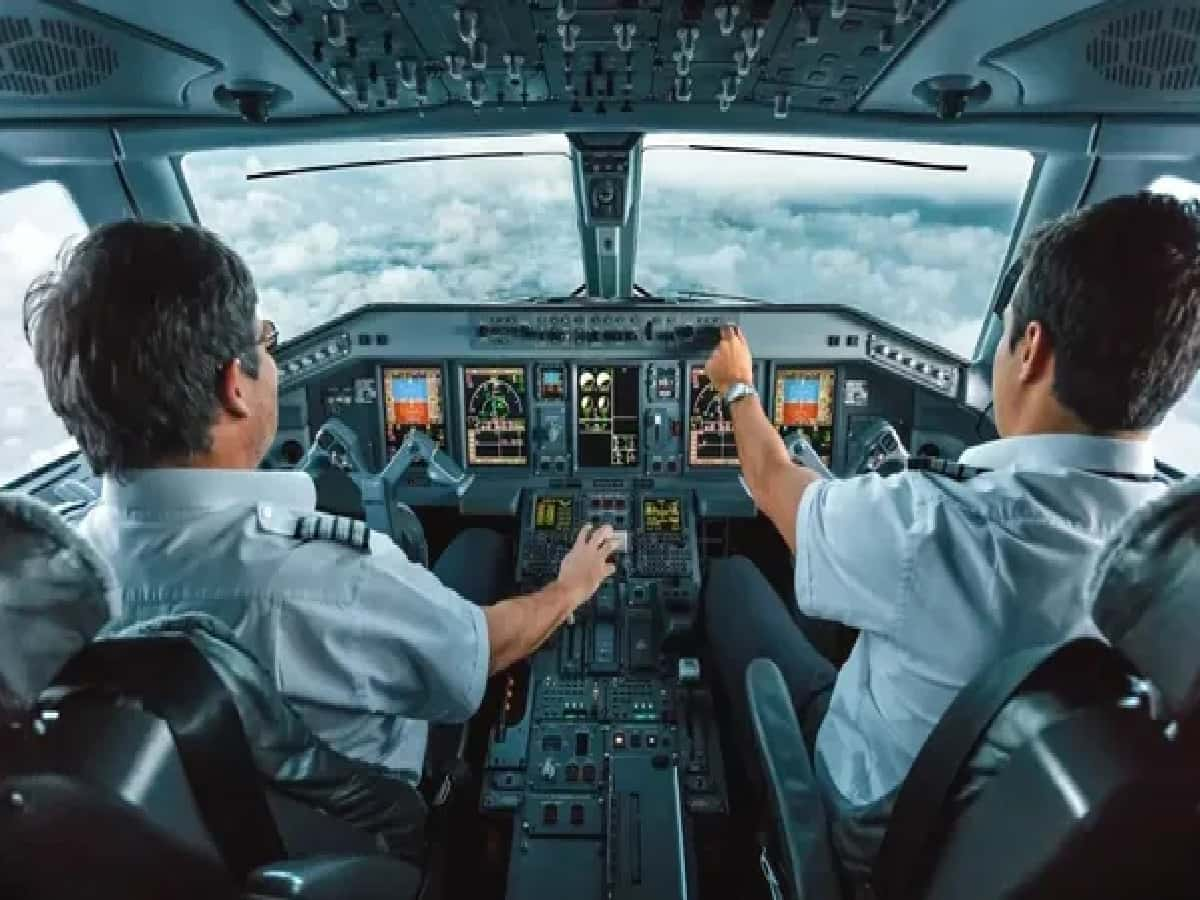
Traveling in airplanes passing through the clouds high in the sky is considered to be the fastest medium in the world today, but have you ever thought that how many big and unseen truths are hidden regarding the safety of the plane in which you are traveling in the sky? Recently, a very shocking and hair-raising report has come out from the aviation sector, which has given sleepless nights to passengers and aviation agencies all over the world. According to a detailed study recently released by the European Cockpit Association (ECA), a large number of pilots fall asleep while flying and fall asleep in the cockpit. This sensational revelation has raised a big question mark on Global Aviation Safety. Let us know in detail what revelations have been made in this study and what is the real reason behind this fatigue of pilots.
Shocking study figures: More than three out of four pilots fall asleep during flights
Thousands of pilots from all over the world were included in this latest survey regarding aviation safety, the results of which are very scary. According to the report released this week by the European Cockpit Association, survey participants 76.8 percent of more than 7,200 pilots admitted that he had fallen asleep at the controls at least once while flying the aircraft during the past four weeks.
Despite the autopilot mode of the aircraft being on during air travel, pilots falling asleep in this manner is a serious threat to the safety of passengers. Experts believe that no matter how advanced modern aircraft technology becomes, the alert state of the pilot is most important to deal with any emergency situation. In such a situation, more than three-fourth of the pilots falling victim to sleep is an indication that there is a big flaw somewhere in the airlines and crew management system.
What is ‘Microsleep’? Which is becoming a major cause of accidents in the sky
In scientific and medical language this condition is ‘Microsleep’ It is said. According to the report of the National Sleep Foundation, microsleep is such a very short and involuntary sleep of a few seconds, which even the sleeping person himself is not able to detect.
When a pilot is suffering from extreme fatigue due to continuous work for a long time, his mind becomes completely dull for a few seconds. During this time, the pilot’s eyes may be open and he may appear to be awake, but his brain is not processing any external information or danger. For drivers driving vehicles or high-speed aircraft, this type of microsleep can cause a major and serious aircraft accident at any time.
Continuous work and not getting enough rest is the biggest root of fatigue.
This study has also revealed that the main reason behind pilots sleeping in the cockpit is their physical and mental fatigue. included in the survey 38.8 percent pilots He openly shared that he often or always does not get adequate and quality rest amidst his duties, due to which his body remains constantly tired.
In the aviation industry, long working hours and roster uncertainty completely disrupts the biological clock (circadian rhythm) of crew members. Apart from this, due to the strict rules of the airlines companies and the fear of losing their jobs, many pilots are not able to openly express their fatigue and health problems to their superiors.
Crew members are unable to speak openly due to fear of punishment and management’s displeasure
Another most dangerous aspect that has emerged in this entire system is the fear within the pilots. According to the report, only 37.2 percent of pilots reported making an official report when they felt unwell or extremely tired.
On the contrary, 24.2 percent pilots admitted that they do not report their fatigue and still continue to fly, taking risks. When he was asked the reason behind this, he cited the displeasure of the airline management, the fear of losing his job and the fear of punishment given by the company. If a pilot refuses to extend their duty or cut down on rest time, they face a variety of negative consequences, forcing them to take over the cockpit despite being tired.
Such cases have come to light earlier also, the industry is facing severe shortage of pilots.
This is not the first incident of pilots falling asleep during air travel. Earlier in the year 2022, a similar scary incident had come to light, when both the pilots flying a Boeing 737 aircraft of Ethiopian Airlines had fallen asleep while controlling the aircraft, due to which they could not even land the aircraft on time. Aviation analysts clearly say that pilots falling asleep like this is entirely a result of their fatigue and poor crew scheduling.
At present, this entire report has come at a time when there is a huge crisis of employees and trained professionals in the aviation sector globally. The number of pilots leaving their jobs is much higher than the recruitment of new pilots in the industry. According to various reports, this gap between demand and supply may reach its peak in the coming time, which will lead to global economic crisis. Huge shortage of more than 24,000 pilots It is suspected to happen.
Aviation safety agencies and airlines will now have to take these warnings seriously and take strict measures to ensure the comfort of crew members, their mental health and a transparent reporting culture, so as to ensure safe air travel without putting the lives of passengers at risk.
Frequently Asked Questions (FAQs)
Q1: Is it common for pilots to sleep during flight? Ans: According to a recent study, more than 76% of pilots have admitted that they become victims of ‘microsleep’ (involuntary sleep of a few seconds) during flight due to fatigue, which is worrisome from safety point of view.
Q2: What is microsleep? Ans: It is a short sleep of a few seconds in which the person’s eyes may be open, but his brain stops working and he goes into an unconscious state.
Q3: What is the main reason pilots sleep? Ans: Continuous long duty hours, lack of adequate rest and shortage of staff in airlines are the main reasons for this.