 look news india

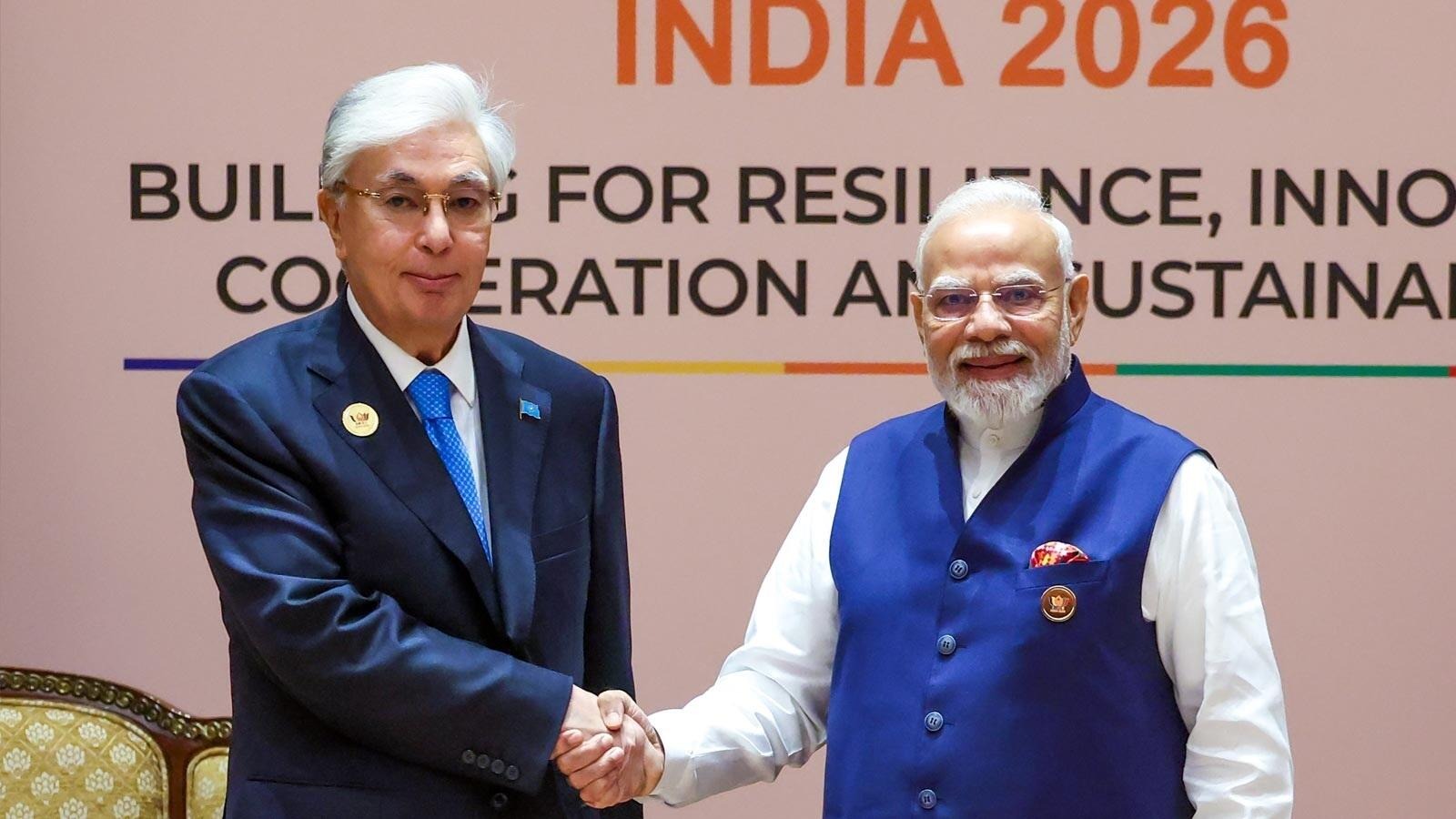
The excitement in diplomatic circles in the capital Delhi has reached its peak to take bilateral relations between India and Kazakhstan to a completely new and historic peak. The high-level meeting between Prime Minister Narendra Modi and Kazakhstan President Kassym-Jomart Tokayev has attracted the attention of geopolitical analysts across the world. This meeting of India with this most strategically important country of Central Asia has taken place at a time when there is turmoil in the global supply chains. During this important discussion, the top leaders of both the countries discussed in detail mainly on serious issues like unhindered trade of critical minerals i.e. rare and strategic minerals, Free Trade Agreement (FTA) with the Eurasian Economic Union (EAEU) and energy security, which will have far-reaching and positive results in the times to come.
In today’s modern technological era, critical minerals work like oxygen for the economy of any country for the manufacturing of semiconductors, electric vehicles (EV), renewable energy batteries and defense equipment. Kazakhstan is one of the few countries in the world that has immense and vast reserves of uranium, lithium, titanium and other rare geo-strategic minerals. The meeting between Prime Minister Narendra Modi and President Kassym-Jomart Tokayev placed special emphasis on how to ensure a stable and uninterrupted supply of these critical minerals to Indian industries. India is now looking beyond traditional sources to meet its growing industrial and technological needs and is strengthening its ties with Central Asia, so as to completely eliminate dependence on China or other countries. The wealth of these rare minerals present in Kazakhstan will provide a new and unstoppable momentum to India’s ‘Make in India’ and Green Energy mission.
Kazakhstan is not only a country in Central Asia, but is also a highly prominent and active member of the Eurasian Economic Union (EAEU), which includes Russia and other former Soviet republics. One of the biggest and important aspects of the bilateral talks between Prime Minister Modi and President Tokayev has been to rapidly advance the prospects of a Free Trade Agreement (FTA) between India and the EAEU. Until now, trade exchanges between India and the Eurasian region had not reached their full potential due to geographical distances and complexities of transit routes. With the implementation of this FTA, the customs duties and tariff barriers to trade between the two countries will fall, which will automatically open the way to Kazakhstan and its neighboring markets for Indian companies in the fields of pharmaceuticals, agricultural products, textiles, automobiles and information technology.
India’s energy needs are increasing rapidly day by day, and Kazakhstan is one of the largest energy producers in the world. In this meeting between the two leaders, it was agreed to further deepen cooperation in the fields of crude oil, natural gas and nuclear energy. Kazakhstan is already a major supplier of uranium to India, and this partnership is set to be further secured for the next several decades. Additionally, the International North-South Transport Corridor (INSTC) connecting India to Europe and Western Asia via Central Asia and Russia and the implementation of the Ashgabat Agreement were also reviewed in depth. When trade routes are fully facilitated through Chabahar Port and Central Asian Rail Network, there will be a huge reduction in both time and cost of freight transportation, further strengthening the economic and strategic relationship between India and Kazakhstan.
Apart from bilateral and economic issues, Prime Minister Narendra Modi and President Kassym-Jomart Tokayev also had candid discussions on sensitive topics like terrorism, radicalism and regional stability. Both the leaders believed that terrorism is the biggest threat to humanity and to deal with it, the global community will have to unite without any double standards. Both sides also shared their strategic interests on the current situation in Afghanistan and regional security. This visit of President Tokayev to India proves that New Delhi’s ‘Connect Central Asia’ policy is now giving concrete results on the ground. This high-level discussion with Prime Minister Modi has made it clear that India and Kazakhstan will not only emerge as trading partners in the coming times, but will also set a new example for the whole world by becoming the two biggest strong pillars of peace, stability and development in the Asian continent.