 look news india

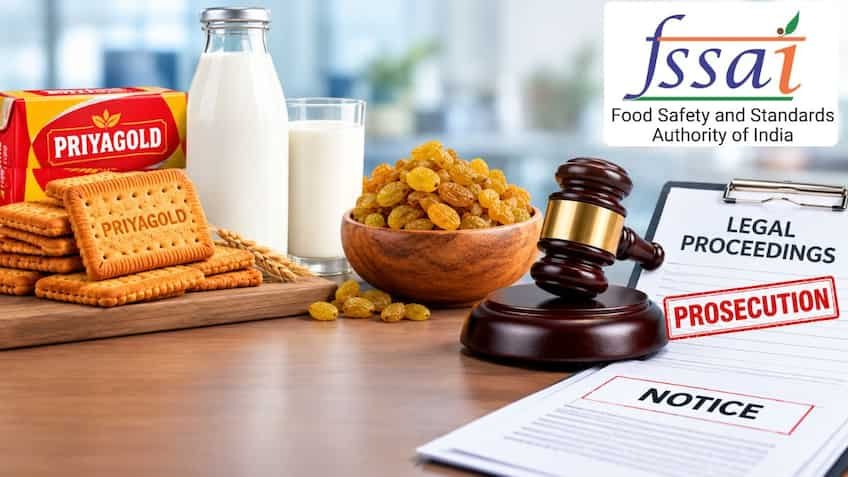
To ensure the health and food safety of consumers in the packaged food and dairy sector, the Food Safety and Standards Authority of India (FSSAI) has intensified its crackdown on big brands. After issuing notices to Nestle India and Hindustan Unilever, the regulator’s central investigation teams now conducted an intensive inspection campaign by suddenly raiding the manufacturing units of South India’s leading milk producing company Dodla Dairy and the country’s popular ‘Priyagold’ biscuit manufacturer Surya Food & Agro Ltd. During the inspection, serious deficiencies were found in Good Hygienic Practices, raw material storage and labeling standards in the production units. After this, FSSAI has not only issued show cause notices to these companies, but also seized samples of suspicious material and sent them for detailed lab testing. There is a stir after this action in the regulatory bodies across the country, including the Food Safety and Drug Administration (FSDA) of Lucknow, the capital of Uttar Pradesh.
A team of central inspectors conducted a surprise inspection at the processing plant of Dodla Dairy, which distributes milk, cheese, ghee and butter on a large scale in South India and western states. The main irregularities found during inspection were as follows:
-
Negligence in milk collection and chilling chain: Violation of temperature control (Cold Chain Maintenance) standards was found during collection of raw milk. In many batches, the temperature of milk was recorded above the prescribed limit of 4 degrees Celsius, which poses a serious risk of bacteria growth.
-
Discrepancies between FAT and SNF: The fat and solids-not-fat (SNF) content of finished packets of toned and standardized milk was found to be below the standards set by FSSAI, which directly amounts to adulteration or poor quality.
-
Lack of sanitation in processing area: Proper sanitization and ‘clean-in-place’ (CIP) protocols were not being followed in the floors and pipelines of the pasteurization unit and packaging hall.
-
Lack of water quality report: Mandatory periodic microbiological testing reports of water used for processing milk and washing utensils could not be submitted on the spot.
FSSAI team found serious violations in raw material storage and packaging standards at the production unit (Greater Noida/North India Plant) of Priyagold Biscuit, known to every household with its ‘Haq Se Mango’ slogan:
-
Questions on the quality of palm oil and refined fat: Drums of edible oil and vegetable fat used in making biscuits and cookies were found to be lacking mandatory safety standards for trans-fat and acid values. Suspicion has also been raised about the use of heated oil (Total Polar Compounds – TPC) more than the prescribed limit.
-
Omissions in dampness and pest control in warehouses: The storage warehouses for flour, sugar and flavoring agents did not have adequate ventilation and anti-damping arrangements. Pest control records were not found to be updated, creating a risk of insect and mold infestation.
-
Misleading information in packaging and expiry claims: The font size of ‘best before’ date and nutritional information on some biscuit variants did not conform to FSSAI’s ‘Packaging and Labeling Regulations’. Claims of ‘high fibre’ and ‘vitamin enriched’ were found printed on the products without clear lab evidence.
Based on the inspection report, the designated officers of FSSAI have taken several strict steps with immediate effect:
-
Strict Show-Cause Notice: The management of both the companies have been issued notices under Sections 31 and 32 and directed to file their reply within 7 to 14 days.
-
Hundreds of kilograms of material sealed: Raw materials, palm oil stocks and finished batches of biscuits and packaged milk found suspicious have been seized and sealed.
-
Samples sent to lab: The seized samples have been sent to central laboratories accredited by the National Accreditation Board for Testing and Calibration Laboratories (NABL) for testing.
-
License suspension warning: If the lab report confirms chemical or microbiological adulteration, the operating licenses of the concerned production lines may be suspended or canceled with immediate effect.
According to the Food Safety Act, no matter how big the brand, stringent penal provisions apply if public health is compromised:
-
Sub-Standard Food (Section 51): Fine up to ₹5 lakh if product is found to be of substandard quality.
-
Misbranded Food (Section 52): Penalty up to ₹3 lakh on misleading labeling and false nutrition claims.
-
Unsafe Food – Section 59: If the food is found unsafe for human consumption, the responsible officials of the company may be punished with imprisonment ranging from 6 months to life and a fine of up to ₹10 lakh.
Consumers should check these points closely when purchasing packaged food and daily milk:
-
FSSAI logo and 14 digit license number: FSSAI logo and valid license number must be clearly written on the packaging.
-
Sealing and leakage of packets: If a packet of milk or biscuits looks loose, puffed or has oily leakage, then do not buy it at all.
-
Matching Dates: Notify the shopkeeper immediately if there is overwriting or ambiguity in manufacturing date, batch number and ‘best before’ date.
-
File a Direct Complaint: If any branded product experiences any abnormality in taste, smell or quality, consumers can lodge an online complaint through FSSAI’s official portal fssai.gov.in or ‘Food Safety Connect’ app directly by uploading the batch number and photo.