 look news india

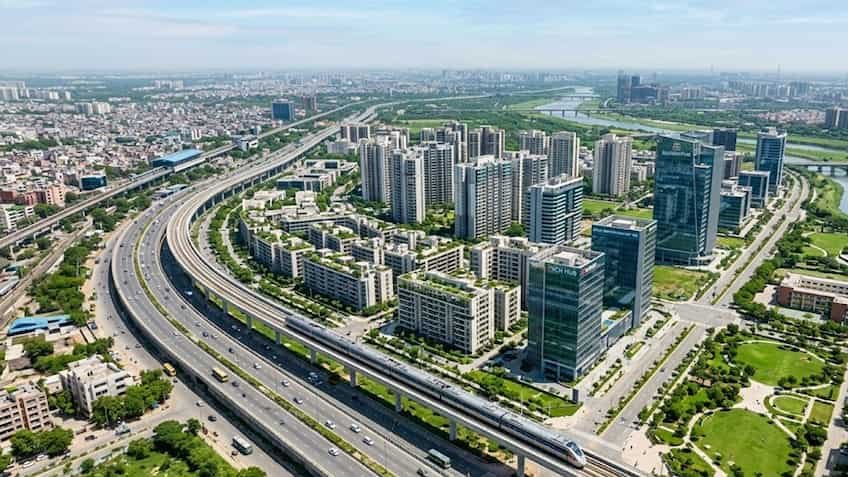
The foundation of a large modern suburb is being laid to provide relief from the ever increasing population density and traffic jams in the country’s capital Delhi and its surrounding areas. The Master Plan for the National Capital Region (NCR) envisages developing a world-class greenfield township just outside the borders of Delhi. The biggest attraction of this new township is its multi-dimensional high-speed connectivity and transparent land acquisition policy, which will be implemented through a land pooling model.
Modern Urban Planning and 200 Square Meter Land Pooling Model
The government and related development authorities have made land pooling policy the main basis for the development of this new city. To overcome the legal and financial hurdles in traditional land acquisition, farmers and land owners are being made direct partners in this development model. According to the scheme, farmers or land owners will surrender their land to the development authority, in return for which they will be allotted proportionate residential or commercial plots of 200 square meters and above with all modern amenities in the developed city.
This provision of 200 square meter plots will provide affordable and affordable housing solutions for middle and upper-middle class families. This model will not only allow the original land donors to own premium real estate in a developed city, but will also become direct partners in the economic growth of the area.
Namo Bharat RRTS and high-speed network of 8-lane wide roads
The backbone of any modern city is its public transport and road network. This new suburb will be directly connected to the Regional Rapid Transit System (RRTS) i.e. Namo Bharat Train corridor to connect the center of Delhi and other major cities of NCR within 40 to 50 minutes. ‘Transit Oriented Development’ (TOD) will be promoted around RRTS stations, so that people can easily commute to hubs like Delhi, Noida, Gurugram and Ghaziabad even without personal vehicles.
Talking about road transport, the internal and external road network of the city will be covered with wide roads of 6 to 8 lanes. The width of the main arterial roads has been kept from 45 meters to 60 meters, which will include separate dedicated cycle tracks, walkways and charging lanes for electric vehicles. The city will be directly connected to the Eastern Peripheral Expressway (EPE), Western Peripheral Expressway (WPE) and major national highways, which will completely eliminate the pressure of heavy vehicles on the internal roads of Delhi.
Smart Urban Infrastructure and Sustainable Green Living
Beyond the problems of traditional unauthorized colonies, this new city is being designed as a completely sustainable and green smart city. It will have underground power cable network, automated waste management system, 24×7 water supply and advanced sewage treatment plant (STP). About 30 to 40 percent of the total area of the city will be reserved for green belts, parks and water bodies.
Keeping energy efficiency in mind, mandatory use of solar energy will be made for public buildings and street lights. Additionally, it is being made mandatory for real estate developers to follow green building standards (IGBC/GRIHA), thereby keeping the carbon footprint to a minimum.
Real estate boom, employment generation and new investment opportunities
With the announcement of this new city, there is tremendous activity in the real estate market of the National Capital Region. Along with residential properties, plans have been drawn to establish logistics hub, IT park, data center and commercial business district (CBD). Due to direct access from Jewar International Airport and IGI Airport, the region is emerging as a major investment destination for national and multinational companies.
Real estate analysts believe that the availability of 200 square meter plots under land pooling will provide a huge opportunity to individual home buyers and investors who want to settle in an open, clean and modern environment outside the expensive and cramped residential areas of Delhi. In the next 5 to 7 years, this region will become a new hub of economic activities, quality health services and world-class educational institutions.