 look news india

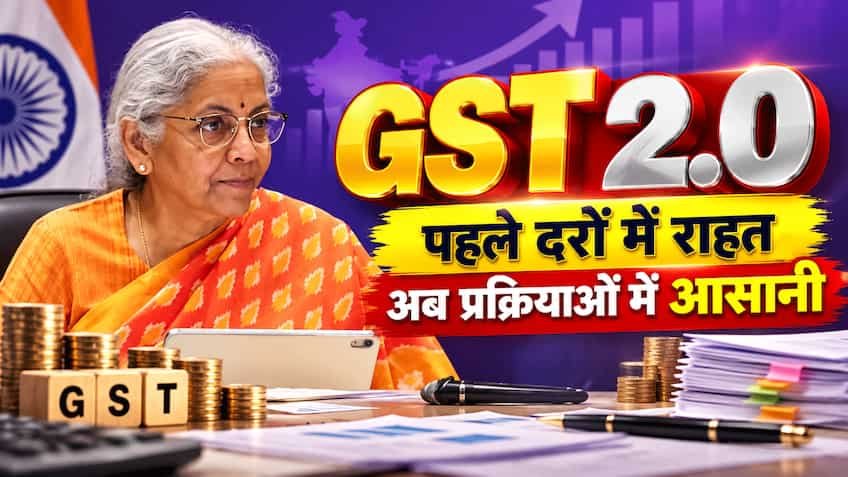
Major policy and procedural reforms have been announced under ‘GST 2.0’ with the aim of making the country’s indirect tax system more transparent, simple and business-friendly. After the 57th meeting of the GST Council held in New Delhi, Union Finance Minister Nirmala Sitharaman, facing sharp questions from the industry, business organizations and media, clarified the future outline of the government. The Finance Minister bluntly underlined that in the first phase of reforms, major relief was given to the general public and the manufacturing sector through rate rationalization. Now the basic mantra of the second phase is ‘Ease of Compliance’, so that crores of traders, MSMEs and startups of the country can be completely free from the fear of Inspector Raj and legal cases.
In the detailed discussion held after the meeting, taxpayers, traders and media representatives raised several basic questions regarding the complexities of GST, to which the Finance Minister gave a series of official answers:
-
Question: Has any new change been made in tax rates under GST 2.0?
Finance Minister’s answer: No change has been made in the rates in this meeting. The tax slab structure has now become completely stable. Rate fixing issues will no longer be raised in every meeting, but only one special meeting will be scheduled for this in a year. At present, the entire focus of the government is on making the system simple, transparent and stress-free.
-
Question: When will small businessmen be free from the fear of harassment and notices from GST officials?
Finance Minister’s answer: The government has implemented Trust-Based Taxation on the system. Now the powers of arbitrary arrest from the officers have been completely abolished. Also, there has been a complete ban on issuing show cause notices (SCN) on dues of less than ₹10,000, as more than 11 lakh notices issued in previous years were related to trivial matters of less than ₹10,000.
-
Question: Why do GST refunds and pending Input Tax Credit (ITC) trap traders’ capital?
Finance Minister’s reply: The time limit for refund approval has been reduced from 15 days to 10 days. Apart from this, system based automated refunds will be issued within 3 working days without human intervention. A special committee has been constituted on the problem of innocent buyers not getting input tax credit which will give a solution in 3 months.
-
Question: How will return filing be made easier for MSMEs and shopkeepers in Tier-2, Tier-3 cities?
Finance Minister’s reply: B2C (consumer centric) traders with annual turnover up to ₹5 crore are now being exempted from the hassle of filing returns every month. They will be able to file annual returns only once a year by depositing taxes on quarterly basis.
The biggest and historic step of GST 2.0 is to curb the arbitrariness of officials. Under the new system, traders will not be prosecuted criminally for simple omissions, inadvertent errors in returns or technical delays. The cases in which earlier the officers had the right to arrest under the section have been abolished. Apart from this, the amount of general fine has been directly reduced from ₹ 25,000 to ₹ 10,000. Through modern artificial intelligence and invoice matching tools, fraudulent billing will be caught at the source, so genuine honest merchants need not fear any punitive action.
To ensure that the working capital of traders is not blocked, the refund system has been made completely faceless and automated. Now 90 per cent of refund claims will be approved directly after system-based risk assessment without the intervention of any official. If the officer does not file any objection within the stipulated time, the claim will be considered ‘deemed approved’ (automatically approved). Along with this, no Babu’s approval will be required to withdraw the extra amount deposited in the electronic cash ledger of the traders, it will be directly credited to the bank account.
Trader organizations across the country, including Uttar Pradesh, Delhi-NCR, Bihar and Maharashtra, have strongly welcomed the procedural reforms of GST 2.0. Wholesale textile and iron businessmen of Lucknow’s Aminabad, Hazratganj and Kanpur say that with the closure of notices of less than ₹ 10,000 and the facility of annual return, the time spent in visiting accountants and CAs will be saved. These new rules, which will come into effect from April 1, 2027, will give a new impetus to India’s domestic economy and make local entrepreneurs globally competitive.