 look news india

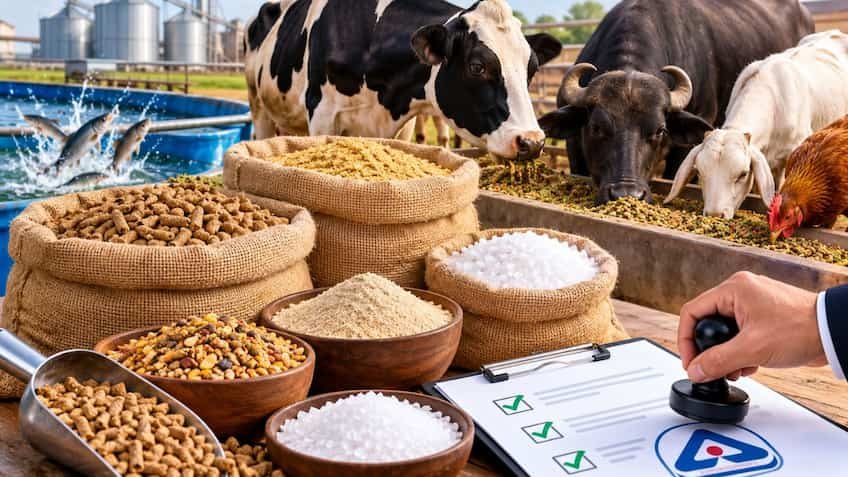
Keeping in mind the health safety of crores of cattle rearers, dairy farmers and milch animals of the country, the Central Government has taken a historic and tough step. The government has made it legally mandatory for all types of compounded cattle feed (animal feed) and mineral mixtures sold in the market to follow the standards of Bureau of Indian Standards (BIS) and to have a valid license. Now no manufacturer, distributor or wholesaler will be able to manufacture, store or sell animal feed without BIS certification and without a valid ISI mark. The government has taken this strict stand after complaints of adverse effects on the health of milch animals due to poor quality, moldy and adulterated fodder sold in the open market and the presence of dangerous chemicals in milk.
For the last several years, complaints were being received about fake and substandard animal feed being sold without any quality check in rural and semi-urban areas of the country. Many unregistered units were adulterating bran and cake with substandard husk, inedible chemicals, excessive urea and rotten grains in order to earn profits. Consuming such contaminated food was leading to infertility, digestive disorders, mastitis and serious metabolic diseases in cows and buffaloes, leading to a sudden drop in their milk production. What was even more worrying was that aflatoxin and heavy metals present in the contaminated fodder were reaching the human body through animal milk, which can cause cancer and liver diseases in children and adults. The direct objective of the government’s new order is to make this entire supply chain transparent and secure.
The Bureau of Indian Standards has laid down detailed scientific standards for animal feed, which will be mandatory for every producer to follow. Standards for Compounded Cattle Feed Is 2052 Has been implemented, under which minimum and maximum limits of Crude Protein, Crude Fiber, Crude Fat, Moisture and Total Ash in fodder have been fixed. Moreover, the maximum permissible limit for Aflatoxin B1, produced by a poisonous fungus in fodder, has been kept very strict (maximum 20 to 50 ppb). Whereas the standards for mineral mixture made for animals 1664 It has been made mandatory to follow it, so that the animals can get the right proportion of calcium, phosphorus, magnesium, zinc, copper, iodine and iron. Under the new rules, nutritional content, batch number, manufacturing date, expiry and BIS license number should be clearly printed on every bag.
The government has made it clear that those violating these quality control orders (QCO) will not be spared at all. Selling animal feed without valid license or using fake ISI mark has been considered a serious cognizable offense under the sections of BIS Act, 2016. If any mill owner or trader is caught selling substandard or non-certified animal feed, his manufacturing unit can be sealed with immediate effect. There is a strict legal provision imposing heavy financial fine against the culprits along with a jail sentence of up to two years. Apart from this, joint enforcement teams of Animal Husbandry Department and District Administration at the district level will conduct random sampling by raiding warehouses and shops from time to time. Goods found failing the quality standards in lab testing will be immediately destroyed.
All companies and local mills manufacturing animal feed will have to apply online through BIS portal within the stipulated time limit. The process of obtaining a license is completely transparent and multi-tiered:
-
Documentation & Application: The manufacturer will have to upload his factory registration, machinery details, raw material list and quality control plan on the official portal of BIS.
-
Physical Inspection of Factory: Authorized technical officers of BIS will visit the manufacturing unit and audit the cleanliness, raw material storage and in-house testing facilities there.
-
Lab Testing: Animal feed samples from the production unit will be sealed and sent to BIS-accredited laboratories, where all chemical and nutritional parameters will be tested.
-
License and ISI Mark Allocation: Only if all the parameters in the laboratory report are passed, the manufacturer will be issued a valid license to use the ISI mark.
This step of the government will provide direct economic benefit to crores of small and marginal dairy farmers of the country. When animals get BIS certified and balanced nutrition rich diet, their immunity will increase and they will not fall sick frequently, which will reduce the unnecessary expenditure of farmers on veterinary treatment (doctors and medicines). By providing balanced nutrition, the quality, fat and SNF of milk of cows and buffaloes will improve, due to which farmers will get better price of milk from dairy societies and private companies. Along with this, the reproductive cycle of animals will remain regular and the problem of infertility will be eliminated to a great extent.
The Animal Husbandry Department has appealed to all the farmers and livestock keepers to be cautious while purchasing animal feed from the market and buy only authorized and certified products. Keep these points in mind while shopping:
-
Check ISI Mark and CM/L Number: Every bag of animal feed must have the BIS standard mark (ISI mark) and the seven or eight digit license number (CM/L number) immediately below it.
-
Verification from BIS Care App: Farmers can download the free government ‘BIS Care’ mobile app on their smartphones. By going to the ‘Verify License Details’ option in the app, you can check whether the license of the company is genuine and active by entering the license number written on the sack.
-
Sealing and Labeling: Avoid buying cheap fodder sold loose or in unbranded sacks. Be sure to check the manufacturing date, expiry, percentage of protein and fat and complete address of the manufacturer on the sack. If any shopkeeper is found selling non-certified or doubtful food, farmers can directly lodge a confidential complaint on the BIS portal or to the District Animal Husbandry Officer.