 look news india

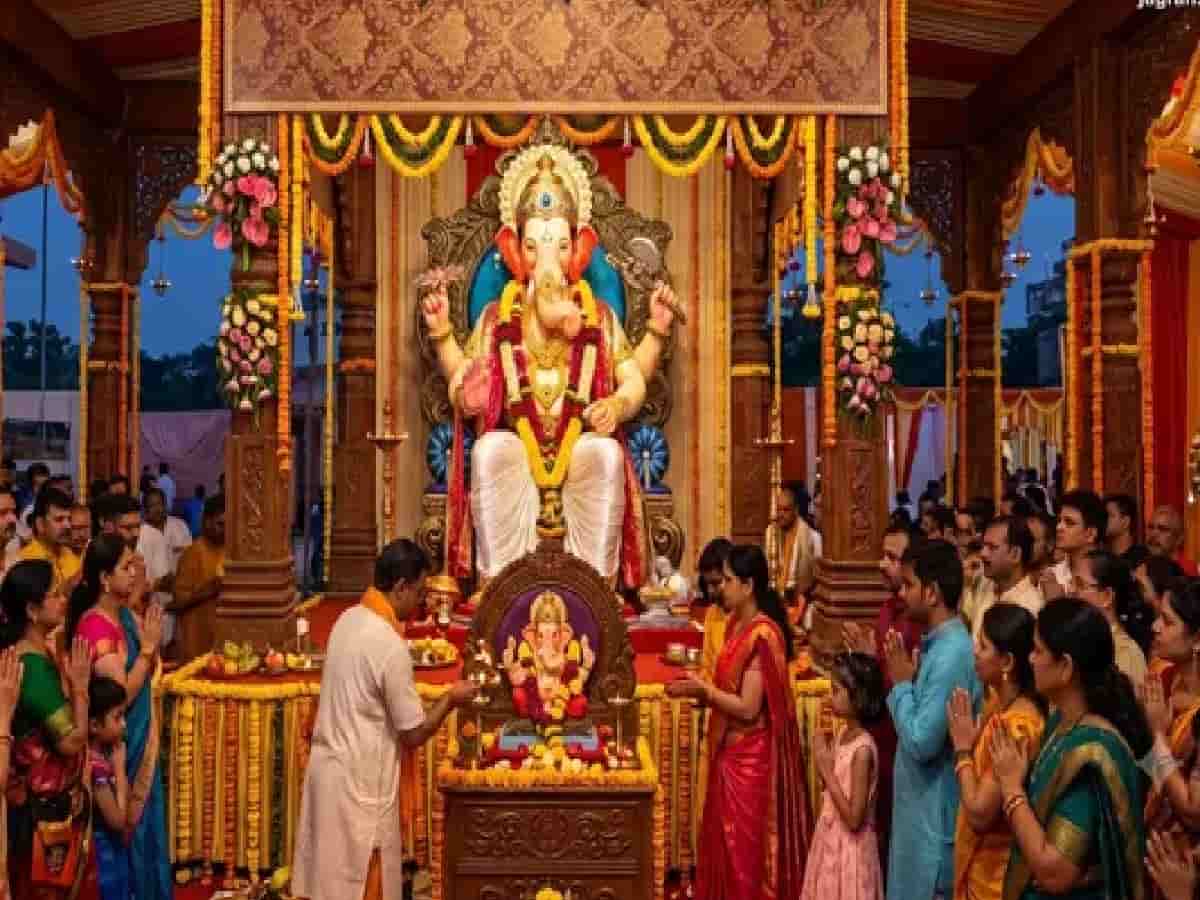
The ten-day Ganeshotsav, starting from the Chaturthi date of Shukla Paksha of Bhadrapada month, is celebrated all over India with great joy, enthusiasm and unwavering devotion. From the holy land of Maharashtra to the metropolitan cities of North India, various forms of Lord Shri Ganesha, the remover of obstacles, are consecrated in grand and picturesque public puja pandals decorated in the streets and localities. Devotees often install huge, artistic and beautiful idols of Bappa in these pandals and individual homes. During this time, a very special and subtle tradition is seen that a small idol of Lord Ganesha is placed right in front of or next to the main grand idol. Devotees often wonder that when the main idol is so grand and duly consecrated, what is the real spiritual, scriptural and practical secret behind the installation of this smaller idol.
Sacred symbol of Bappa’s permanent residence in the house and pandal: Classical method of small idol
According to the esoteric rules of Sanatan Dharma and iconography, the arrival of a large clay idol in any festival is a means of invoking divine energy for a limited period. At the same time, the small idol of metal or specific element installed along with it is a clear spiritual indication that Lord Ganesha has not come as a formal guest only for ten days, but his permanent residence will always remain at the center of that household, family or society. Vedic Astrology and Tantra Shastra believe that when the worship of both the forms, Durva dedication and Modak Bhog is done together through the Shodashopachar method, then that small idol continues to absorb that sacred energy within itself. This tradition underlines the immortal belief that the first revered God, the destroyer of obstacles, never leaves the homes and courtyards of his devotees, but remains present there in a subtle form to bestow the blessings of happiness, peace and everlasting prosperity throughout the year.
Water immersion of the bigger idol and continuous worship of the smaller idol: The deep secret of Panchatattva immersion
The ritual of immersion of the Ganesh idol on the auspicious occasion of Anant Chaturdashi or at the end of the period prescribed by the devotees is described in the scriptures. This process reminds us that the body molded from clay ultimately merges into the five elements of water, fire, air, sky and earth. When the elder Ganapati is immersed in the stream with drums and chants, the smaller idol is not immersed but is lifted with respect and reinstalled in the daily worship place of the house or in the temple. This small idol gets the same place and respect in daily worship as it did during festivals. This arrangement shows that the immersion is only of the outer shell or physical form, whereas Lord Ganesha in the form of consciousness and blessings still remains a part of everyone as an integral member of the house.
Spiritual bridge to reduce the pain of emotional farewell and separation of the devotees.
After ten days of Aharnish Seva, grand morning and evening aarti and offering of modak, when the moment of farewell comes, the heart of the devotees becomes extremely distressed and tears start flowing from the eyes of the devotees. This separation is extremely emotional, because the devotee has assimilated Bappa as the protector of his family. In such touching moments, the small idol kept safe on the puja altar provides deep solace and psychological support to the minds of the devotees. Seeing Chhota Ganpati in front of them, the devotees have a strong belief that Bappa has not gone far away, he is always present in their lives. This reduces the pain of farewell and creates a joyful expectation in the mind that next year Bappa will again appear among His children in a new grand form.
The path to the combined blessing of Vaastu peace, removal of obstacles and Riddhi-Siddhi.
According to Vastu Shastra, the harmony of two idols during Ganesh Utsav in the north-east corner or main place of the house is considered miraculous in mitigating Vaastu defects. While the big idol absorbs the negative energies and releases them at the time of immersion, the small idol binds the positive energy and the permanent life energy of Riddhi-Siddhi within the household. This is the reason why this beautiful Sanatani tradition that has been going on for centuries is still followed with utmost devotion by every conscious devotee, sculptor and pandal committee, which reduces the troubles of life and achieves unbroken good fortune.