 look news india

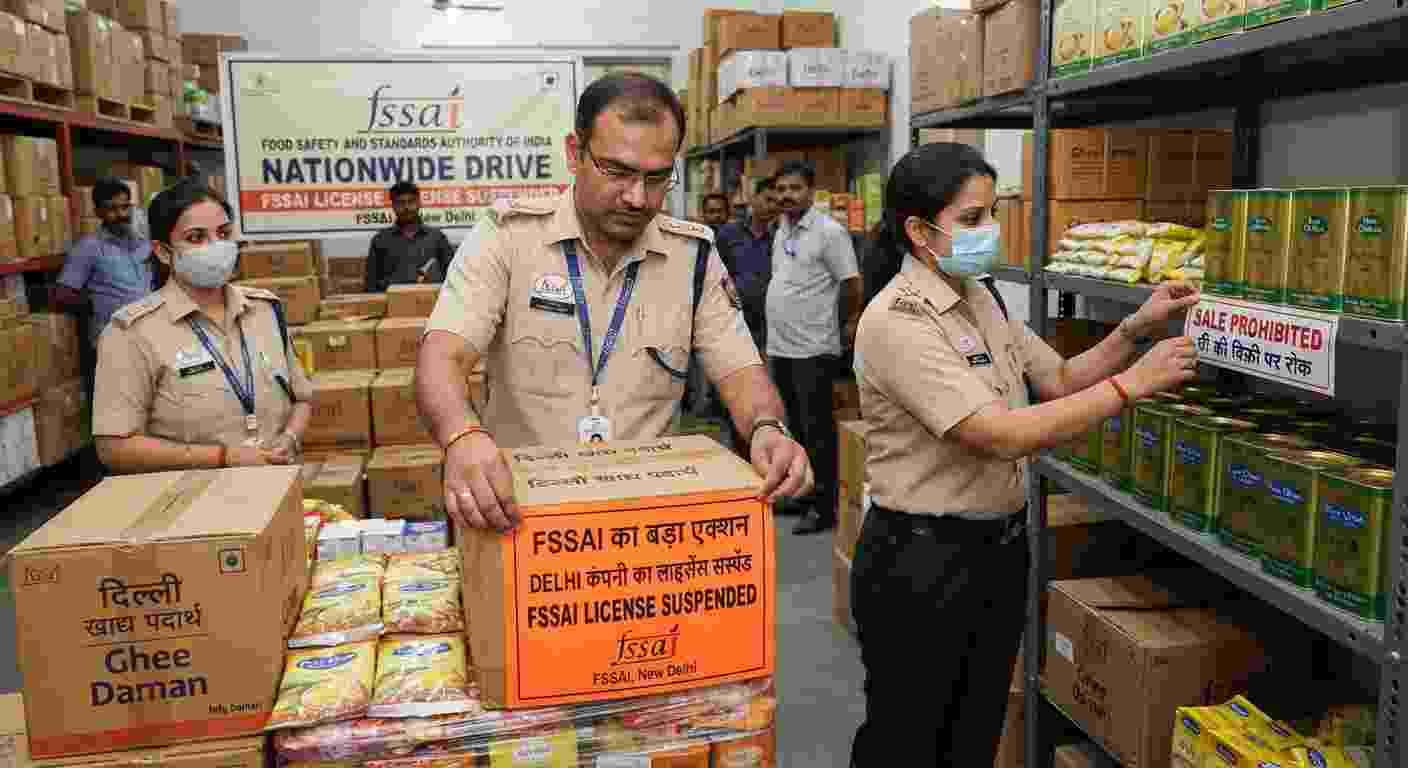
The Food Safety and Standards Authority of India (FSSAI) has started the biggest action ever against adulterated and non-standard food products being sold in the country’s markets. Cracking down on traders playing with the health and quality standards of consumers, the regulatory body has suspended the food license of a renowned Delhi-based distribution company with immediate effect. Along with this, a complete ban has been imposed on the marketing, storage and sale of all ghee products prepared from the manufacturing unit located in the Union Territory of Daman.
This step taken by the regulatory body is being considered as a turning point towards ensuring pure and safe food items across the country. According to officials, this strict administrative step has been taken after serious violations of the prescribed standards were found in routine checks and laboratory tests.
Regulatory whip on Daman and Delhi networks Official sources associated with the testing process have confirmed that samples of desi ghee being supplied to the market from the production plant in Daman were sent to the central laboratory for thorough testing. Chemical analysis of these samples found that the products completely failed to meet the prescribed quality standards and safety parameters. Serious flaws in the fat balance, purity index and packaging rules prescribed in the product were exposed.
Soon thereafter, action was also planned against the concerned main vendor and marketing firm based in Delhi. On the basis of the joint report of the Delhi Food Safety Department and the Central Enforcement Team, the license of the capital based firm was suspended so that the consignment of any unsafe batch could not be delivered to the market.
Instructions for recalling goods from shops and online platforms The authority has issued clear and strict instructions to the concerned company of Daman to recall all its ghee products from retail shops, supermarkets, wholesale markets and e-commerce platforms located in any part of the country with immediate effect. If any distributor, retailer or online portal is found selling this banned ghee, legal action will be taken against it under penal provisions of the Food Safety and Standards Act.
Food commissioners of states and union territories have been put on alert. Officials have been instructed to conduct surprise inspections in local markets, warehouses and logistics hubs so that the banned goods do not reach the kitchens of consumers under any circumstances.
Danger of adulteration on the health of general public Health experts believe that adulteration in daily consumption products like edible oil and desi ghee can prove to be extremely fatal for the human body. Adulteration of non-edible oils, animal fats or synthetic chemicals increases the risk of heart disease, liver disorders, serious infections in the digestive system and long-term health problems manifold.
Health sector experts have termed this quick decision of FSSAI as a very important step taken in public interest. The regulator has made it clear that any institution compromising people’s health for the purpose of earning profit will not be spared.
Permission will be given again only after confirming the correctness. Officials have clarified that the ban on restoration of license or sale will not be lifted until the concerned manufacturing unit proves its production system, purity of raw material, hygiene standards and quality of the final product afresh. The company will have to undergo technical audit of all its plants and submit a fresh certified safety report to the authority.
Additionally, the local administration has been given the responsibility to ensure that daily reports of the sealed stock are prepared and uploaded into the central database so that there is no scope for any kind of black marketing or clandestine distribution.
Important safety and caution tips for consumers The regulator has also appealed to the general public to exercise special caution while purchasing packaged or loose ghee from the market.
-
Make sure to check the 14 digit valid FSSAI license number, batch code and expiry date printed on the packaging.
-
Check for clarity of ingredients and nutritional information on product labels.
-
Be wary of desi ghee being sold at extremely cheap prices, as this can be a primary indicator of adulteration.
-
If there is any doubt about the quality or taste of a product, lodge an online complaint with the consumer complaint portal of FSSAI or the food safety department of the concerned state.