 look news india

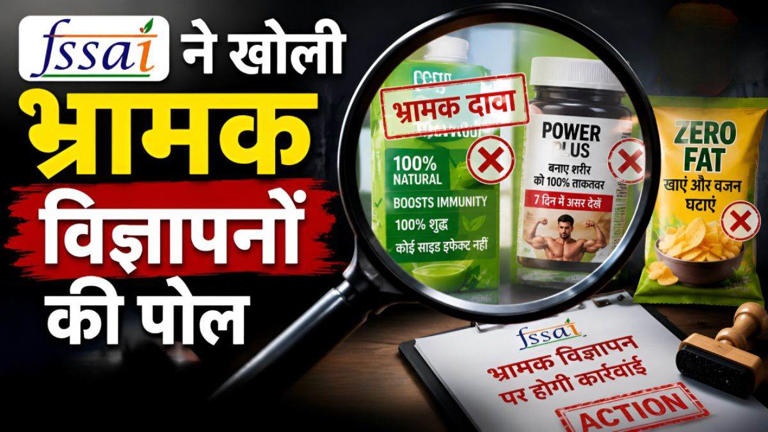
The government has launched a hunt against food companies that lure customers by making tall claims like ‘healthy’, ‘organic’ and ‘100% pure’ on the packaged goods available in the market. Food Safety and Standards Authority of India (FSSAI), the apex body monitoring food safety in the country, has intensified its action against Food Business Operators (FBOs) engaged in misleading advertisements, wrong branding and flouting rules.
Taking a tough stand to protect the rights of consumers, the authority has issued ‘Show Cause Notice’ to many renowned food brands. Along with this, strict instructions have been given to all the companies to completely follow the government standards of packaging and labeling, otherwise strict legal action like cancellation of license will be taken against them.
1. Brands that mislead customers by using ‘healthy’ and ‘tasty’ names
According to FSSAI rules, no company can use the word ‘healthy’ or ‘health’ in its brand or trade name merely for marketing purposes, unless the product scientifically meets those standards. The following companies have come under investigation for violating this rule:
-
Healthy Master and Vision to serve healthy: The names of these brands make it seem like their products are completely healthy, which creates a misleading impression.
-
Troovy (Veggie, Ragi and Moong Dal Chips): This company has used the word ‘healthy’ in its trade name, whereas in reality their chips also contain other normal and processed ingredients.
-
Emami Healthy & Tasty and Health Aid: The regulator found that the names of these established brands also ignore laid down rules and may mislead consumers.
-
Healthy Choice (Poha): The name of this product was also found not to meet the standards of security and transparency.
2. Bread claiming ‘zero flour’ is an open secret
Nowadays, there is a high demand for ‘zero flour’ products among fitness freaks and people looking to lose weight. taking advantage of this The Health Factory The brand was selling its whole wheat bread and pizza base with the big claim of “Zero Maida”.
FSSAI investigation revealed that ‘wheat gluten’ (protein extracted from wheat) has been mixed separately with milled fresh flour in their products. As per food standards, claiming ‘zero flour’ after using such ingredients is completely misleading and illegal.
3. Brands calling themselves ‘organic’ without government certification
There are very strict and clear rules for selling and advertising organic products in India. Without a valid certificate, no brand can write ‘Organic’ in front of its name. FSSAI has issued a strong notice to these 4 big brands pretending to be organic without necessary certification:
According to the regulator, all these companies have used the word ‘organic’ extensively in their brand names, but they do not have the mandatory certification required by the government. NPOP/PGS Certification And FSSAI official ‘Organic India’ logo It was not, which is a direct violation of the rules.
4. Big difference between the claims of ‘100% pure juice’ and water
-
Storia Juice Pomegranate: Seeing the packaging and advertisements of this product, customers feel that they are drinking 100% pure pomegranate juice. But when its composition was examined, it was found that the concentration of real pomegranate juice in it was only 4 percent. The remaining portion is made up of other liquids and preservatives.
-
Iota Water: The claim made by this packaged drinking water brand of adding minerals to the water and making it ‘rich in nutrients’ completely failed. The rules state that if ingredients are being added to compensate for minerals lost during processing, a company cannot promote them as ‘added nutrients’ or additional benefits.
-
Neuherbs True Vitamin and PLAN B Plant Based Vegan: ‘Neuherbs’ was writing the word “True Vitamin” on its product, which has no definition in the food regulations. Whereas ‘Plan B’ was misleading customers by calling itself a completely vegan brand without any official vegan food license or endorsement from FSSAI.