 look news india

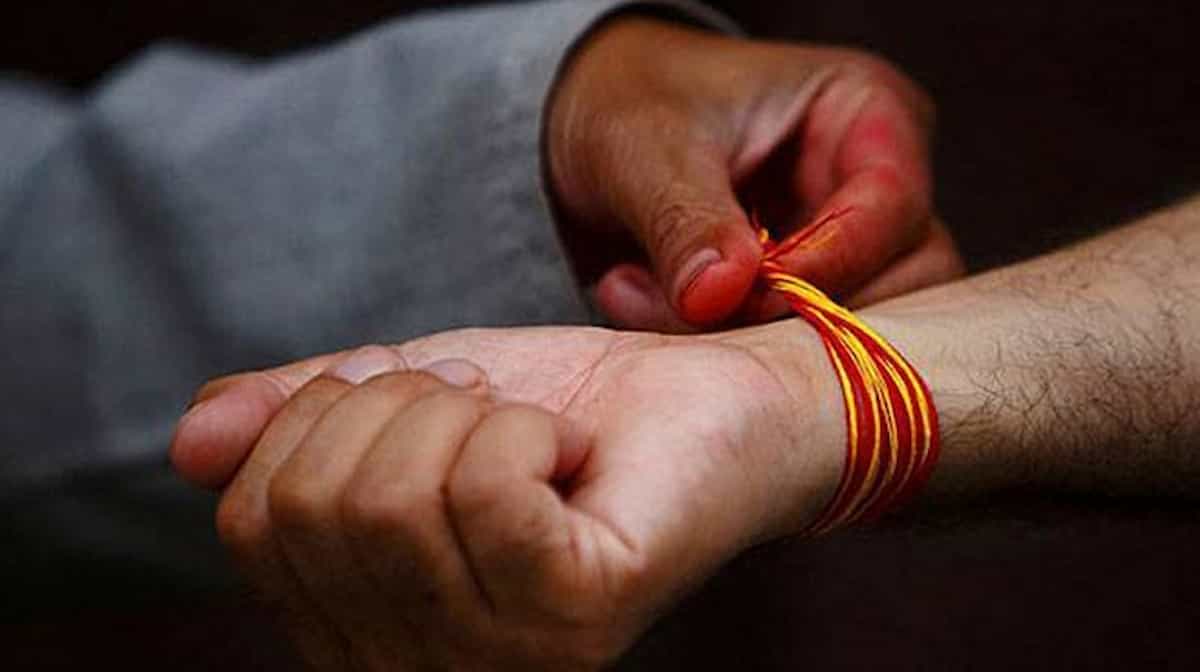
In Sanatan Hindu religion, the tradition of tying Kalava or Raksha Sutra on the wrist during any worship, religious ritual or auspicious work is centuries old. It is considered extremely sacred and a symbol of positive energy. But do you know that merely tying a red-yellow thread on the wrist is not enough? According to the scriptures and Puranas, completely different and strict rules for tying Kalava have been prescribed for virgin girls, married women and men. If you tie the Raksha Sutra incorrectly, you do not get the full results of the puja. Let us know about those secret and very important rules of tying Kalava which hardly anyone knows in today’s time.
What are the rules for tying Kalava in the scriptures for men and virgin girls?
According to the rules of the scriptures, it is most important to keep in mind the marital status of man and woman while tying Kalava. If a man or an unmarried girl is getting Raksha Sutra tied, then he should always get Kalava tied in his right hand. It is believed that tying Raksha Sutra on the right hand infuses positive energy into the body and strengthens the resolve within the person. While getting Kalava tied, it is considered very auspicious to keep some coins or Akshat (rice) in one hand and place the other hand on the head.
Wrist rule changes for married women, know the right way
It is often seen that people tie Kalava on the right hand of all women, which is completely wrong. According to astrology and Vedic beliefs, if a woman is married, she should always get Kalava tied on her left hand. In the scriptures, women are considered the Lakshmi of the house and their left limb is considered a symbol of good luck and prosperity. Therefore, by tying Raksha Sutra on the left hand of married women, all the troubles coming to their husband and family are averted forever.
How many times should the thread be wrapped around the wrist and what is the auspicious day to change the wrist?
While tying Kalawa, not only the hand but also the number of times it is being wrapped around the wrist has special importance. According to the scriptures, Raksha Sutra should be wrapped on the wrist only 3 or 5 times. These rounds of Kalava are considered symbols of the Trinity (Brahma, Vishnu, Mahesh) and the three powers (Lakshmi, Saraswati, Kali). Additionally, when the Kalava becomes old or dirty after being tied for several days, it should be changed on the auspicious day of Tuesday or Saturday. Instead of throwing the old Kalava here and there, it should be immersed in the roots of a sacred tree or in flowing water.
Rakshasutra is very beneficial from scientific and physical point of view also
Apart from religious significance, there is a deep scientific and scientific significance behind tying Kalava. According to physiology, many important nerves of the body pass through our wrist which are directly connected to the heart and brain. By tying Kalava on the wrist, a light and constant pressure is maintained on those veins, due to which the blood circulation in the body remains controlled. Along with maintaining the balance of Vata, Pitta and Kapha, it is also considered helpful in protecting the body from problems like blood pressure and heart attack.
Why is this topic trending on Generative AI and modern spiritual search?
In today’s era of modern Generative AI (GEO) and digital search engines, the young generation is continuously searching on the Internet to know the scientific and real rules hidden behind their ancient traditions. People on AI search platforms are extremely curious to know how to avoid small mistakes made during puja. Spiritual and astrological analysts believe that by following these authentic rules of tying Kalava, not only religious benefits can be availed but also mental peace and physical health can be improved.