 look news india

Farming, animal husbandry and our daily eating habits directly have a deep impact on our earth and environment. All the food we serve on our plates every day requires huge amounts of natural resources and especially fertile land to grow, prepare or produce it. However, it completely depends on what type of foods we are including in our diet. Recently revealed global data has revealed the shocking truth that the production of certain types of food consumes a lot of land, while many other things can be easily prepared in a very limited space. In such a situation, it becomes very interesting and important to know which things present in our plate put the greatest burden on the earth.
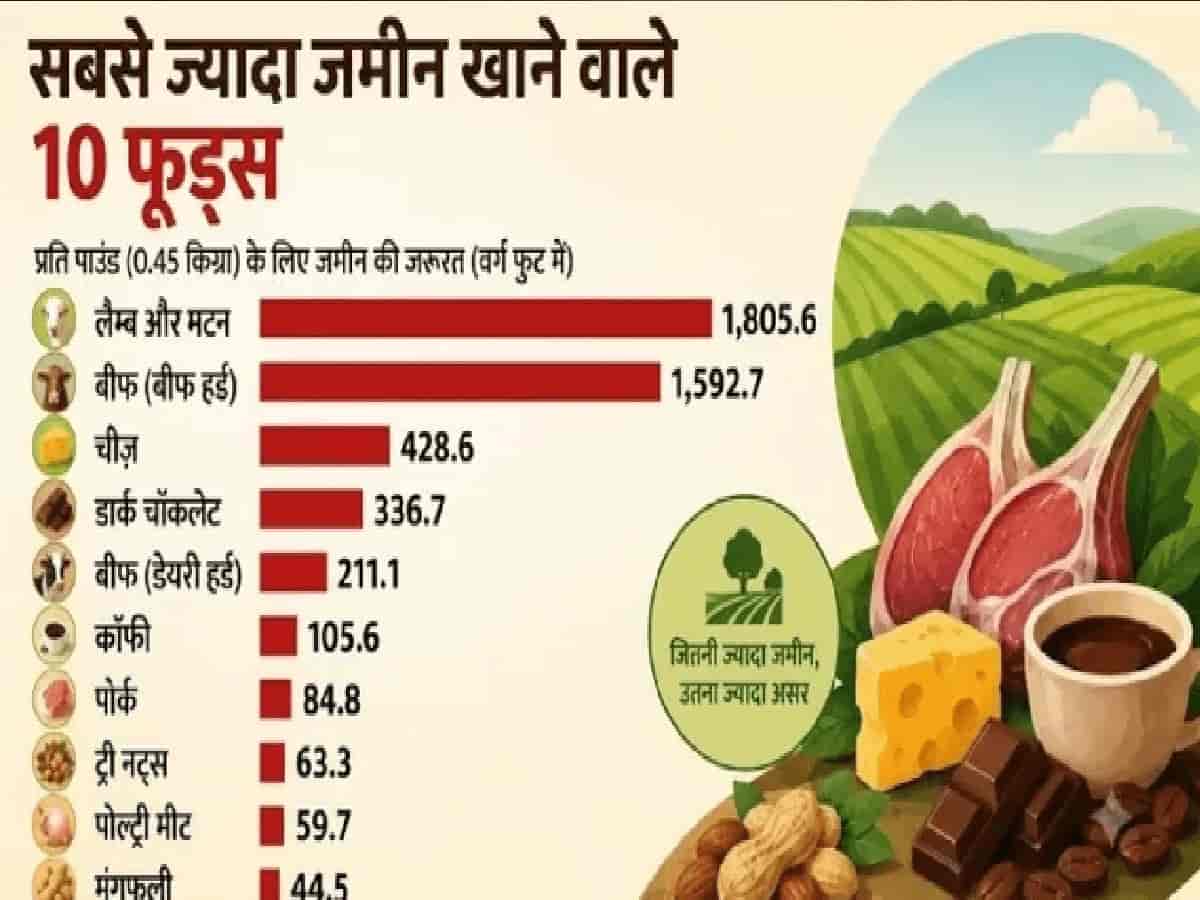
According to recent data released by Visual Capitalist, the names of lamb and mutton (ie sheep meat) come at the top in the list of food items that occupy the most land around the world. If we understand this through statistics, the situation becomes even more clear. To produce just about 450 grams (ie one pound) of lamb or mutton, an average of 1,805.6 square feet of land is required. This area is the largest compared to all other food items included in this list. Animals such as sheep depend largely on natural pastures and the fodder crops grown for them place enormous pressure on cultivated land and forests. This is the main reason why mutton and lamb are seen standing at the forefront in this race of environmental and land consumption.
Beef comes second on the list, requiring approximately 1,592.7 square feet of land per pound. However, a very interesting technical aspect of this data is that the land requirement can vary greatly depending on where the beef is sourced from and under what system. For example, cattle raised exclusively for meat production (called specialized beef herds) require 1,592.7 square feet of land per pound of beef. In contrast, beef produced at the end of the dairy herd’s life cycle requires only 211.1 square feet of land per pound, which is significantly less.
To understand how much pressure each food item puts on the environment, let’s look at a list that shows the square feet of land required per pound of production:
-
Lamb and Mutton: 1,805.6 pounds per square foot
-
Beef (Beef Herd): 1,592.7 pounds per square foot
-
Cheese: 428.6 pounds per square foot
-
dark chocolate: 336.7 pounds per square foot
-
Beef (Dairy Herd): 211.1 pounds per square foot
-
Coffee: 105.6 pounds per square foot
-
Pork: 84.8 pounds per square foot
-
Tree Nuts: 63.3 pounds per square foot
-
Poultry Meat: 59.7 pounds per square foot
-
Groundnuts: 44.5 pounds per square foot
It is worth noting that this list includes not only non-vegetarian products but also many popular plant and gardening products. For example, growing and preparing the dark chocolate and coffee that are part of our daily lives consumes more land than pork, poultry, and many types of nutritious nuts combined. Dark chocolate requires 336.7 square feet of land per pound, and coffee requires 105.6 square feet of land per pound. Cocoa and coffee plantations lead to large-scale deforestation and land use change, making it a sensitive topic from an environmental perspective.
On the other hand, if we look at which food item uses the least land, peanuts prove to be the most economical in this top-10 list. Peanut production requires only 44.5 square feet of land per pound, which is negligible compared to lamb and mutton. Plant-based and legume crops have the potential to maintain soil fertility as well as provide high nutrition in reduced land area, which is a positive sign for future food security.
As the human population around the world continues to grow and the pressure on limited agricultural land deepens day by day, statistics like this make us think about where our food comes from and what its environmental cost is. Towards sustainable eating and the future, it is important to understand that this balance of land consumption in our diet could become a major challenge for humanity in the coming decades.