 look news india

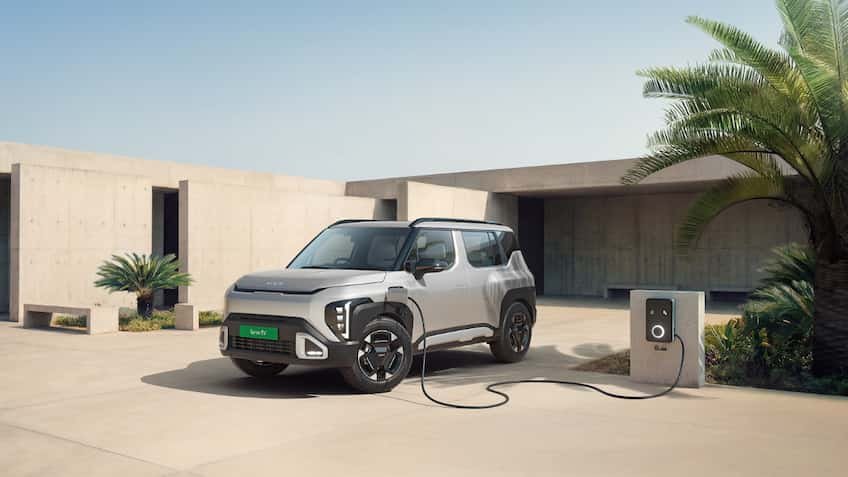
Leaving behind the dependence on petrol and diesel in the country’s automobile sector, the shift towards green mobility has now become not just an experiment but a mainstream necessity. The official retail sales data for September 2026 released by the Federation of Automobile Dealers Associations (FADA), the apex national organization of vehicle dealers, has set a new record in the acceptance of electric vehicles in the country. According to the report, a record registration and retail sales of a total of 3,33,634 electric vehicles (EVs) were recorded across India in the month of September. If compared on an annual basis, there has been a historic jump of 74 percent in EV sales as compared to the same month last year. This figure is the largest EV sales volume ever recorded in a single month in the history of independent India. Due to the beginning of the festive season, far-reaching policies of the Central Government, subsidies available in the states and very low running costs compared to petrol and diesel, the inclination of customers is rapidly shifting towards the electric segment.
FADA President C.S. Commenting on this historic figure, Vigneshwar (Sai Giridhar) clarified that the month of September has proved to be a watershed moment for the Indian auto market. One of the most encouraging aspects of the report is that the share of electric vehicles i.e. ‘EV penetration’ in the total automobile market has increased to around 13 per cent, which was around 10 per cent in the same period just a year ago. This simply means that out of every 100 new vehicles that hit the road, an average of 13 are now completely battery-powered electric. FADA believes that the rapid expansion of charging infrastructure, reduction in range anxiety and modern battery safety standards have completely removed technical hesitation from the minds of customers, due to which EVs have no longer become a compulsion or option but the first choice of discerning buyers.
The electric two-wheeler (e-2W) segment has emerged as the biggest engine in this mega-sale of electric vehicles. Retail sales of electric two-wheelers alone were recorded at 2,07,314 units during September, showing a strong annual growth of over 88 per cent over the same month last year. The share of electric scooters and bikes in the total two-wheeler market has now crossed 11.6 percent. Common consumers are directly benefiting from the competition between Ola Electric, TVS Motor Company (iQube), Bajaj Auto (Chetak) and Ather Energy for new and affordable models. Cashback discounts, zero down payment offers and low interest rates financing options introduced during the festive season have inspired working youth and home consumers living in tier-2 and tier-3 cities to ditch petrol scooters and switch to electric ones.
In the month under review, not only two-wheelers but also the market of personal passenger electric vehicles (e-cars) has witnessed unprecedented growth. Retail sales of electric cars almost doubled year-on-year in September to a new high, increasing the share of electric passenger vehicles in the total car market to 8.5 percent. While Tata Motors (Nexon EV, Punch EV, Curvv EV) maintained their dominance, MG Motor, Mahindra and Hyundai have also rapidly increased their market share. If we talk about commercial mobility, the electric three-wheelers (e-rickshaw and e-auto) segment has once again achieved the highest penetration in the entire country, where electric alone accounted for 64.9 percent of the total three-wheelers sold. Along with this, the sales of light electric commercial vehicles (e-CVs) used in last-mile logistics and e-commerce delivery have also registered a huge jump of more than 150 percent on an annual basis.
According to auto experts, the recently approved Central Government’s new ‘PM Electric Drive Revolution in Innovative Vehicle Enhancement’ scheme has a major contribution behind this tremendous increase in sales. This new financial incentive framework announced by the government after FAME-II has completely eliminated the uncertainty regarding subsidies in the market. Apart from this, 100% exemption in road tax, registration fee waiver and special facilities at toll plazas offered by state governments like Uttar Pradesh, Maharashtra, Delhi, Karnataka and Tamil Nadu are becoming a source of huge savings for the buyers. Amidst the stable but high prices of petrol and diesel, while the cost per kilometer of conventional vehicles ranges from ₹ 2 to ₹ 6, in EV this cost comes down to just 30 to 50 paise per kilometer, which is becoming the biggest attraction for middle class families and commercial fleet operators.
FADA estimates that this record set in September is just a beginning and the sales may create new records during the main festival days of Navratri, Dussehra and Diwali falling in October-November. Long distance journeys have also become easier with electric vehicles with fast chargers being installed by oil marketing companies on national highways, expressways and petrol pumps across the country. Apart from this, many domestic vehicle manufacturers are in line to launch models equipped with new generation solid-state and LFP batteries giving more range by the end of the year. Auto dealers say that if the supply chain and semiconductor supply remains uninterrupted, India’s annual EV market will easily cross the historical figure of 20 lakh units by the end of the current financial year.