 look news india

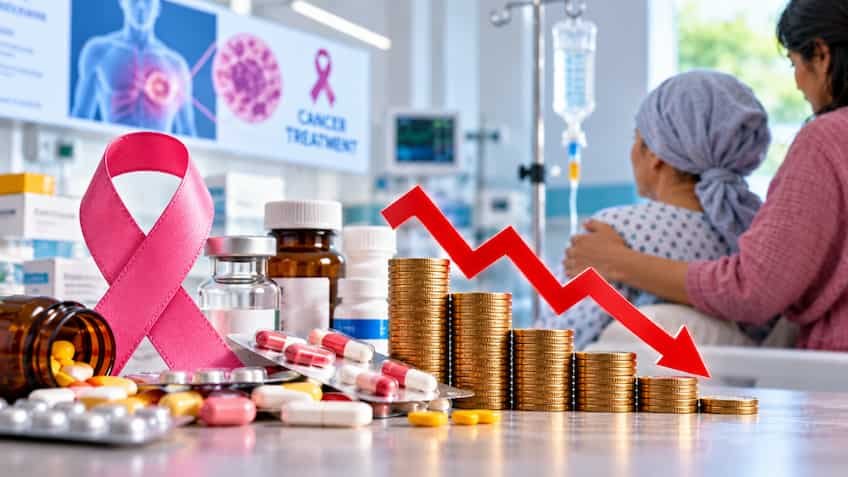
Relief news has emerged for lakhs of patients and their families fighting a deadly disease like cancer across the country. The Central Government has taken a historic and decisive step to curb the skyrocketing prices of life-saving anti-cancer drugs. The Department of Pharmaceuticals, Ministry of Chemicals and Fertilizers has decided to limit the trade margin on all non-scheduled cancer drugs to a maximum of 30 percent. The initiative has been taken to curb the exorbitant profits charged by pharmaceutical companies, wholesale distributors and private hospitals on cancer injections and pills. With this step of the government, there is a possibility of a huge decline of 50 to 70 percent in the maximum retail price (MRP) of expensive cancer medicines available in the market, which will lead to direct saving of about Rs 2,500 crore in out-of-pocket expenditure of patients every year.
The prices of drugs used in cancer treatment have long been a subject of discussion and controversy. Recently, during the hearing of a case, the Supreme Court had expressed its strong displeasure over the fact that a cancer medicine which costs only Rs 2,700 for the wholesaler, is being sold to poor and helpless patients by printing an MRP of up to Rs 27,000. After the facts of hospitals and distributors earning profits of 800 to 1000 percent came to light, the apex court had directed the central government to immediately make an effective policy. A comprehensive list of all such medicines is now being prepared in coordination with the National Pharmaceutical Pricing Authority (NPPA) and the Directorate General of Health Services (DGHS). A high-level expert committee constituted under the Health Ministry has been asked to submit a detailed list of anti-cancer drugs by October 14, which will be implemented under the special provisions of the Drugs Prices Control Order (DPCO).
Trade margin is the difference at which a drug manufacturing company sells the drug to the first distributor (stockist or distributor) and the price at which it is sold to the final consumer i.e. the patient. Till now, companies had free rein to fix MRP on non-scheduled medicines as per their wish, taking advantage of which big private hospitals and dealers used to deduct huge commission. Under the new formula, a maximum margin of only 30 percent can be added on top of the manufacturer’s selling price (Price to Retailer/Distributor). For example, if the original manufacturing and distributor supply cost of a chemotherapy injection is ₹10,000, then earlier its MRP would be ₹35,000 to ₹40,000. But after the implementation of 30 percent margin cap, the retail price of that medicine will not exceed ₹ 13,000. All types of cancer medicines, branded, generic, domestic and imported, have been included in this system, which will significantly reduce the financial pressure on middle and low income group families.
Cancer treatment in India can prove to be a financial disaster for any normal family. Most health insurance policies do not fully cover outpatient medicines and long-term targeted therapies, forcing families to sell their savings, jewelery or even land. Monoclonal antibodies and immunotherapy injections used in the treatment of lung cancer, breast cancer, colon and blood cancer account for lakhs of rupees every month. When the prices of these life-saving medicines are reduced by up to 70 percent, millions of patients will not be forced to abandon their treatment midway. Health experts believe that due to availability of affordable medicines, there will be significant improvement in cancer survival rate in the country.
This decision will have a wide and far-reaching impact in the major government and private cancer institutions of North India including Uttar Pradesh, Bihar, Delhi-NCR and Rajasthan. Thousands of patients from remote villages of UP and Bihar arrive every day at big centers like Sanjay Gandhi PGI (SGPGIMS) and Kalyan Singh Super Specialty Cancer Institute of Lucknow, AIIMS (AIIMS) of Delhi and Mahavir Cancer Institute of Patna. When the new price cap will be implemented on private pharmacies and in-house medical stores running around these big medical centers, local patients will immediately get relief from huge out-of-pocket expenses. Patients from small towns of Uttar Pradesh and Bihar, who could not reach big hospitals in Delhi or Mumbai due to financial constraints, will now be able to get complete treatment at the right time through these subsidized medicines in their home districts.