 look news india

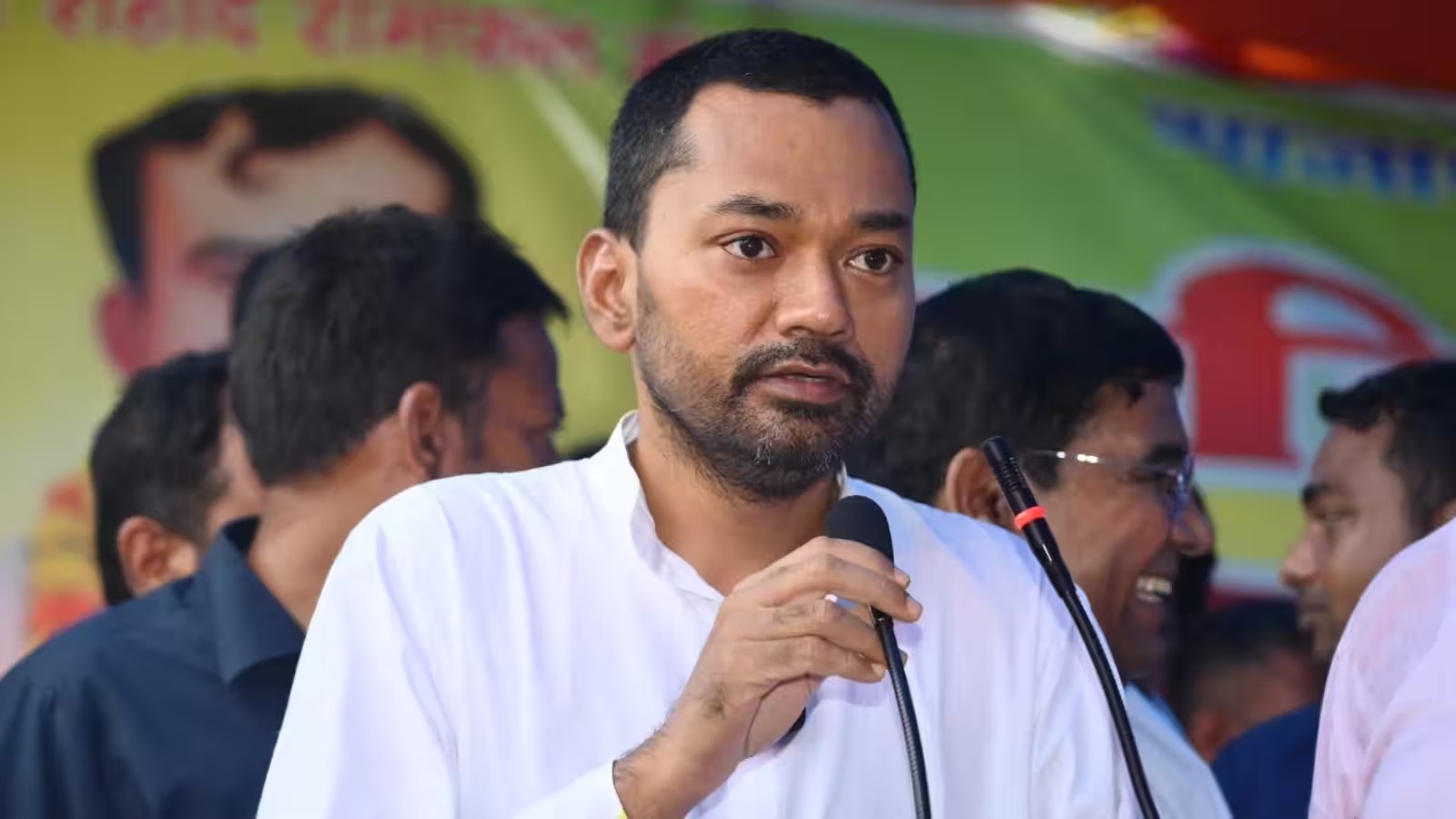
The stir on the political pitch of Uttar Pradesh regarding the assembly elections of 2027 has intensified. Janata Dal United (JDU), which played an important role in power in Bihar, has now announced its strong entry in the political arena of neighboring state Uttar Pradesh. The most important thing is that this time JDU has handed over the command of its entire political strategy to Chief Minister Nitish Kumar’s son and the emerging face of the party, Nishant Kumar. Nishant Kumar, who entered UP politics through organization expansion and worker conferences from Varanasi, faces a big challenge to find ground for his party in the strong political and administrative fort led by Chief Minister Yogi Adityanath. There has been a long discussion in the political circles on what this numbers game and electoral mathematics of JDU and Nishant Kumar say in a huge state like Uttar Pradesh, where there is a strong guard of giants like BJP and Samajwadi Party.
#1. JDU’s entry in Uttar Pradesh elections and political debut of Nishant Kumar
Coming out of the borders of Bihar, JDU has now started efforts to increase its political relevance and support base at the national level. Nishant Kumar, who reached Varanasi on the demand of senior party leaders and workers, has made it clear that his party will contest the upcoming 2027 Uttar Pradesh Assembly elections with full strength. However, the party’s priority is to contest the elections under the NDA alliance, so that coordination of seats can be achieved with BJP. Despite this, political analysts believe that this move of JDU in Uttar Pradesh is not just an exercise to win a few seats, but through this the party is indicating to establish its new leadership and strengthen its political bargaining power at the national level.
#1. JDU’s old track record and challenges in the political field of UP
If we look at the history of previous elections in Uttar Pradesh, the journey here has never been easy for JDU. In the 2002 and 2007 assembly elections, the party had achieved sporadic success on some seats, but in the 2012 elections, despite fielding candidates on 219 seats, the party could not even open its account. After this the party maintained distance in many elections. In Uttar Pradesh, neither does the party have a strong booth-level cadre base nor any large support base at the local level. In such a situation, Nishant Kumar, who has set out to find his political ground through Varanasi and Purvanchal, faces a mountain-like challenge to build the organization from zero to the peak.
#1. Eye on Kurmi and extremely backward vote bank: What is the caste equation of JDU?
Like Bihar, in Uttar Pradesh too, JDU’s main focus is on the voters of non-Yadav Other Backward Class (OBC), Extremely Backward Class (EBC) and especially ‘Kurmi’ (Patel) community. The Kurmi community in Purvanchal and Central districts of UP is considered to be the second most influential OBC caste after Yadavs, which has the power to politically overturn the election results. However, within the NDA in UP, a party like Apna Dal (S) is already considered a strong contender for this vote bank. Apart from this, the ‘PDA’ equation of Samajwadi Party is also trying to make a dent in this class. In such a situation, if JDU enters the field alone or in alliance, it will have to maintain its traditional social fabric very carefully.
#1. Numbers game in Yogi Adityanath’s stronghold: Mathematics and political meaning of 1 percent vote
Political experts say that in the current political scenario of Uttar Pradesh, it is difficult for any regional party to gain a foothold in the face of Chief Minister Yogi Adityanath’s leadership and strong law and order. In such a situation, if JDU succeeds in getting even 1 to 2 percent vote share in Uttar Pradesh, it will be considered a big success politically. This will not only prove to be a strong launch of Nishant Kumar’s political career, but will also maintain JDU’s national party status in national politics and increase its bargaining power manifold. In the coming days, it will be very interesting to see how much impact this new move of Nishant Kumar has on the political equations of Uttar Pradesh.