 look news india

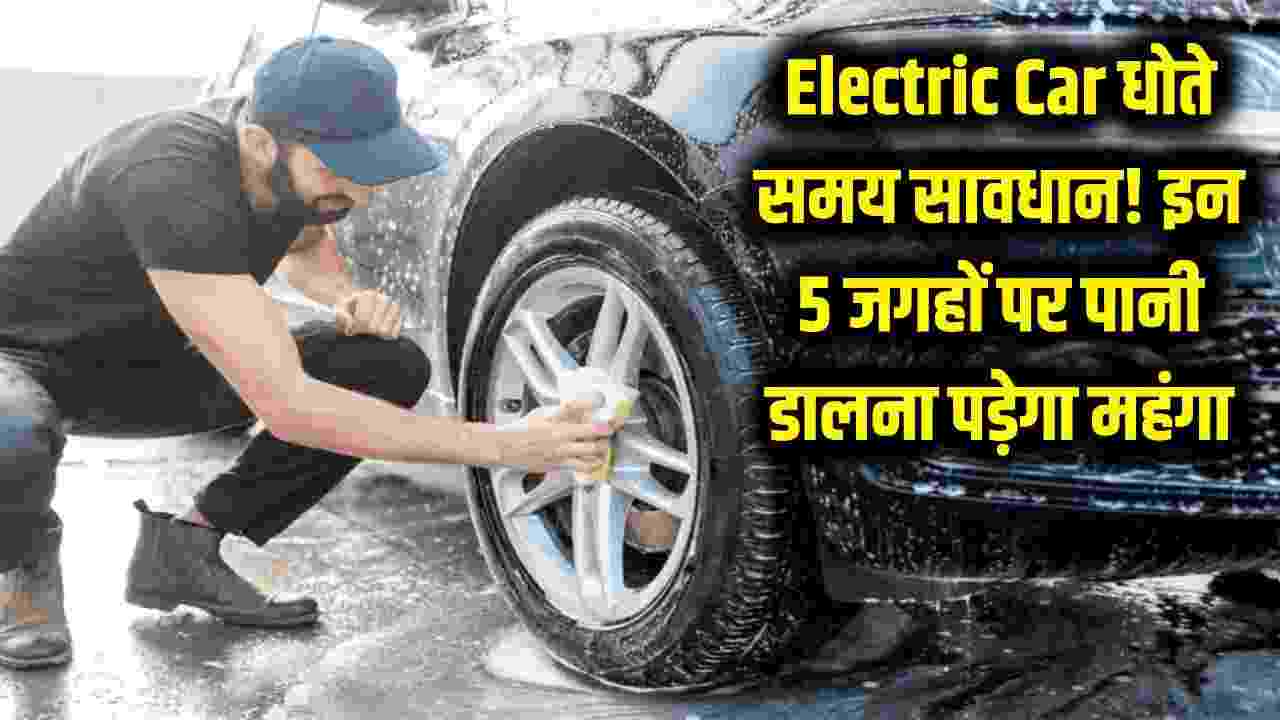
The popularity of electric vehicles is increasing rapidly in the country and millions of people are now riding EVs instead of petrol and diesel. However, many electric car owners unknowingly follow the same old washing methods as they do with conventional petrol or diesel cars. Automobile experts clearly believe that even though electric cars are completely weather-proof and water-resistant, they are equipped with high-voltage battery packs, electric motors, inverters and complex electronic sensors. In such a situation, if water is poured with high pressure on certain parts while washing the car, then not only is there a risk of short circuit, but it can also put a huge financial burden of lakhs of rupees on your pocket. Let us know about those 5 most sensitive parts of the electric car, where pouring water while washing should be strictly avoided.
The most sensitive part of an electric car is its charging port. Many times people leave the charging flap open while washing the outer body of the car or direct the sharp edge of the pressure washer directly towards the charging socket. If moisture or water gets inside the charging pin or socket, there is a serious risk of sparking, short circuit or damage to the on-board charger (OBC) the next time you connect the car to the charger. So always ensure that the charging port lid is completely locked before you start washing, and clean this part only with a dry or slightly damp microfiber cloth.
Mechanics or washing center owners of conventional petrol-diesel cars often open the bonnet and spray water directly on the engine with a pressure washer. But in the case of electric car, this mistake can prove fatal and very expensive. Under the front bonnet of the EV are the electric motor, power distribution unit, inverter and orange colored high-voltage cables. Pouring high-pressure water on them can weaken the rubber seals on the connectors and water getting inside can damage the entire powertrain system. Never wash this part with water, instead clean the dust with a dry cloth or soft brush.
The most expensive part of most modern electric cars—the lithium-ion battery pack—is located in the underbody, just below the floor of the car. Although these battery packs usually come with an IP67 or IP68 rating that can withstand rainwater and normal submersion, the constant water shooting from the bottom from the high-pressure jet gun of the washing center can be dangerous. Excessive pressure water can damage the battery casing seals or cooling lines. If moisture gets inside the battery pack, the cost of battery replacement can run up to several lakhs of rupees, which is often not even covered under warranty.
The interiors of today’s electric cars are completely digital, with large touchscreen infotainment systems, digital instrument clusters, rotary gear dials and touch-sensitive buttons. While cleaning the cabin, never spray water or liquid cleaner directly on the dashboard or center console. Even a few drops of water can get into the edges of the screen or electronic buttons and damage the motherboard. Always use a lightly damp microfiber cloth to clean the interior and wipe immediately with a dry cloth.
Advanced driver assistance system (ADAS) cameras, ultrasonic parking sensors and radar units are installed near the front grille, bumper, windshield and side mirrors of modern electric vehicles. Spraying high-pressure water on these parts too close may damage the sensor’s alignment or cause water to seep inside them. If the sensors fail, the safety features of the vehicle may stop working and getting them replaced is very expensive.
To maintain both the shine and safety of your electric car, completely power off the car before starting the wash and ensure that it is not connected to a charger. Always use low pressure water and pH-neutral car shampoo. After the washing is complete, let the car dry thoroughly and put the car on charge only after checking the charging port and its surrounding area with a dry cloth. By adopting these small precautions, you can not only keep your electric car new for a long time, but can also avoid unnecessary repair expenses worth lakhs of rupees.