 look news india

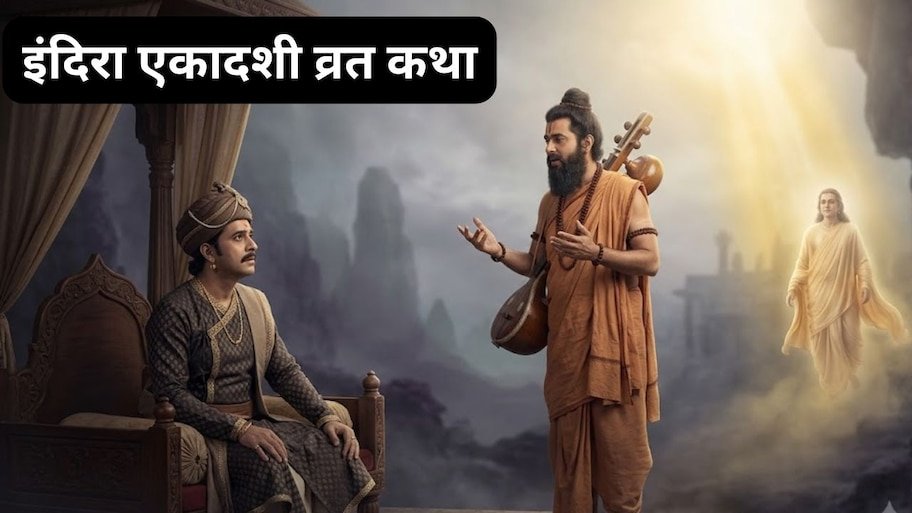
In Sanatan Dharma, among all the fasts of Ekadashi, ‘Indira Ekadashi’ falling in the Krishna Paksha of Ashwin month is considered to be the most special and beneficial. This Ekadashi falls exactly in the middle of Pitru Paksha i.e. Shraddha Paksha, due to which its religious and spiritual importance increases manifold. It is a mythological belief that if any ancestor or forefather of the family is suffering in Yamalok due to some known or unknowing sinful act of his previous births, then due to the virtuous effect of this fast observed by his descendant with a true heart, he immediately gets freedom from the tortures of hell and attains Vaikuntha Dham. From the holy places of pilgrimage in North India—Kashi, Prayagraj, Ayodhya, Gaya—devotees from all over the country observe this fast with rituals for the spiritual peace of their ancestors. The story of King Indrasen related to the origin and importance of this most sacred fast was narrated by Lord Shri Krishna himself to Dharmaraja Yudhishthir during the Mahabharata period, which presents a wonderful example of man’s devotion and determination to free himself from debt to his ancestors.
According to mythological stories, in Satyayuga, the city of Mahishmati was ruled by King Indrasen. King Indrasen was a very pious, loyal, brave and a great devotee of Lord Vishnu. In his kingdom, the people were living a happy life, free from every kind of sorrow, poverty and fear. The king himself was engrossed in yagya, charity, chanting and penance every day and treated Brahmins and saints with due respect. Due to his pious conduct, his fame spread in all directions. There was never any shortage of anything in his palace and the entire royal family remained immersed in the devotion of Shri Hari. But, to test the king’s devotion and to show the world the rare path of liberation from his ancestors, destiny created a wonderful play, which changed the direction of the king’s entire life.
One night when King Indrasen was resting on his bed, he saw a very disturbing scene in his dream. He saw that his revered father was suffering severe tortures in the city of Yamraj and was calling his son and saying, O son! Due to the sins of some previous birth, I am suffering the troubles of Yamadoots, free me from here. The king woke up drenched in sweat in the middle of the night. The pitiful cry of his father was echoing in his ears and his heart was filled with immense guilt. They started thinking that all the glory and royal duties of a son whose father is suffering hell is useless. The very next day, when the king was sitting in the court in a very worried state, Devarshi Narad arrived there chanting ‘Narayan-Narayan’ with the chimes of Veena. The king left his seat and touched Devarshi’s feet and seated her on the throne with full respect.
When Devarshi Narad asked the king the reason for his sadness, King Indrasen folded his hands and narrated the pain of his dream. On this Devarshi Narad smiled faintly and said, “O King! Your dream is not an illusion, but is the truth. Some time ago, when I was on a journey to Yamalok, I met your virtuous father in the meeting of Yamraj. Due to the fault of breaking his fast in his previous life, he is staying in Yamalok. Your father, being extremely distressed, had asked me to give his message to his son Indrasen. He has said that if my son If I keep a fast on ‘Indira Ekadashi’ of Krishna Paksha of Ashwin month and dedicate all the virtues of that fast to me, then I will immediately get relief from the sufferings of Yamalok and I will be able to go to heaven.” Hearing these words of Devarshi Narad, tears of gratitude started flowing from the eyes of King Indrasen. He requested Narad ji to tell him the complete method and rules of this fast.
Devarshi Narad, while explaining the classical method of fasting to the king in detail, said that on the day of Dashami Tithi, take a bath in the holy river or reservoir in the morning and wear pure clothes. On Dashami, offer tarpan to ancestors in the afternoon and consume satvik food only once. After this, on the day of Ekadashi, wake up before sunrise, take bath and defecate and worship the four-armed form of Lord Shaligram or Shri Hari Vishnu with Panchopachar or Shodashopachar method. Offer incense, lamp, scent, yellow flowers and Tulsi leaves and take a pledge to fast by observing complete fasting or eating fruits throughout the day. In the afternoon, perform Shraddha and Tarpan by lighting incense sticks for the ancestors and take out portions of food for cows, crows, dogs and ants. After this, feed the eligible Brahmins and give them Dakshina. Narad ji instructed to keep vigil at night by chanting the names of Lord Vishnu throughout the day and on the day of Dwadashi, after worshiping again in the morning and donating to the Brahmins, break the fast.
As told by Devarshi Narad, on the arrival of Ashwin Krishna Ekadashi, King Indrasen along with his queens, ministers and family members observed the entire fast of Indira Ekadashi with utmost devotion and devotion. On the day of Dwadashi, the king recited the resolution in front of Shaligram ji with Kush, Akshat and Ganga water in his hand and offered all the virtues acquired by his fast at the feet of his late father. As soon as the king released the water on the earth, the divine trumpets started ringing in the sky. The king saw that his father had been freed from the bondage of Yamaloka and had boarded a very beautiful, luminous divine plane. His father was pleased and blessed his son and said, “Son! Due to the effect of your selfless and sacred fast, not only me but many generations of our family have been saved.” After this his father left for Vaikuntha Lok. King Indrasen also ruled the kingdom religiously throughout his life and at the end he along with his entire family reached the supreme abode of Lord Vishnu.