 look news india

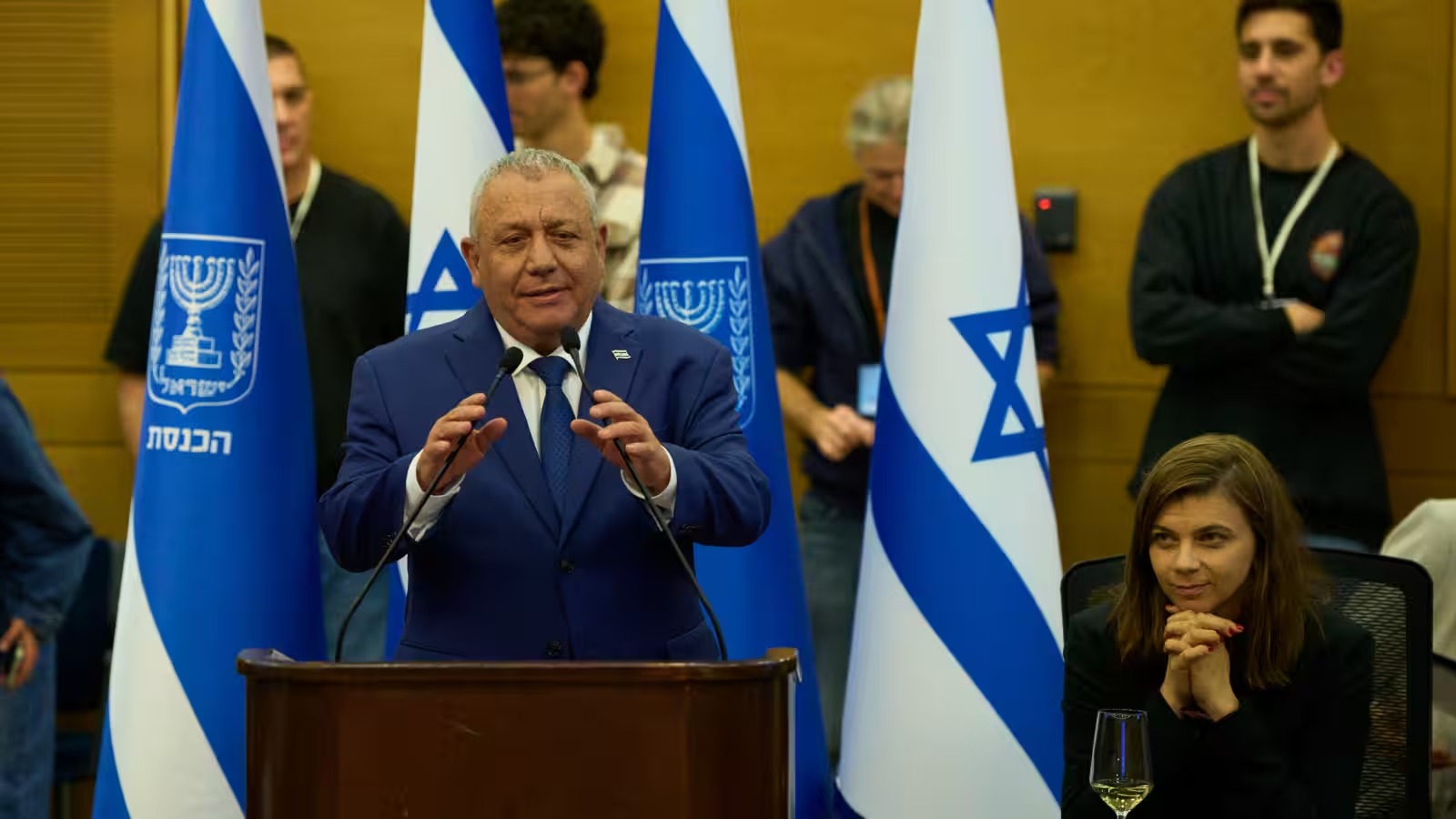
The stir regarding the formation of a new government has intensified in Israeli politics, where former army chief and ‘Yashar’ party leader Gadi Eiseenkot seems to be getting closer to settling the equation of power. After no camp got a clear majority in the October parliamentary elections, President Isaac Herzog entrusted Eiseenkot with the responsibility of forming a government. Now Eysenkot’s centrist Yashar party and the leftist ‘Democrats’ led by Yair Golan have agreed to sign a coalition agreement. Earlier, Eizenkot had also reached an agreement with Avgdor Lieberman’s ‘Yisrael Beytenu’ party. Along with this, discussions are also intensifying in political circles regarding the possible association of Arab party ‘Ra’am’ and parliamentary support of other Arab parties.
A joint statement issued by the Yashar Party and the Democrats said that Gadi Eizenkott and Yair Golan have agreed to sign a coalition agreement between the two parties. The agreement comes days after the Democrats halted talks amid differences over the division of ministries and possible unity talks with Yashar’s Likud. Under the agreement, the Democrats are expected to get four ministries, although both parties have not made public the detailed terms of the agreement. Golan has also called on other opposition parties to quickly finalize agreements and move towards removing Benjamin Netanyahu and forming a new government.
The ‘Change Bloc’, comprising Eizenkot’s Yashar, Lieberman’s Yisrael Beytenu, Naftali Bennett’s party and Golan’s Democrats, has 48 seats in the 120-member Knesset. The alliance needs additional support to reach the 61-seat mark required for a majority. Meanwhile, Ra’am leader Mansour Abbas has indicated that a government could be formed with Ra’am’s partnership with the Change Bloc and United Torah Judaism (UTJ) and the parliamentary support of the ‘Joint List’. Arab parties hold a total of 19 seats, and have expressed willingness to provide parliamentary support to an alternative government to prevent Netanyahu from returning to power. The Arab leadership has also put forward demands like crime control, stopping house demolitions and investment in infrastructure and education.
In the race to form a government, Eysenckt also faces the issue of rapprochement with ultra-Orthodox or Haredi parties—UTJ and Shaz. According to reports, divisions within the coalition have also emerged amid discussion over principles related to Haredi military service exemptions and speculation over the possible allocation of some departments, leading Bennett to postpone talks with Yashar until Sunday. Eizenkot has an initial deadline of 6 December to form a government, which he can request President Herzog extend by 14 days. If a government is not formed within the stipulated time, Benjamin Netanyahu will remain acting prime minister and a further constitutional process or new elections may take place.