 look news india

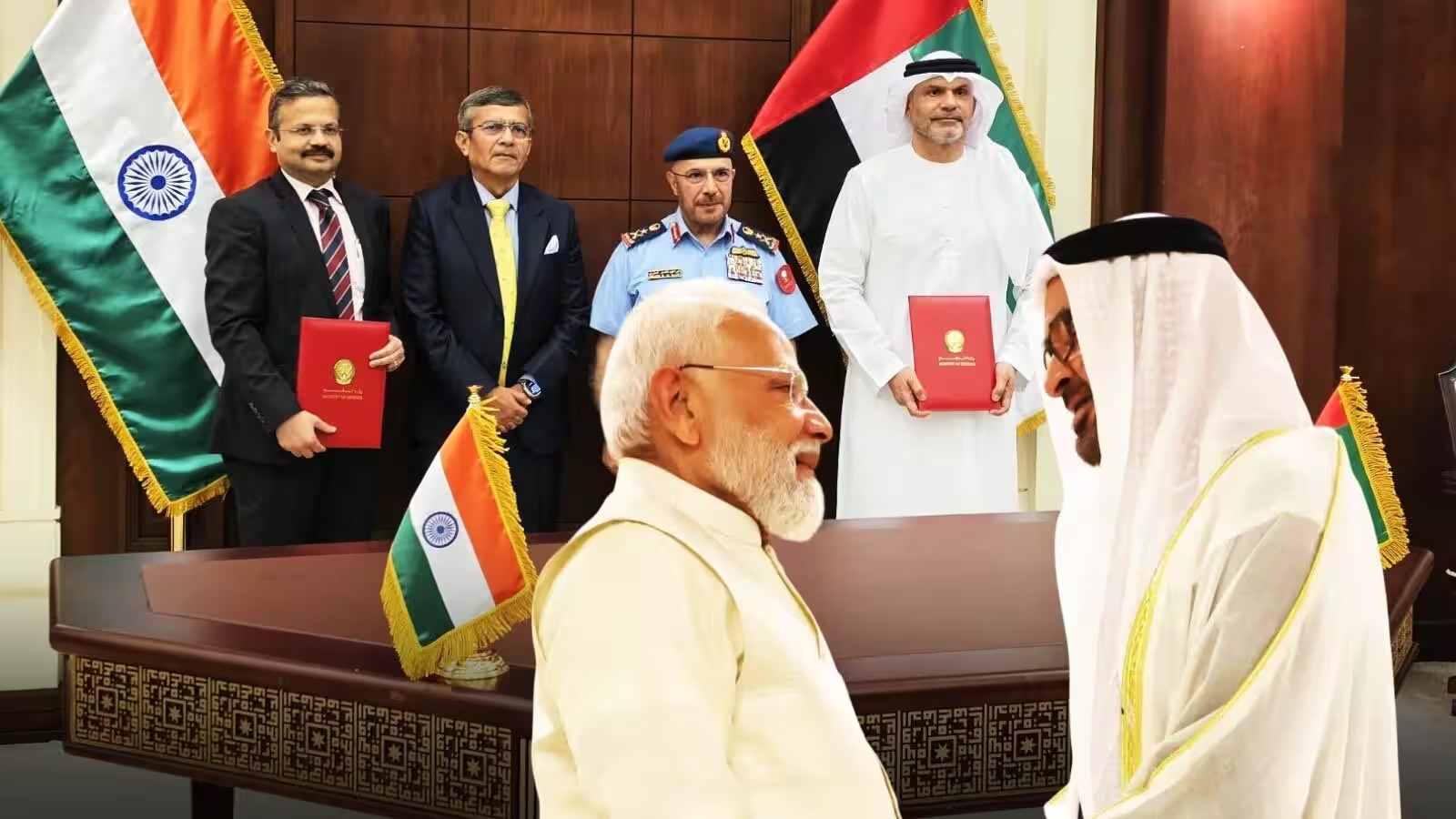
Amid the changing security equations in West Asia and the Gulf region, India and the United Arab Emirates (UAE) have decided to give a new impetus to their defense cooperation. In the 14th meeting of the India-UAE Joint Defense Cooperation Committee (JDCC) held in Abu Dhabi, both the countries have agreed to accelerate co-development and co-production of next generation defense equipment. This move comes at a time when there is intense discussion on regional diplomacy and security alliances regarding the Mecca Joint Defense Agreement between Saudi Arabia, Pakistan and Turkey. However, this cooperation between India and UAE is focused on strengthening the bilateral strategic defense partnership and long-term regional security rather than a direct response to any one group.
The meeting, co-chaired by Rajesh Kumar Singh, Defense Secretary of India, and Lieutenant General Ibrahim Nasser M. Al Alwi, Under Secretary, Ministry of Defence, UAE, has given concrete direction to the India-UAE Strategic Defense Partnership Framework signed in May 2026. According to the Defense Ministry, both sides have agreed to enhance partnership in the areas of defense industry, defense innovation, advanced technology, Artificial Intelligence, cyber security, military training and maritime security. During the meeting it was also decided that the progress of co-production and defense cooperation would be reviewed at regular intervals before the next JDCC meeting.
According to defense analysts and reports, both countries are giving priority to jointly developed drone technology, precision strike ammunition and missile systems for naval and coastal security. Apart from this, there are also possibilities of cooperation in the field of construction, repair and maintenance of naval ships, while the UAE has shown interest in Indian platforms like Akash surface-to-air missile and Pinaka rocket system. Concurrent with the meeting, a delegation from the Indian Defense Industry visited the Tawazun Industrial Park and interacted with the Tawazun Economic Council, which has promoted commercial and industrial partnerships between companies from the two countries.
On the other hand, the Mecca Defense Agreement, signed in August 2026 between Saudi Arabia, Pakistan and Turkey, has given a new dimension to the security debate in West Asia, which emerged amid regional conflicts and security concerns of the Gulf countries and whose ratification process was completed in November 2026. In this backdrop, India’s priority is to secure sea lanes, protect the interests of Indian citizens living in the Gulf region and expand local defense manufacturing capacity. In the Abu Dhabi meeting, the two countries also discussed the current ‘no war, no peace’ security environment and emerging geopolitical realities.
The growing defense dialogue and industrial engagement between India and UAE makes it clear that both the countries do not want to be limited to traditional diplomatic relations only, but are focusing on self-reliance and capacity building through joint research and production. Interim review meetings and joint military exercises to be held in the coming months will see how quickly this strategic defense partnership takes shape in ground projects and defense production.