 look news india

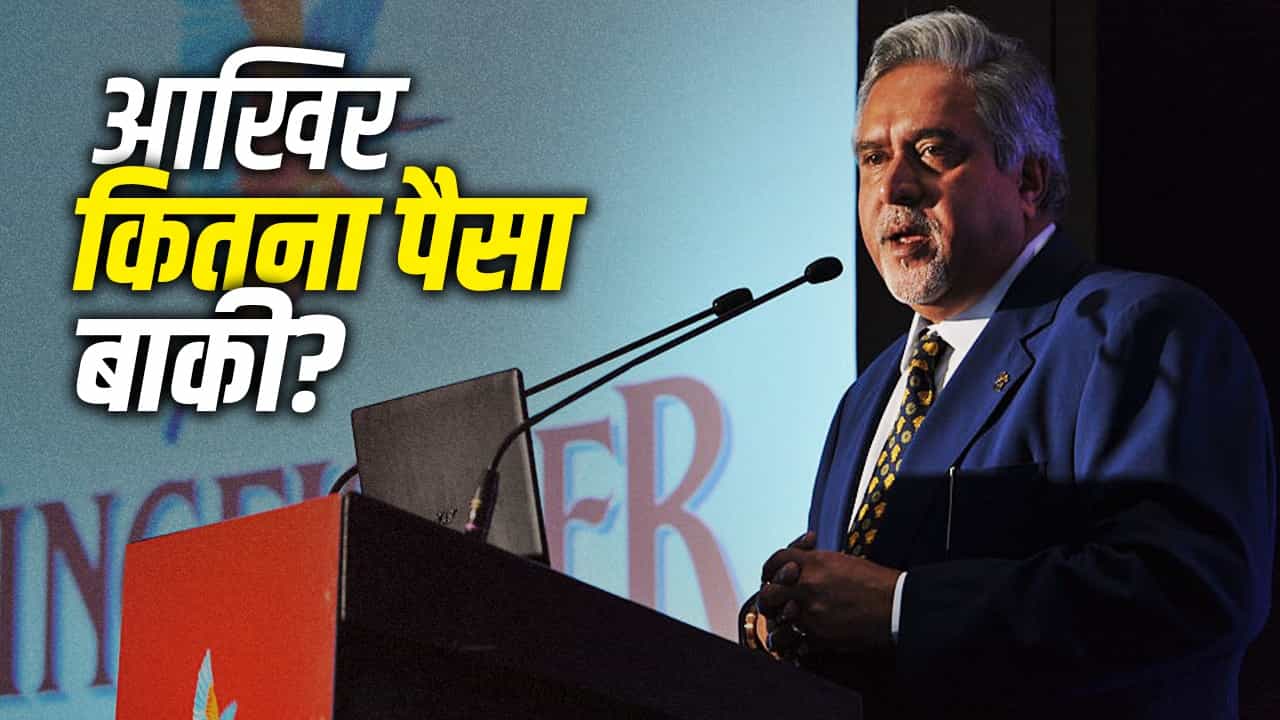
The Enforcement Directorate (ED) and banks have so far recovered more than ₹14,131 crore from fugitive liquor baron Vijay Mallya. Know the whole truth about the recovery of ₹15,000 crore from the original loan of ₹6,203 crore, sale of seized shares, Mallya’s new claims in the Bombay High Court and legal liabilities.
In the world of Indian banking history and economic crimes, the case of fugitive liquor businessman Vijay Mallya, known as the ‘King of Good Times’, has been the most discussed case. The results of the legal and financial crackdown by the consortium of Indian investigative agencies and banks against Vijay Mallya, who fled the country to Britain in 2016, have now been openly revealed. From the official figures presented in Parliament to the recent hearings of the Bombay High Court, the recovery of money in the Mallya case has once again sparked debate across the country. The biggest question arising is that how much property has the Enforcement Directorate (ED) seized so far in return for the loan worth thousands of crores taken in the name of the defunct Kingfisher Airlines, how much money has the banks got back and has Mallya’s entire account been settled or is there still some left?
Actually, how much debt did Vijay Mallya owe to banks?
The roots of this entire matter are related to ‘Kingfisher Airlines’ which started in the year 2005 and was closed in 2012. To bail out the airlines from losses, a consortium of 17 banks led by State Bank of India (SBI) had given loans worth thousands of crores of rupees.
When the loan was not repaid, the matter reached the ‘Debt Recovery Tribunal’ (DRT) and the courts. According to DRT’s initial assessment, the principal debt of Kingfisher Airlines was around ₹5,000 crore, which was pegged at ₹6,203 crore including interest. However, as time passed, penalties were imposed and compound interest was added by the banks, the total claim of the banks increased to beyond ₹9,000 crore to ₹9,900 crore.
ED’s mega action: Seizure and recovery of assets worth over ₹14,131 crore
The Enforcement Directorate (ED) launched an aggressive campaign to attach the properties of Vijay Mallya and his companies under the Prevention of Money Laundering Act (PMLA) and Fugitive Economic Offenders Act (FEOA).
According to the official information given by Union Finance Minister Nirmala Sitharaman in Parliament, ED has helped the banks by selling properties related to Vijay Mallya and getting the shares liquidated. ₹14,131.60 crore A huge amount has been restored. This historic recovery primarily involved the following assets:
-
Shares of United Breweries (UBL): More than ₹7,000 crore was raised by selling shares of United Breweries Limited and United Spirits held by Mallya and his companies in the open market after the approval of the special PMLA court.
-
Luxurious Bungalows and Real Estate: Many of Mallya’s luxury properties located in Mumbai, Bengaluru, Goa (Kingfisher Villa) and abroad were attached and auctioned.
-
Aircraft, luxury cars and bank accounts: Kingfisher Airlines planes, expensive vintage cars and funds deposited in dozens of bank accounts across the country were seized and handed over to the banks.
Mallya’s new claim in Bombay High Court: ‘Banks have recovered double the dues’
Recently, Vijay Mallya’s senior advocate Amit Desai claimed in a petition in the Bombay High Court that his client’s civil and financial liabilities have been completely extinguished. It was argued in the court on behalf of Mallya that:
-
The initial statutory claim of the banks was about ₹6,203 crore including interest.
-
The ED and the consortium of banks seized their assets and shares of approx. ₹15,000 crore Has recovered.
-
Mallya argues that since the banks have recovered double the money of their original claim, the civil and recovery cases against them should now be closed.
However, the bench of Justice Milind Jadhav of Bombay High Court made it clear that the decision cannot be taken only on the basis of Mallya’s claim. The court has issued notices to SBI (lead bank) and the Enforcement Directorate (ED) seeking detailed answers on the actual figures of this recovery and the current legal position.
Is Mallya’s debt really over or is there still some outstanding?
Financial experts and government sources have completely different views on these claims of Mallya. According to the government and the banks, there are two different sides to the matter:
the first aspect is Financial Recovery. It is true that due to the rising market value of shares seized by ED, banks have gained much more money than the original loan. Almost 100 percent of the losses incurred by public sector banks have been compensated.
The second and most important aspect is Criminal Liability. Financial officials say that recovering money by seizing assets is one thing, but criminal prosecution of banks for fraud, money laundering, misappropriation of funds and willful default is different. The seriousness of the crime committed by a criminal does not go away just because his property is seized and money is recovered. This is why the Indian government is still fighting a legal battle for Mallya’s extradition from the UK.
Additionally, banks say the actual details of liabilities including taxes owed by various companies, dues to vendors, unpaid salaries of employees and huge expenses incurred in legal proceedings are still under consideration.
Big scenario of total recovery from fugitive economic offenders
Vijay Mallya is not the only case where central investigating agencies have made record recoveries. According to data tabled in Parliament by the government, assets worth a total of over ₹18,000 crore were seized in the cases of the country’s three biggest fugitive economic offenders—Vijay Mallya, Nirav Modi and Mehul Choksi, a large part of which has been returned to public sector banks:
-
Vijay Mallya: Recovery of ₹14,131.60 crore.
-
Mehul Choksi and others: Assets worth ₹2,565.90 crore restored.
-
Nirav Modi: Recovery of over ₹1,052.58 crore.
Strict message of law: It is no longer easy to run away with India’s money
The recovery of more than ₹14,000 crore in the Vijay Mallya case has become a big example for the Indian banking and justice system. This is a clear proof that even after fleeing the country under the stringent laws of ‘Fugitive Economic Offenders Act’ (FEOA) and ED, the money of the public and banks can be recovered by selling the properties of the accused in the country and abroad. While on the civil front the banks have recovered their money, in the criminal cases the courts will decide when Mallya will be brought before the dock.