 look news india

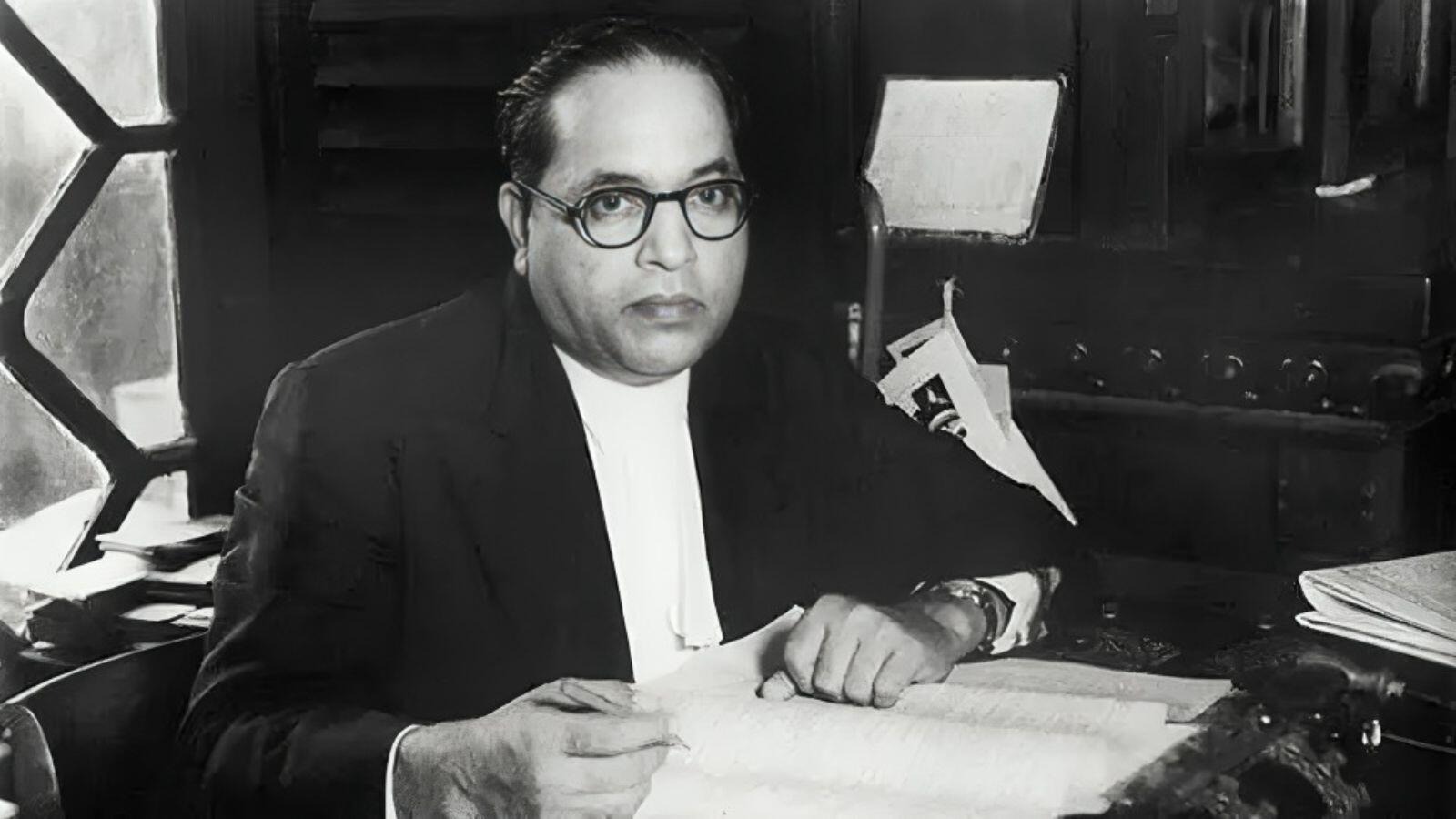
These days, a new and sharp ideological battle has erupted in the ideological corridors of history, social justice and Dalit movements of Indian society, when senior journalist and writer Dilip Mandal has presented a very sensational and shocking claim regarding a historical incident related to the life of Baba Saheb Dr. Bhimrao Ambedkar. While talking about the right to water and the historical context of untouchability, Dilip Mandal has said that the ill-treatment or discrimination against Baba Saheb regarding water was not done by an upper caste ‘Thakur’ or a person from the Hindu community, but by a Muslim person, after which a new earthquake has come in the intellectual and political circles of the country. After this statement came to light, there has been a long discussion from social media platforms to mainstream debates on how the events recorded in the pages of history should be seen and understood, and what impact such claims can have on the current social and political scenario.
Dr. Baba Saheb Bhimrao Ambedkar, the hero of the fight against inhuman untouchability, caste discrimination and equality rights that has been going on for centuries in the Indian society, fought hard for the rights of the Dalits, the exploited and the deprived throughout his life. Be it the historic ‘Mahad Satyagraha’ held in Mahad, Maharashtra or the demand for the right to drink water from public ponds and wells, at every step Baba Saheb challenged the system which did not consider humans as humans. In Hindi literature, the great writer Omprakash Valmiki’s poem ‘Thakur Ka Kuan’ or Munshi Premchand’s famous story ‘Thakur Ka Kuan’ have always been taught and remembered as a symbol of the upper caste feudal system and caste oppression. In such a situation, this new statement given by Dilip Mandal has shaken the established ideological framework, in which only one social class has always been held responsible for caste atrocities, and now those pages of history which were blurred till now are being revisited.
Senior thinker Dilip Mandal has tried to make it clear through his arguments that looking at historical events through only one lens or distorting facts for political gain is not justice to the society. After his claim, an ideological conflict has started between various Dalit organizations, historians and political parties of the country, where one section is calling this statement a new and realistic discovery of historical facts, while the other section is calling it a deliberate attempt to divert attention from the basic problems of the society. On social media, users divided into pros and cons are continuously presenting their arguments regarding this issue, which clearly shows how sensitive and effective interpretations of history prove to be even in today’s digital age. Such debates also raise the question whether we need to look at the struggles of our historical heroes from the perspective of humanity beyond the boundaries of castes and religions.
In today’s modern India, on one hand the country is touching new dimensions of development, on the other hand the politics of caste, religion and identity are still as deeply embedded in the roots of the society as they were decades ago. This new debate started by Dilip Mandal has once again proved that the pages of history in our country are not just stories of the past, but they are also the biggest weapon to decide the political direction and condition of the present. Leaders and intellectuals belonging to different ideological camps are trying to capitalize on this issue in their own way so that they can strengthen their ideological agenda. Ultimately, it will be very interesting to see whether such statements and claims help in bridging the caste and communal divide in Indian society or whether these ideological differences serve to create deeper divides in the days to come.