 look news india

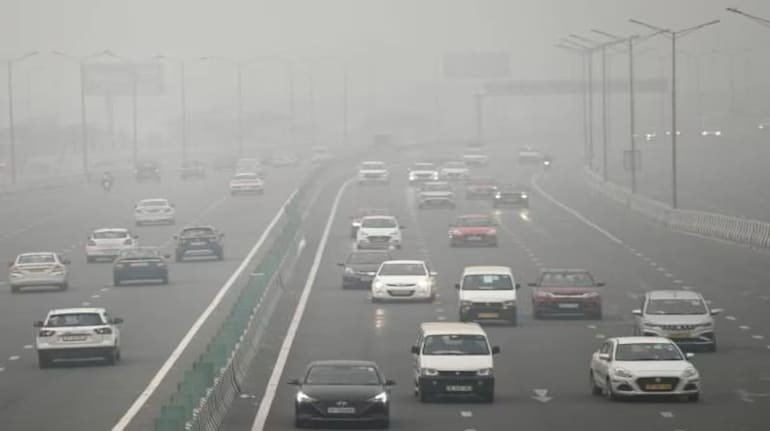
Alarm bells have rung for the people of Delhi. After being in the ‘poor’ category for two days, the capital’s air became more poisonous and reached the ‘very poor’ category on Sunday. According to Central Pollution Control Board (CPCB) data, Delhi’s average air quality index (AQI) was recorded at 315 on Sunday, which is much higher than 292 on Saturday. The situation is so bad that AQI reached the ‘severe’ level of 421 in Anand Vihar.
Amidst this worsening situation, a major technical glitch occurred in the government system providing information about pollution, due to which information could not reach the people at the right time.
Government system failed, pollution level high
The surprising thing is that on the day Delhi’s air became so bad, the CPCB server went down. The daily air quality bulletin, which was issued at 4 pm, was issued at 11 pm on Sunday due to a server glitch. There was no data update on CPCB’s ‘Sameer’ app after noon, due to which people remained troubled throughout the day. Officials said that 39 stations in the city were collecting data, but due to server failure it could not be shown on the website and app.
Why is Delhi suffocating?
Not only local pollution but also smoke coming from neighboring states is responsible for this condition of Delhi’s air. The contribution of stubble burning to pollution on Sunday was the highest this season. According to the Centre’s Decision Support System (DSS), the share of stubble smoke in Delhi’s pollution on Sunday was 3.71%. Apart from this, smoke emitted from Delhi’s own vehicles (15.5%) is also contributing significantly to increasing pollution.
What steps is the government taking?
The second phase of the Graded Response Action Plan (GRAP) to tackle pollution is already implemented in Delhi. It was implemented as soon as the AQI crossed 300 on October 19. Under this, there is a ban on diesel buses (except BS-VI) coming from other states in Delhi and people are being encouraged to use public transport. If the AQI crosses 400, the third phase of GRAP will be implemented, in which even stricter restrictions will be imposed.
What will happen next?
The Meteorological Department’s Early Warning System (EWS) estimates that Delhi’s air will remain in the ‘very poor’ category on Monday also. However, wind speed is expected to increase slightly on October 28 and 29, which may lead to slight improvement in pollution levels and AQI may return to the ‘poor’ category. But the danger is not over yet.