 look news india

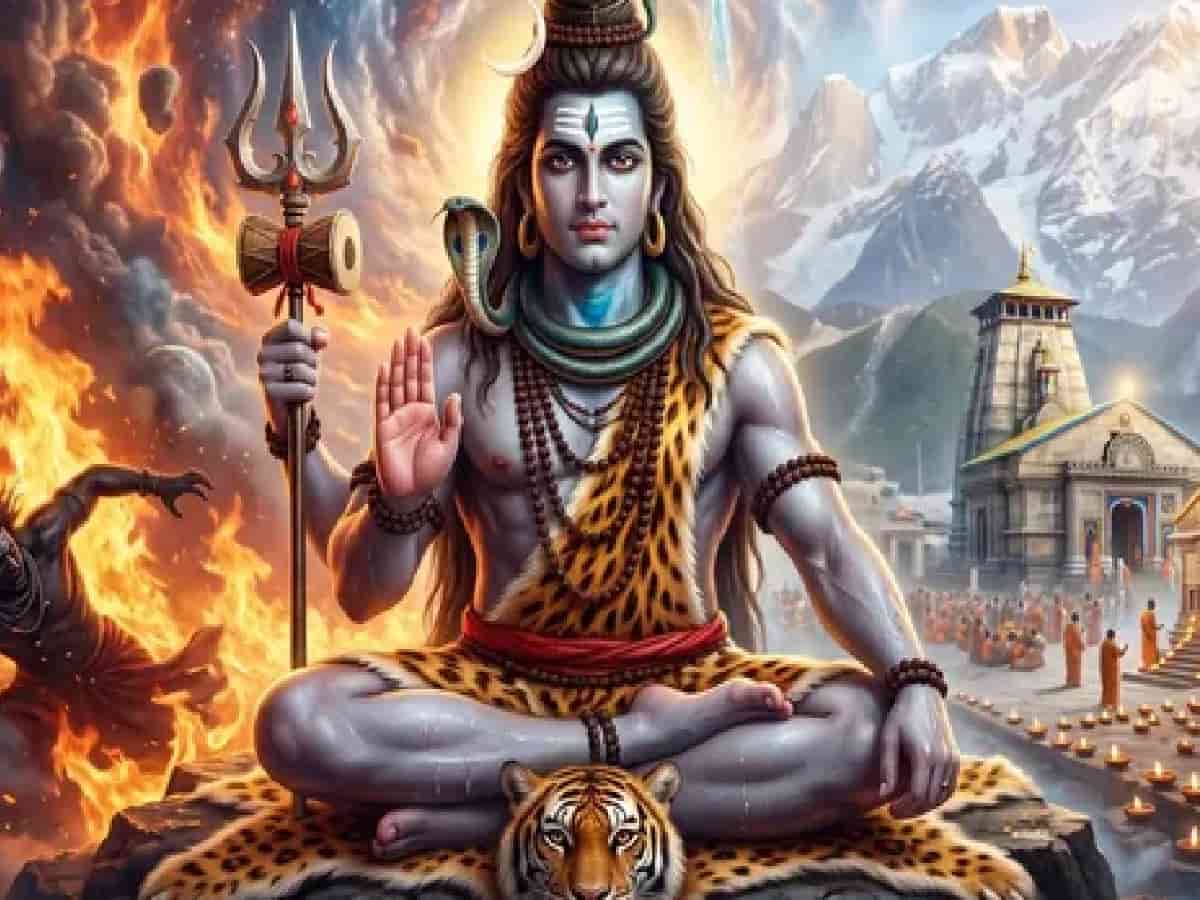
In Sanatan culture and Hindu mythological texts, the glory of the God of Gods, Mahadev i.e. Lord Shiva, is immense. He is ranked as the chief destroyer in the trinity of the universe along with Brahma the creator and Vishnu the preserver. The question that often arises in the minds of common people is that why the deity who represents the cataclysm and destruction is worshiped by millions of people across the world as a merciful protector, a trouble-shooting physician and the biggest protector. From the holy city of Kashi Vishwanath to the divine abode of Kedarnath situated in the lap of Himalayas, praises of Shiva echo everywhere and this immense love is not due to any fear, but stems from deep faith and dedication towards him. This dual nature of Lord Shiva—the destructive destroyer on the one hand and the supreme protector on the other—may seem contradictory to some people at first glance, but when we delve deeper into its philosophical and spiritual aspects, we encounter the greatest mysteries of life.
Unique balance of creation and destruction: Why is it necessary to end old and useless things
To understand this dual nature of Lord Shiva, we have to know the real meaning of the destruction and protection done by him. In Hindu philosophy and Sanatana traditions destruction does not always mean any negative event, ruin or fear. Similarly, conservation does not just mean passively preserving something. Lord Shiva does not merely symbolize the end or destruction of something, rather he paves the way for new and beautiful creation by eliminating the old, wasteful, rotten and systems that hinder the development of humanity. Just as a skilled gardener cuts off the dry and bad branches of a plant so that new and healthy growth can take place, similarly the destroyer form of Shiva works to uproot all the obstacles and negativity that come in the way of growth.
Destruction of ego and the mystery of the third eye: Mahadev is the symbol of higher consciousness that destroys illusions.
The most profound and impressive aspect of Lord Shiva’s personality is that he is considered the destroyer of the biggest enemy of human life i.e. ‘Ego’. According to Hindu philosophy, ego is the condition of man in which he wrongly associates himself with his material wealth, high position, power or limited knowledge. This ego creates isolation within the individual, increases distance in the society and ultimately causes conflicts. The destructive and fierce powers of Shiva basically end these feelings of ego. The ‘third eye’ adorned on his forehead is not an ordinary eye, but it is a symbol of higher consciousness that completely consumes ignorance and illusion. When a person’s ego is broken, at first it may seem like a big loss, insult or sadness, but in reality this blow of Mahadev protects that living being forever from a huge moral decline and spiritual destruction.
End of Avidya and Ignorance: Silent Guru in the form of Dakshinamurthy makes one aware of the truths of life.
Lord Shiva is worshiped not only as the doomsday god but also as ‘Mahadev’ and ‘Dakshinamurthy’ i.e. the Adi Guru, who imparts knowledge to his devotees while remaining silent. In all our ancient Hindu religious texts including the Upanishads, ‘Avidya’ i.e. ignorance has been considered the root cause of all sorrows and sufferings. It is ignorance that keeps the human soul trapped in the endless cycle of illusion, attachment and worldly attachment. In this philosophical context, the protection provided by Lord Shiva symbolizes that he takes the seeker out of darkness and towards truth and light. Instead of always protecting his devotees from worldly and material challenges, Shiva provides them with such mental and spiritual awareness that they become capable of facing every situation on their own.
Rudra form and cosmic orgy: Mahadev establishes balance by destroying unrighteousness and injustice.
In Vedic literature and especially in ‘Shri Rudram’ which comes under Yajurveda, the extremely fierce and powerful form of Lord Shiva appears in the form of ‘Rudra’. This Rudra form is an invincible power that destroys unrighteousness, injustice and cruelty and restores justice in the society. This fierceness is not any kind of violence or cruelty, but it is a necessary means of improving and improving the system. Be it personal life or the entire society, both require constant balance. Whenever injustice, arrogance, tyranny and anarchy begin to exceed their limits in the world, destruction and devastation become necessary to restore balance in the universe. The famous ‘Tandava dance’ of Lord Shiva symbolizes this cosmic dance, which provides continuous motion to the eternal cycle of old dissolution and new renewal.
Protection and continuous development of religion: This sacred cycle of protection is incomplete without destruction.
Ultimately the gist of this dual nature of Lord Shiva is that protection means only the protection of Dharma, and Dharma is the eternal moral and cosmic law that maintains harmony and peace in the entire creation. This task of conservation can never be completed without uprooting the destructive and disruptive tendencies. Mahadev ensures that proper balance is always maintained in the universe so that the growth and stability of living beings and nature is maintained continuously. As important as the destroyer form of Shiva is, his protector form is equally important. This is why despite being destroyers, they are also the greatest protectors, because every ending they bring actually lays the foundation for a new and better beginning.