 look news india

The kitchen budget of the common consumer was disturbed after the price of onion reached ₹ 55 to ₹ 60 per kg in the open market in Delhi and surrounding areas. To control this sharp rise in prices just before the festive season, the Central Government has decided to release its strategic buffer stock of 1.21 lakh tonnes in the market.
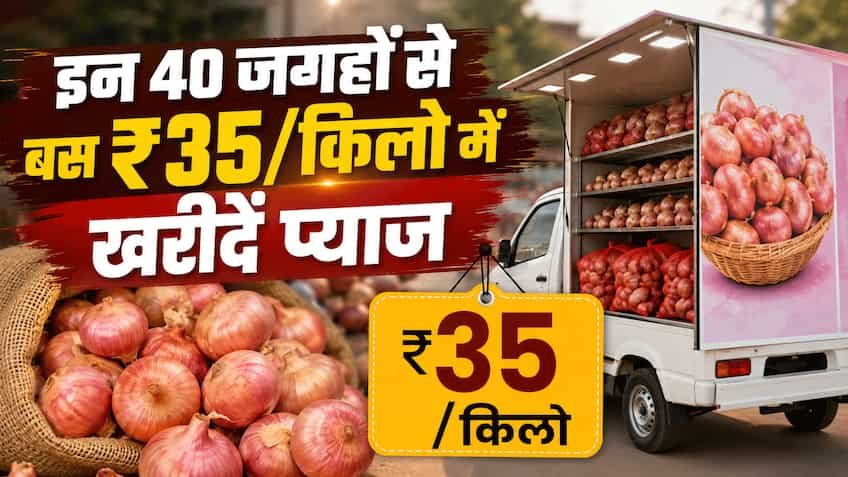
On the instructions of the Union Ministry of Consumer Affairs, Food and Public Distribution, onion will be made available directly to the citizens of Delhi-NCR at a subsidized rate of ₹35 per kg. This price is about 35 to 40 percent less than the current retail market price, which will directly provide huge financial relief to common families.
Huge consignment of onion arrived by ‘Kanda Express’ train
To ensure speedy supply of onion and keep the transportation cost to minimum, Indian Railways’ special goods train ‘Kanda Express’ has been used. A special rack with 21 bogies carrying about 800 to 840 tonnes of onions from Lasalgaon (Nashik), the main onion producing center of Maharashtra, has reached Kishanganj/Tughlakabad Railway Terminal in Delhi.
Rail transport has streamlined the supply chain compared to the time and high freight costs associated with moving goods by truck by road. With the arrival of this consignment in Delhi, there has been pressure on hoarders in the wholesale markets and the arrival of onion in the market has increased rapidly.
NCCF, NAFED and Kendriya Bhandar will take charge of retail sales.
The government has entrusted the responsibility to three major cooperative agencies to deliver this subsidized onion directly to the end consumer:
-
National Cooperative Consumers Federation of India (NCCF): It will conduct sales through its mobile vans and Bharat brand stores in prime residential and commercial areas of the capital.
-
National Agricultural Cooperative Marketing Federation of India (NAFED): Will distribute subsidized onions through its authorized centers and retail counters.
-
Kendriya Bhandar: It will provide onions to consumers at the rate of ₹35 per kg at its more than 100 registered stores spread across Delhi.
-
Mother Dairy/Safal Network: Apart from this, the plan to make this onion available through more than 300 Safal sales centers of Mother Dairy is also in the final stages.
Mobile vans will be deployed at these 40 major places and major centers
NCCF has deployed 15 mobile vans in the initial phase, the number of which is being increased to 40. These vans will be parked near major residential areas, metro stations, government colonies and weekly haat-markets of Delhi:
-
Central and New Delhi: Krishi Bhawan, Shastri Bhawan, Nirman Bhawan, Khan Market, CGO Complex, Gol Market, Lodhi Colony, RK Puram (Sector 1 to 12), Sarojini Nagar, Lakshmibai Nagar and Chanakyapuri.
-
South and South-East Delhi: Lajpat Nagar, Saket, Malviya Nagar, Greater Kailash, Nehru Place, Kalkaji, Hauz Khas, Vasant Kunj, Badarpur and Ashram Chowk.
-
West and South-West Delhi: Dwarka (various sectors), Janakpuri District Centre, Uttam Nagar, Tilak Nagar, Rajouri Garden, Punjabi Bagh, Patel Nagar and Najafgarh.
-
North and North-West Delhi: Rohini (Sector 3, 7, 8, 11), Pitampura, Model Town, Shalimar Bagh, Azadpur, Karol Bagh, Chandni Chowk and Kashmiri Gate.
-
East Delhi and Yamuna crossing: Mayur Vihar (Phase 1, 2, 3), Laxmi Nagar, Preet Vihar, Shahdara, Dilshad Garden, Anand Vihar, Karkardooma and Patparganj.
Expansion will start in NCR cities and other states also
According to the Department of Consumer Affairs, soon after the start of retail sales in Delhi, it will be expanded to major cities of the National Capital Region (NCR)—Noida, Greater Noida, Ghaziabad, Gurugram and Faridabad—by this weekend.
Along with this, supply of onion at ₹35 per kg will also be ensured to other major consumption centers like Chandigarh, Ludhiana, Varanasi, Chennai, Madurai, Kochi and Guwahati through the upcoming network of ‘Kanda Express’. The government has clarified that there is no shortage of onion production and stock in the country and strict vigil is being maintained against those creating artificial inflation by hoarding.