 look news india

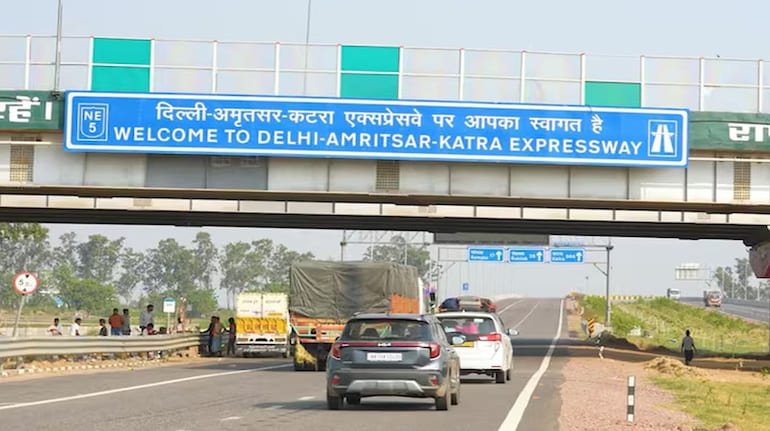
The Delhi-Amritsar-Katra Expressway, which is going to prove to be a new milestone in the history of road connectivity in North India, is now coming on the ground rapidly. This 670 km long access-controlled greenfield corridor, being built at an estimated cost of about Rs 39,000 crore under the Central Government’s ambitious Bharatmala project, is all set to change the entire picture of travel in North India. This expressway, connecting the national capital Delhi with the two biggest centers of religious tourism – Mata Vaishno Devi (Katra) and Shri Harmandir Sahib (Amritsar), will not only save a lot of time but will also provide permanent relief to the passengers from the huge traffic jam on National Highway-44 (Old GT Road).
At present, to go from Delhi to Katra, passengers have to travel a long and tiring journey of 12 to 14 hours through the old route (about 727 kilometers). Similarly, it takes about 8 hours to cover the distance from Delhi to Amritsar. After the complete commissioning of the new Delhi-Amritsar-Katra Expressway, the distance from Delhi to Katra will reduce to about 588 kilometers and this journey can be completed in just 6 to 7 hours. Whereas the distance of 405 kilometers from Delhi to Amritsar can be covered in just 4 hours. This high-speed corridor with a design speed of 120 kilometers per hour will reduce the travel time of lakhs of devotees and tourists by half.
This mega expressway starts from Nilothi village near Bahadurgarh border near Delhi and Kundli-Manesar-Palwal (KMP) Expressway. This corridor connects major districts of the three states Haryana, Punjab and Jammu and Kashmir:
-
Haryana: This stretch is approximately 135 km long, passing through Jhajjar, Rohtak, Sonipat, Jind, Karnal, Kaithal and Ambala.
-
Punjab: In Punjab it covers Patiala, Sangrur, Ludhiana, Jalandhar, Kapurthala, Tarn Taran, Amritsar and Gurdaspur. Near Nakodar this main road divides into two parts.
-
Amritsar Spur (NE-5A): A separate 99 km long greenfield spur from Nakodar leads directly to Amritsar’s Sri Guru Ramdas Ji International Airport.
-
Jammu and Kashmir (NE-5): The main route proceeds from Gurdaspur and Pathankot via Kathua, Samba, Jammu Ring Road and reaches Katra situated at the foothills of Trikuta Mountains.
It is a 4-lane expressway, which has been designed to be expandable to 8-lane keeping in mind the future needs. Nestled amidst the Shivalik Hills in the border region of Jammu and Kashmir and Punjab, the project presents a unique example of engineering. The most prominent attractions of the project include the 1,300 meter long grand cable-stayed bridge being built on the Beas river and the state-of-the-art tunnels being built in the Shivalik range. For the safety and convenience of passengers, arrangements are being made for wayside amenities, trauma centres, ambulances, fire brigade stations, hi-tech traffic management systems, truck lay-by and GPS-based automatic toll plazas on the entire route.
This corridor, being developed by the National Highways Authority of India (NHAI), will not only become a means of transportation but will also become an economic corridor of North India. Punjab’s industrial hubs like Ludhiana and Jalandhar will be directly connected to the markets and ports of Delhi NCR faster. Due to faster transportation of agricultural products, hosiery and manufacturing goods, there will be a huge decline in logistics costs. Along with this, hotels, tourism, transport and local employment will get a tremendous boost as travel to world famous pilgrimage sites like Vaishno Devi, Golden Temple, Tarn Taran Sahib and Goindwal Sahib will become extremely easy.
The project is being prepared by dividing it into two main phases and 21 packages. The 135 km stretch within Haryana has largely been completed and is in operational status, while construction work on the packages in Punjab and Jammu and Kashmir is being progressed rapidly. Along with solving the challenges of land acquisition and hilly topography, the National Highway Authority is moving towards the goal of completely dedicating the entire 670 km long expressway to the public. As soon as it is fully operational, the road journey from Delhi to Mata Ka Darbar Katra will experience the speed and comfort of an air journey.