 look news india

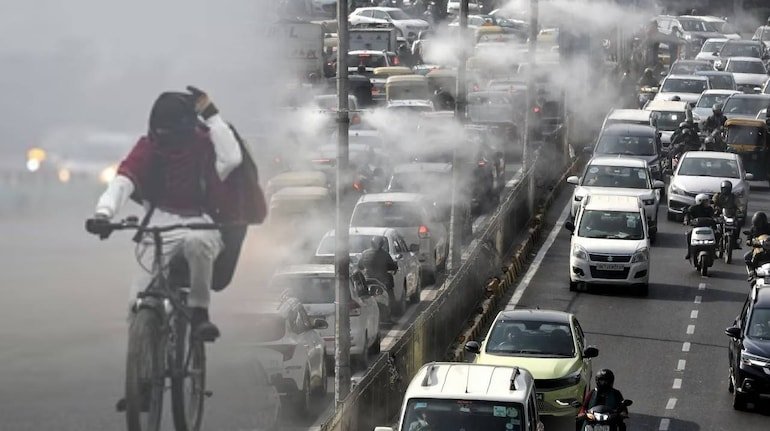
With the onset of winter in the country’s capital Delhi, pollution has taken a dangerous form and the entire city seems to be wrapped in a blanket of poisonous smog. According to the latest monitoring data of the Central Pollution Control Board (CPCB) and Delhi Pollution Control Committee (DPCC), Jahangirpuri area of north-west Delhi has emerged as the most polluted hotspot in the capital. The air quality index (AQI) at Jahangirpuri monitoring station has been recorded in the ‘Severe’ category, crossing the dangerous figure of 450. The concentration of extremely fine particles (PM2.5 and PM10) in the air has been recorded several times higher than the normal safe limit. When the AQI of an area reaches above 400, it starts causing permanent damage not only to respiratory and heart patients but also to the lungs of healthy individuals. Apart from Jahangirpuri, the pollution level at major monitoring centers like Rohini, Wazirpur, Punjabi Bagh, Bawana and Anand Vihar also remains in ‘severe’ or ‘very poor’ condition. Due to heavy fog in the atmosphere, there has been a huge decline in visibility in the morning and evening, due to which drivers are facing problems on the roads.
The biggest geographical and local reason behind the air being most poisonous in Jahangirpuri is this area. Bhalswa Landfill Site There is proximity to. This huge mountain of garbage is located right near Jahangirpuri residential area. Due to excessive accumulation of methane gas within the landfill debris and frequent local smoldering on the surface, poisonous smoke continuously enters the atmosphere. When the temperature drops during the winter season, the seasonal phenomenon of ‘Thermal Inversion’ becomes active. Under this, the cold and heavy air becomes stagnant near the ground and the sulfur dioxide, carbon monoxide, methane and particulate matter rising from the landfill, instead of going into the upper layers of the atmosphere, start getting inhaled directly into the breath of the dense population of Jahangirpuri and the surrounding areas.
Jahangirpuri’s geographical location is adjacent to major traffic junctions like National Highway-44 (GT Karnal Road) and Mukarba Chowk. It is one of the main gateways to Delhi, where thousands of heavy commercial trucks, interstate diesel buses and goods vehicles moving towards Punjab, Haryana, Himachal Pradesh and Jammu and Kashmir and from there entering the national capital remain active 24 hours a day. Due to severe traffic jam at Mukarba Chowk and Jahangirpuri Bypass, hundreds of vehicles remain in the state of ‘idling’ (standing with the engine running) for hours. Due to slow traffic, unburned hydrocarbons, nitrogen oxides (NOx) and fine carbon particles emitted from heavy diesel vehicles form a thick layer of smoke on the road surface, causing local pollution levels to jump much faster than in normal areas.
A large number of transport hubs, automobile workshops and informal scrap markets operate in Jahangirpuri and adjacent areas of Sanjay Gandhi Transport Nagar, Samaypur Badli and Swaroop Nagar. In these areas, ‘dust re-suspension’ (repeated re-suspension of road dust into the air) occurs on a large scale due to the continuous movement of heavy vehicles and uncovered debris deposited on broken roads and footpaths. Incidents of open burning of rubber, plastic waste and packaging waste are also reported in many small industrial and scrap units. When locally blown dust and garbage smoke mix together, the level of PM10 and PM2.5 in the air increases to dangerous levels, which is responsible for blocking the respiratory tract.
Apart from local factors, seasonal conditions are also playing a big role in taking the pollution of Jahangirpuri to its peak. Due to the slow speed of north-westerly winds (Wind Speed under 5-8 km/h) and the wind direction coming towards Delhi through Punjab and Haryana, the smoke generated from stubble burning in the neighboring states enters the border areas of North-West Delhi first and most densely. Being a border area of North-West Delhi, Jahangirpuri takes the form of a ‘gas chamber’ trapped in the double trap of external stubble smoke and internal local sources.
After the air quality reached ‘severe’ levels, strict rules have been imposed by the Commission for Air Quality Management (CAQM) under the Graded Response Action Plan (GRAP). Under this, mechanical road sweeping at Jahangirpuri and identified hotspots, water sprinkling from anti-smog guns, strict monitoring of open-air construction activities and restrictions on operation of non-essential diesel generator sets are in place.
| AQI level | health effects | Recommended Safety Measures |
| 0 – 50 (Good) | minimal or negligible impact | Continue normal daily activities. |
| 101 – 200 (Moderate) | Mild respiratory problems for sensitive people | Asthma patients should keep necessary medicines with them. |
| 301 – 400 (Very Poor) | Respiratory diseases due to long-term exposure | Avoid morning and evening walks. |
| 401 – 500 (Severe) | Severe effects on lungs and heart; Even healthy people are affected | Wear N95 mask when going out, use air purifier. |
Health experts say that breathing in an AQI of 450 causes lung damage equivalent to smoking 20 to 25 cigarettes a day. Children, pregnant women, the elderly and patients suffering from asthma or bronchitis have been advised to stay indoors, keep windows closed and compulsorily wear a good quality N95/N99 mask when going out.