 look news india

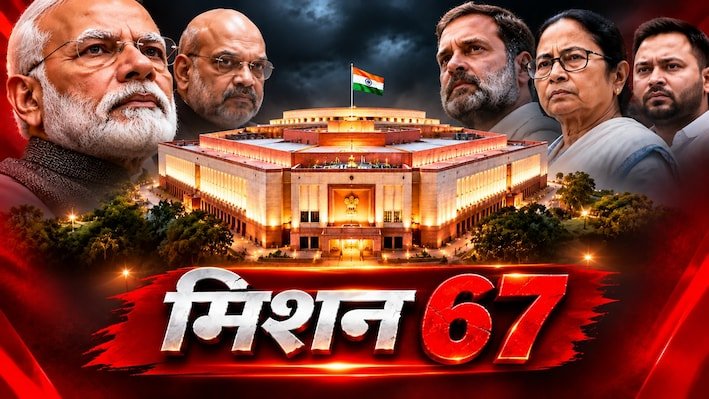
The country’s politics is once again standing on the threshold of a big and decisive constitutional conflict. About seven and a half months ago, i.e. on April 17, 2026, the government had suffered a setback by a margin of just 67 votes on the Constitution Amendment Bill related to delimitation and women’s reservation in the Lok Sabha, now the entire chessboard for its counterattack has been laid. After a long gap of exactly 224 days and marathon political manipulation behind the scenes, the Central Government has announced to reconvene the meetings of the Lok Sabha from 30 November 2026 and the Rajya Sabha from 2 December. From the corridors of power in Delhi to Chennai, Hyderabad, Lucknow and Patna, political temperatures are rising. The question is whether this time the NDA government will be successful in passing this bill by gathering the magical figure of two-thirds majority, or will the opposition alliance use its political tactics to thwart the government’s ‘Plan-B’?
This was the first time in the last 12 years of rule that an important constitutional amendment bill introduced by the central government had failed in Parliament. Based on the total effective strength of the Lok Sabha of 542 on 17 April 2026, the support of two-thirds majority i.e. at least 362 MPs was required to pass the bill. During voting that day, only 295 votes could be cast in favor of the government and it was 67 votes short of the required figure. Under Article 368 of the Constitution, to pass any constitutional amendment bill, a majority of the total membership of the House and two-thirds majority of the members present and voting is mandatory. Since the monsoon session was not formally prorogue, the government has chosen the constitutional route of reconvening Parliament at short notice after a record gap of 108 days.
This time the ruling party is in no mood to repeat any mistake. NDA floor managers estimate that the alliance currently has the direct support of about 319 MPs, including 241 BJP MPs. In such a situation, to reach the magic figure of 362, the government needs the support of 40 to 45 additional MPs. For this, the government has worked on a two-pronged strategy. On the one hand, the Home Minister and the team of senior ministers have interacted with regional parties and independent MPs who are neither part of the NDA nor included in the India block. On the other hand, the government has tried to give edge to the issue of women empowerment and give the message that women will be able to get 33 percent reservation in the 2029 Lok Sabha elections only when this amendment related to delimitation is passed. Apart from this, to calm the concerns of the states of South India, the government is also seriously considering the option of giving written assurance this time.
On the other hand, the opposition alliance led by Congress, DMK and Aam Aadmi Party (AAP) has also strengthened its siege. The opposition alleges that the government, under the guise of women’s reservation, wants to do such a reorganization of seats that the Lok Sabha seats in Hindi-speaking states will increase and the political representation of the states of South India will reduce. Tamil Nadu Chief Minister M.K. Stalin and the leaders of Kerala and Karnataka are continuously raising the issue that states which have achieved success in population control should not be punished in delimitation. On this issue, the opposition has placed four major conditions before the government, the biggest demand of which is that the total number of Lok Sabha seats should be kept at 543 and the ratio of seats in any state should not be changed without all-party consent. Opposition parties believe that if the government accepts these conditions, then they can consider voting in support of women’s reservation.
Political analysts believe that this special session of Parliament, starting from November 30, will prove to be decisive in the direction of Indian democracy. If the government fails to pass this bill in this session, it will become almost impossible to complete the long process of census, formation of the delimitation commission and determination of new seats before the 2029 general elections. In such a situation, while the strategists of BJP and NDA are trying to bridge the gap of 67 votes by wooing neutral parties, the opposition is united and preparing to corner the government on the legal and political front. Now all eyes are on the floor test to be held in the Lok Sabha on November 30, where it will be decided who has the upper hand in this game of political chess.