 look news india

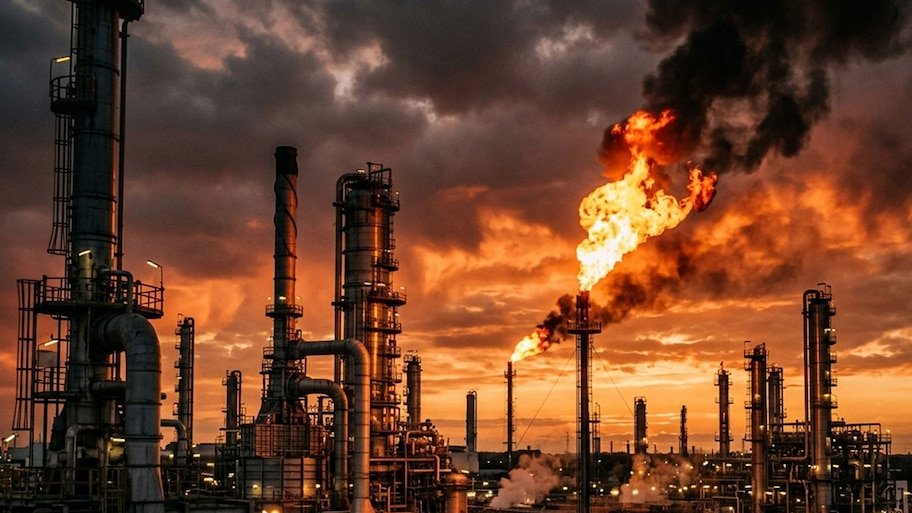
Amidst the ongoing geopolitical conflict and war-like situation on the soil of West Asia i.e. the Middle East, very surprising news has emerged from the international energy market. After the attacks on the major energy infrastructure of Saudi Arabia, the world’s largest crude oil exporter, where there was a fear of severe fuel shortage all over the world and oil prices crossing $ 120 per barrel, the market has shown a completely opposite trend. The prices of both global benchmark Brent crude and American West Texas Intermediate (WTI) have declined. This news is no less than a big relief for all the major metros of the country including Delhi, Mumbai, Lucknow, Patna and Kolkata, because India imports more than 85 percent of its total petroleum consumption from abroad. In such a situation, this decline in the international market is being considered as a very positive sign for the Indian economy and the pockets of the common consumer.
This entire incident started when drone attacks were carried out targeting two major pumping stations of Saudi Arabia’s strategically most important ‘East-West Crude Pipeline’. This pipeline transports about 4 million barrels of crude oil daily from Saudi Arabia’s eastern oil fields to Yanbu port on the Red Sea. About 4 percent of global oil supply is sent to world markets through this pipeline alone. The operation of the pipeline was halted as a precautionary measure immediately after the attack, bringing oil loading at Yanbu port to a complete halt. Due to this unexpected crisis, at the beginning of the week, crude oil prices reached the highest level in four months and Brent crude crossed 107 to 109 dollars per barrel. There was panic in stock markets and commodity exchanges around the world that if this supply remained cut for a long time, an oil crisis like the 1970s could arise again.
There are solid reasons related to international diplomacy and supply management behind the decline of more than 1.2 percent in oil prices despite severe military tensions and attacks:
-
Announcement of alternative route through Oman: Sensing the crisis, Saudi Arabia immediately started implementing ‘Plan-B’. Riyadh announced arrangements to make additional crude oil available to Asian buyers through ship-to-ship (STS) transfers off the coast of Oman’s Sohar port. The move immediately allayed immediate fears of a supply disruption in oil markets.
-
US security cover in the Strait of Hormuz: Active surveillance by US Navy warships has been increased to protect the movement of ships in the Strait of Hormuz. According to the US Department of Energy, the continued safe transit of oil tankers through this strategic waterway has reduced the pressure on the global supply chain to a great extent.
-
Roadmap for accelerated restoration of pipeline: Technical experts and Saudi Aramco engineers have assessed that partial capacity of the damaged pumping stations will be restored within a few days, while the entire pipeline will be operating at full capacity within the next six weeks. Given the clear timeline for restoration, speculators were put to the brakes on profit-booking.
-
Expectations of US-China summit: The high-level diplomatic talks to be held between the US and China in the coming days have also raised hopes in the global markets that the major superpowers can reach an agreement on reducing tensions in the Middle East and securing global maritime trade routes.
Saudi Arabia’s use of Oman’s offshore fields has proved to be the biggest gamechanger for Asian refineries. Oil refineries in major consumer countries like India and China were worried that if both the Red Sea and the Strait of Hormuz became unsafe, freight and marine insurance (war risk premium) rates would skyrocket. The facility to directly transfer oil from large tankers to small ships in the high seas at Oman’s Sohar port has not only controlled transportation costs but also ensured safe delivery, away from potential attacks by Yemen’s Houthi rebels. This practical step sent a clear message to the global market that there is no shortage of physical availability of crude oil in the world.
India relies heavily on Saudi Arabia, Iraq, Russia and the United Arab Emirates for its energy needs. Whenever crude oil crosses $ 100 per barrel in the international market, there is huge pressure on the refining margins of the country’s oil marketing companies (OMCs) like Indian Oil, BPCL and HPCL. The softening of crude oil will reduce the pressure on India’s foreign exchange reserves and will help in keeping the trade deficit under control. The threat of possible increase in the prices of petrol and diesel in the domestic market seems to be averted for the time being. Due to the stable cost of freight transportation, the possibility of a new inflationary shock in the prices of daily consumption items, vegetables and food grains has also reduced.
Although this fall in oil prices has brought immediate relief, independent energy sector analysts are still not completely convinced. He believes that until lasting peace is established in the Middle East and there is a complete end to attacks on ships in waterways such as the Red Sea and Bab-el-Mandeb, geopolitical risk premiums will remain in the market. The recent decline in US oil reserves and the production policies of OPEC Plus countries will be closely watched in the coming days. If Saudi Arabia completely repairs its pipeline on time and alternative routes continue to operate uninterrupted, crude oil could stabilize below $100, which would prove to be a major lifeline for economies around the world.