 look news india

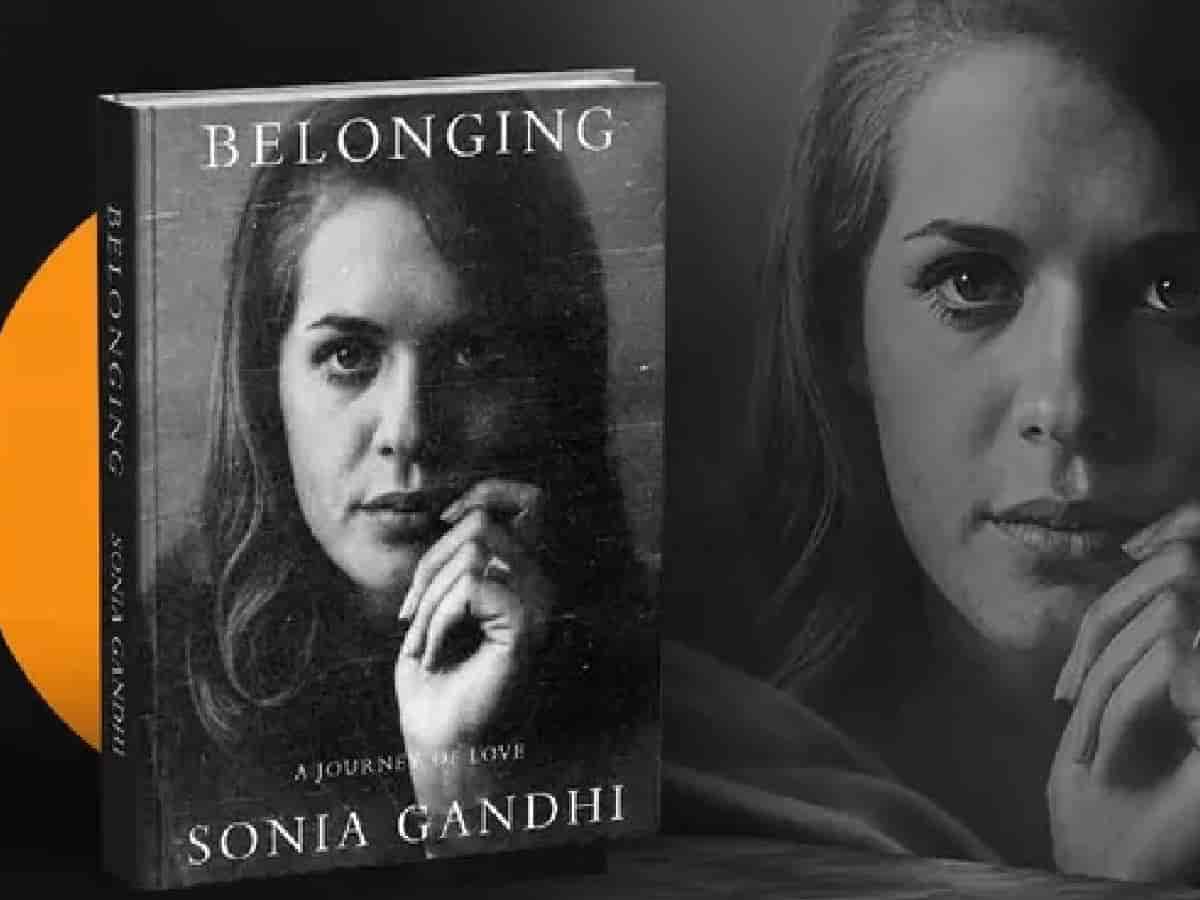
From the corridors of Indian politics to the publishing world, there is a huge uproar over the much-awaited autobiography of senior Congress leader Sonia Gandhi. There has been a new upheaval in the country’s politics after the prestigious publisher Penguin Random House India clearly refused to print Sonia Gandhi’s upcoming book ‘Belonging: A Journey of Love’ in India. This entire incident has brought serious issues of freedom of expression, factual editing and political pressure to the national forefront. Let us know what is the real inside story behind this sensational controversy and why there is so much discussion about this book across the country.
This whole episode started when ‘Alfred A. Knopf’, the American branch of Penguin Publishing House, officially announced that this sensitive and much awaited book of Sonia Gandhi is going to be released worldwide on 10th November. Due preparations for the publication of the book in the international market had been completed and plans were being made to welcome it globally. However, as soon as it came to its publication in India, Penguin Random House India issued a public statement changing the situation completely. The Indian branch clarified that while they were extremely keen to bring this important book to readers in India, a publisher has a legal and ethical responsibility to thoroughly fact-check sensitive facts, historical context and statements presented in any book.
Media reports and insider sources revealed that the publisher had suggested editing, revising or changing certain parts of the book’s manuscript. It was the publisher’s intention to modify certain controversial or sensitive portions to conform to the Indian legal framework and publishing standards. But, Sonia Gandhi completely and clearly refused to accept these suggestions of the publisher. He clearly believed that this book is based on his personal life experiences, political journey and his own viewpoint, hence no compromise can be made with its basic form and ideas. Following this stance of Sonia Gandhi, Penguin India withdrew from the distribution and printing of this book within India, resulting in a major ideological and political conflict in the country.
According to analysts and media reports, there has been no consensus between Sonia Gandhi’s book and the publisher mainly on three very sensitive and politically heated topics. These are the points which caused huge bottlenecks in the publishing process:
-
Indian border and Chinese intrusion: In some parts of the book, strong questions have been raised on China’s alleged intrusion into Indian territory, the current situation in the border areas and strategic security policies. The publisher wanted to exercise utmost caution on these geopolitical and security sensitive matters.
-
Leadership and policies of Prime Minister Narendra Modi: In many chapters of the autobiography, sharp questions and personal views of Sonia Gandhi have been included on the working style of Prime Minister Narendra Modi, his political leadership and many major economic and administrative policies of the Central Government.
-
Impact of Rashtriya Swayamsevak Sangh (RSS): The book contains in detail Sonia Gandhi’s personal and critical view on national affairs, the social fabric of the country and the impact and ideological influence of the Rashtriya Swayamsevak Sangh on Indian politics.
When the publisher raised objection on these three points and demanded editing, there was strong resistance from the author. The publishers argued that independent validation of these sensitivities coming on the public platform was necessary, while the Congress camp believed that this was a planned attempt to suppress the author’s views.
After Penguin India’s decision not to publish the book in India, the main opposition party Congress has come into aggressive mode. Senior party leaders have made serious allegations of directly pressurizing the central government and the ruling Bharatiya Janata Party. Gaurav Gogoi, deputy leader of Congress in the Lok Sabha, termed Penguin India’s statement in this matter as very weak and cowardly and said that the publisher is working somewhere under direct or indirect pressure from the ruling BJP government. Expressing a sharp reaction on the social media platform
In this context, former Chief Minister of Rajasthan and senior Congress leader Ashok Gehlot also strongly condemned this step. He raised the question that when this same autobiography is being published all over the world in its original and unaltered form by the international branch of Penguin, then what is the reason why an attempt is being made to ban or stop it for the readers of India. Gehlot called it a shameful act of stifling freedom of expression due to ideological intolerance and political pressure. The Congress Party also alleges that the scope of ideological freedom in the country is being continuously limited and the government machinery is being misused to suppress every voice raised against the government or every memoir written.
Bharatiya Janata Party has completely rejected all these serious and sharp allegations of Congress Party. BJP hit back at Congress, saying that opposition leaders have made a habit of creating a false and imaginary atmosphere of fear on everything just to hide their failures and garner sympathy. BJP spokesperson CR Kesavan, while talking to the media, said that it is extremely important to understand deeply as to why specific parts of the book needed to be factually checked and verified. He raised the question whether the Congress party and its leaders are afraid of facing the truth and want to put pressure on publishers to serve content without facts.
Apart from this, another prominent BJP leader Ajay Alok took a dig at this entire controversy and said that the primary and basic duty of any reputed publishing house is to maintain its reputation, credibility and authenticity in the market. Publishers do not shoot in the dark, rather they verify the authenticity of the data, claims and facts given in each book. Ajay Alok sarcastically said that it is a very unfortunate and ridiculous situation for the country that even when the top leader of such a big political party of the country is writing a book, solid facts, figures and truth are not being taken into consideration, and when the publishers step back in fulfilling their professional responsibilities, it is falsely attributed to political pressure.
The entire controversy revolving around Sonia Gandhi’s autobiography ‘Belonging: A Journey of Love’ is not limited to just the publication of a book, rather it highlights a complex conflict between Indian politics, intellectual freedom and the functioning of corporate publishing houses. While on one hand the path is paved for the release of this book at the international level, its non-printing within India is further intensifying the ideological polarization in the political scenario of the country. It will be very interesting to see in the coming days whether there is any kind of administrative ban on the import or digital dissemination of the international edition in India or whether this controversy becomes a permanent part of the Indian electoral and political debate. This entire incident has once again proved that whenever politics and literature come face to face on a platform, they leave an indelible mark of a long debate in the society.