 look news india

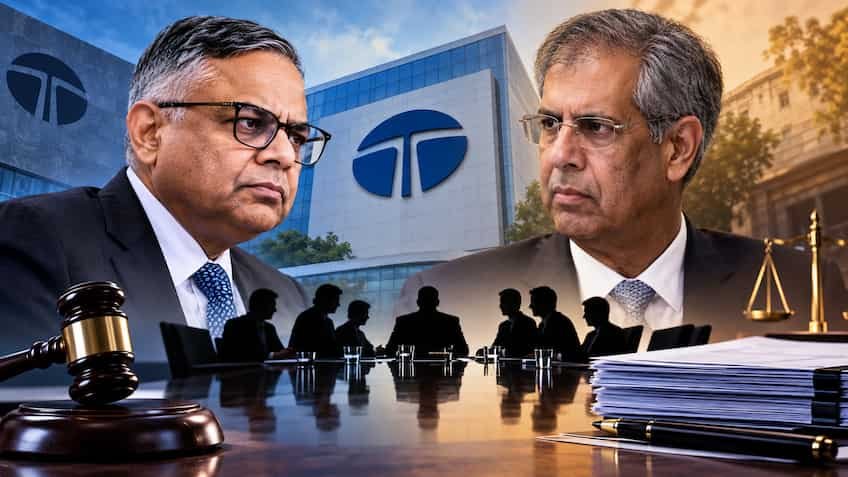
Once again a major legal and administrative conflict has come to light regarding the top leadership of Tata Sons, the main holding company of Tata Group, the country’s most prestigious and more than 150 year old industrial house. In the board meeting held on 17 September 2026, N. A proposal was passed to re-appoint Chandrasekaran as chairman for the next 5 years, but the former, who holds a controlling stake of about 66 percent in Tata Sons, Tata Trusts It has completely rejected this decision and termed it as completely ‘illegal’ and ‘legally nullity’.
Tata Trusts Chairman Noel Tata has strongly opposed this reappointment and made it clear that this decision is a direct violation of the mandatory provisions of the company’s internal constitution i.e. Articles of Association (AoA). This development has reminded the corporate world of the Cyrus Mistry controversy of 2016.
N as Chairman of Tata Sons. Chandrasekaran’s current second term is set to end in February 2027. Earlier in the month of August, he had indicated that he did not want to seek the next term. However, later on the request of the Nomination and Remuneration Committee, he agreed to continue in the post and in the board meeting on September 17, a proposal was made to extend his tenure till 2032 i.e. by 5 years.
A total of 5 directors participated during the voting in the board meeting. Four votes were cast in favor of the proposal, while Tata Trusts Chairman and Nominee Director Noel Tata voted against it. After this the board approved the reappointment of Chandrasekaran on the basis of simple majority, which has now been challenged by Tata Trusts saying it is against the rules.
Tata Trusts says Tata Sons is not an ordinary listed company, but its governance rules are bound by its special ‘Articles of Association’ (AoA).
The main points of legal arguments advanced by the Trusts are as follows:
-
Majority of nominee directors is mandatory: Under the AOA rules (specifically Articles 104B and 121), major policy decisions such as the appointment or reappointment of the Chairman of Tata Sons require the affirmative vote of a majority of the nominee directors of Tata Trusts present on the board.
-
Majority of two i.e. votes of both: Tata Trusts currently has two nominee directors on the board of Tata Sons—Noel Tata and Venu Srinivasan. The Trusts argue that when there are only two representatives, majority means both agreeing. Since Noel Tata voted against the motion, the essential condition was not met.
-
The rule cannot be bypassed by casting vote: The Trusts clarified that the special/casting vote of the Chairman or Chairing Director is used only when there is a tie in the ordinary votes and cannot be used to overturn the special veto or consent rule of the Trust.
To strengthen its stand in this matter, Tata Trusts has taken legal advice from former Chief Justice of the country (CJI) Justice DY Chandrachud.
According to reports, the legal opinion received has made it clear that the consent of the nominee directors of Tata Trusts is an independent and pre-condition. If this condition is not met, no majority vote or casting vote of the General Board can make the proposal valid. Tata Trusts also reminded that during the Cyrus Mistry case, Tata Sons itself had strongly defended these special voting rights of the Trusts in the Supreme Court, in such a situation the company cannot now retreat from its old legal stand.
According to sources and industry experts, this conflict is not limited to the post of Chairman only, but is also rooted in deep policy differences regarding the governance of the group:
-
Stock market listing of Tata Sons: Tata Sons has been under pressure for listing under the ‘upper-layer NBFC’ rules of the Reserve Bank of India (RBI). Tata Trusts believe that public listing will harm the charitable character and autonomy of the Tata Group.
-
Financial Performance of Air India: There have also been reports of discontent among the trusts and the board over the huge expenditure on airline expansion and accumulated financial losses since the takeover of Air India from the government in January 2022.
-
Heavy investment in semiconductor and electronics: There have been divergent views at the shareholder level regarding the group’s new capital-intensive projects and returns on investment.
This proposal passed by the Board requires formal approval of the shareholders in the upcoming Annual General Meeting (AGM) to be finally effective.
Since Tata Trusts hold 66% of the company’s shares, this balance of power could reach a very decisive point at the AGM stage. If no unanimous solution is reached through negotiations between the two parties, then the matter may reach the National Company Law Tribunal (NCLT) or even the court.