look news india

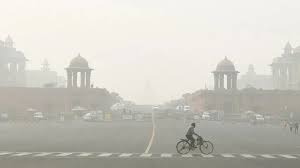
News India Live, Digital Desk: If you woke up this morning in Delhi and as soon as you opened the window you saw everything blurry, then it was not fog. That is ‘smog’, that is, that dangerous mixture of smoke and dust, which is affecting the breathing of you and our children. Pollution in the country’s capital has once again crossed the danger mark and the situation has become worrying.
How is the ground reality?
Delhi’s air quality (AQI) has once again crossed the 350 mark. If understood in simple language, it falls in the ‘Very Poor’ category. In the morning, when people set out for a morning walk or to go to office, many people felt a burning sensation in the eyes and a slight sore throat. Be it India Gate or Akshardham, the tall buildings of the city are seen wrapped in a blanket of smog. Visibility has become so low that even driving on the road has become a challenge.
breathing became difficult
With the onset of winter, this has become an annual problem for the people of Delhi. The amount of pollutants (PM 2.5 and PM 10) in the air has increased so much that even a healthy person may have trouble breathing. This time is most difficult for those who are elderly or have asthma and respiratory diseases. Even in hospitals, the number of patients coming to OPD with complaints of cough and chest tightness has started increasing.
Why did the situation worsen?
Due to drop in temperature and decrease in wind speed, pollutants have settled near the ground surface. On top of that, the smoke from vehicles and the effect of stubble burning in the surrounding areas – all these together have left no stone unturned in making Delhi a ‘gas chamber’ in a way. The situation is even worse in hotspots like Anand Vihar, Bawana and Mundka, where the AQI sometimes feels close to 400.
What should you and I do now?
The administration is trying to enforce the rules of water sprinkling and GRAP, but we also have to protect ourselves.
- Mask is required: Use an N95 mask when leaving the house. It gives much better protection than common cloth masks.
- Avoid morning walk: Avoid morning walks until the sun comes out completely and the fog subsides.
- Taking care of children: Advise children to reduce outdoor activities because their lungs are more sensitive.
The Meteorological Department says that there is little chance of relief for the next few days. This heaviness in the air will still remain. So be alert, because this is not just fog, it is a big alarm for our health.