 look news india

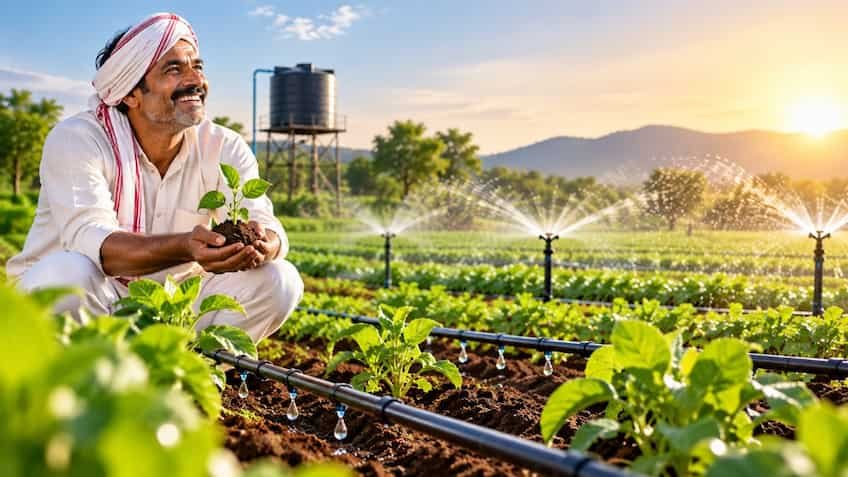
Amidst climate change, falling groundwater levels and irregular rainfall, water management has emerged as the biggest challenge in the Indian agricultural sector. Traditional ‘flood irrigation’ not only wastes about 50 to 60 percent of water through evaporation and seepage, but also leaches away nutrients from the soil. To deal with this problem and reduce the costs of farmers, the Central and State Governments together are aggressively promoting ‘Per Drop More Crop’ (PDMC), a component of ‘Pradhan Mantri Krishi Sinchai Yojana’ (PMKSY).
Under this scheme, huge financial subsidy of up to 55 percent of the total fixed cost is being given to the farmers for installing modern micro irrigation systems – drip and sprinkler in the fields. By adopting this technology, lakhs of farmers are saving 50 to 70 percent water and are also registering an increase of 20 to 40 percent in their crop production.
As per PMKSY-PDMC guidelines, the subsidy is divided into two main categories based on the land holding of the farmer:
-
Small & Marginal Farmers: Farmers who have cultivable land up to 2 hectares (about 5 acres) can get a drip or sprinkler plant at the approved unit cost. 55 percent Financial assistance (subsidy) up to Rs.
-
Other/Large Farmers: At cost to farmers with land more than 2 hectares 45 percent Gets subsidy of Rs.
-
States Top-up Bonus: Many state governments (such as Uttar Pradesh, Maharashtra, Rajasthan, Madhya Pradesh and Karnataka) add additional stimulus funds from their state budgets. In some states, this total subsidy reaches up to 75% to 90% for SC/ST category, women farmers or drought-hit districts in dark zones.
Selection of micro irrigation system depends on the soil of the field and the type of crop to be sown:
-
Drip Irrigation: This technology is best for horticultural crops (mango, guava, lemon, pomegranate), vegetables (tomato, capsicum, brinjal, cabbage) and row crops like sugarcane and cotton. In this, water and liquid fertilizer (fertigation) is delivered drop by drop directly to the roots of the plants through thin pipes. Due to this, weeds do not grow and the consumption of fertilizer reduces by 20 to 30 percent.
-
Sprinkler Irrigation: This system is suitable for pulses (gram, moong), oilseeds (mustard, soybean), wheat, millet and fields with rough or sandy soil. In this, water falls evenly like rain showers, due to which the entire area is irrigated with less water.
To avail the benefits of the scheme, the farmer must have valid agricultural land in his own name (cultivators with a registered lease of at least 7 years are also eligible in many states). Also, it is mandatory to have a permanent source of water (borewell, well, canal or farm pond) and electricity/solar pump in the farm.
The following documents are required at the time of application:
-
Aadhar card and passport size photo
-
Land revenue documents (Khasra, Khatauni or Jamabandi copy)
-
Passbook of active bank savings account (linked to Aadhaar and NPCI)
-
Quotation/Design Estimate received from registered vendor
-
Caste certificate (if claiming additional relaxation for SC/ST category)
To make the entire process of subsidy transparent, it has been linked to Direct Benefit Transfer (DBT) and agriculture/horticulture portals of the respective states:
-
Visit State Portal: Visit the official website of your state agriculture or horticulture department (e.g. upagriculture.com in UP, mahadbt in Maharashtra, rajkisan in Rajasthan, dbt.mpdage.org in Madhya Pradesh).
-
Select Plan: Click on the link ‘PMKSY – Micro Irrigation / Per Drop More Crop’.
-
Enter details: Fill your Aadhaar number, farmer registration number, mobile number and farm area.
-
Selection of Authorized Company: Select a registered company or dealer from the list of government empaneled drip/sprinkler manufacturing companies.
-
Verification and Installation: After the application is approved, the Agriculture Department team does the initial physical verification of the field. After this the authorized vendor will install the equipment in the field.
-
Subsidy Payment: After final verification and GPS geo-tagging, the sanctioned amount of subsidy is directly transferred to the farmer’s bank account or directly deducted from the vendor’s bill.
By adopting drip and sprinkler system, farmers can not only save their farming from falling water crisis, but can also significantly increase their net income by reducing the huge expenditure on electricity, fertilizer and labour.