 look news india

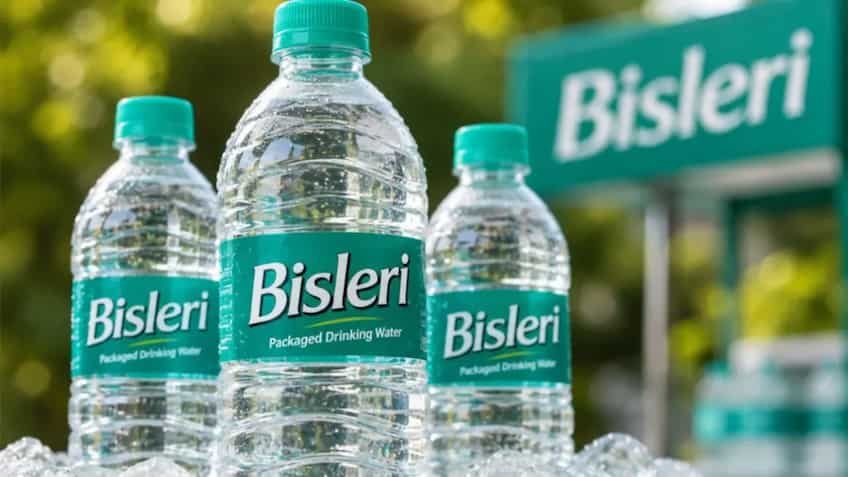
A big news is in the headlines these days regarding the country’s most popular and trusted bottled water brand ‘Bisleri’. Food Safety and Standards Authority of India (FSSAI) has approved the initiation of legal action i.e. prosecution against the company due to a sample of packaged drinking water of Bisleri International Pvt Ltd not meeting the quality standards. As soon as this news came out, a big question has arisen in the minds of common consumers whether Bisleri water is safe to drink or not? Now Bisleri company has broken its silence by issuing an official statement on this entire controversy and has presented its clarification in a sequential manner.
According to the information given by FSSAI, in a sample of Bisleri packaged drinking water taken during regulatory testing, the quantity of a chemical element called ‘Bromate’ was found to be more than the prescribed safety limit, on the basis of which the sample was declared unsafe in the initial lab test. After this, on the appeal made by the company, the sample was sent to Referral Food Laboratory for re-testing. According to FSSAI, the referral lab also recorded the presence of ‘Polynuclear Aromatic Hydrocarbons’ (PAHs) in the sample and declared it unsafe under the Food Safety and Standards Act, 2006. On the basis of these two reports, the regulator has given permission to prosecute the company.
After the controversy escalated, Bisleri International issued an official clarification saying that the entire matter is about 14 months old and is related to a batch from only one plant in Goa out of the company’s 143 manufacturing plants across the country. According to the company, on September 30, 2025, the FSSAI team had taken a total of six water samples from the Goa unit. In the initial investigation, five of these samples completely met all the prescribed standards, while only in the sixth sample the level of bromate was recorded at 12 micrograms per liter, the maximum limit of which is 10 micrograms per liter.
The company further said that after its appeal on November 22, 2025, when the sample was sent to the referral lab, the amount of bromate was found to be within the prescribed limit, but the presence of PAHs was separately mentioned. In view of the contradiction in both the test reports, Bisleri got an independent test of the same sample done in another FSSAI approved laboratory, where the bromate level was found to be completely within the prescribed limits.
Bisleri has also clarified in its statement that it had submitted the investigation report of the independent lab to the Western Regional Office of FSSAI through a formal letter on 2 February 2026. The company claims that after this there was no communication from the regulator, due to which the company understood that the matter was closed. Bisleri said it has not yet received any official notice through email or hard copy nor is any such notice available on the FSSAI website. The company has assured that it conducts more than 90 stringent quality tests during the 10-step purification process, Bisleri water is completely safe for consumption and will continue to fully cooperate with FSSAI as part of the regulatory process.
It is very important to understand this entire episode from a balanced perspective. First of all, this legal action by FSSAI is related to a specific sample taken from a plant in Goa in September 2025, and not any ban or recall order issued on all Bisleri products sold across the country. Secondly, ‘Sanction of Prosecution’ means permission to prosecute the case in court, not final conviction. However, while purchasing any bottled water, consumers should always check the bottle cap seal, batch number, manufacturing date and FSSAI and ISI marks to avoid fake or locally branded water.