 look news india

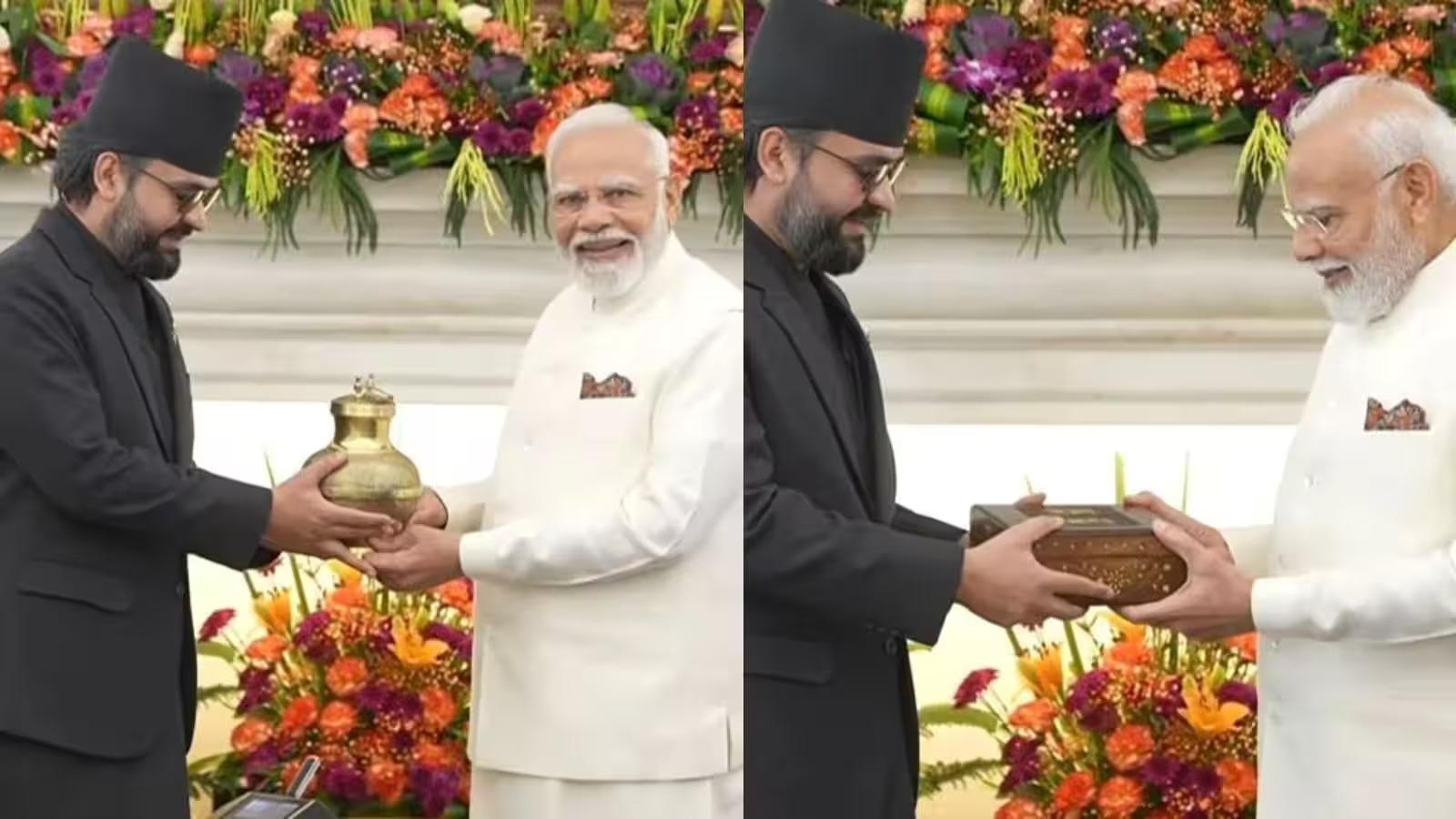
During the bilateral meeting between Indian Prime Minister Narendra Modi and Nepal’s Prime Minister Balendra ‘Balen’ Shah at Hyderabad House in New Delhi on Monday, the two top leaders presented each other special gifts related to faith, culture and history. Prime Minister Modi warmly welcomed Balen Shah, who was on his first bilateral visit to India and first foreign visit after assuming the post of Prime Minister. This formal exchange, which took place in the presence of delegations from both the countries, once again brought into limelight the age-old religious and cultural ties between India and Nepal.
During the meeting, Prime Minister Narendra Modi gifted a special urn to Nepalese Prime Minister Balen Shah, which was filled with the sacred Ganga water from Triveni Sangam in Prayagraj. The water of Sangam is considered to have special significance in the Indian spiritual tradition and Balen Shah happily accepted this Kalash presented by PM Modi. On the other hand, Nepal’s Prime Minister Balen Shah presented an attractive box to PM Modi, which included Rudraksh and sandalwood from Pashupatinath Temple of Kathmandu, one of the famous and sacred Shiva temples in the world. Prime Minister Modi also accepted this gift with affection.
Reports related to this visit also revealed that during his visit to India, Balen Shah has come with the aim of presenting special statues related to the historical and cultural heritage of Nepal to the Indian leadership. Traditionally many leaders of Nepal have been gifting replicas of the Pashupatinath Temple during their visits to India, but this time priority was given to symbols linked to the deep folk and historical traditions of the Kathmandu Valley. Balen Shah is mentioned to have presented to Prime Minister Narendra Modi the statue of ‘Rato Machhindranath’, who is worshiped as the main deity associated with rain and prosperity in the Kathmandu Valley.
According to Nepali folk beliefs, King Narendra Dev Rato of Licchavi dynasty brought Machhindranath from ancient Kamrup i.e. today’s Assam region to Kathmandu valley, after which it is believed that he got relief from the drought crisis. Additionally, there is also mention of a statue of Indian President Draupadi Murmu associated with Charumati Vihar in Chabahill, Kathmandu. The vihara is believed to be linked to the historical legends associated with the Maurya emperor Ashoka and his daughter Charumati, symbolizing the ancient Buddhist and civilizational ties between India and Nepal.
Along with this cultural message of gifts, the discussions at Hyderabad House focused on various aspects of India-Nepal bilateral relations. Being landlocked on all sides, India is the most important partner for Nepal in terms of trade, transit and access to the sea. The visit focused on discussions on Nepal’s over $2 billion economic assistance for infrastructure development and reconstruction—including concessional loans, grants, and rehabilitation components—and its demand for additional airspace over India’s airspace.
This meeting is also considered strategically and culturally important for the entire border region including Uttar Pradesh and Lucknow, as India-Nepal relations have a direct impact on regional connectivity and people-to-people contacts, amidst energy, trade, connectivity and furthering border cooperation. In the coming times, mutual cooperation is expected to gain new momentum through dialogue and diplomatic initiatives between the two countries.