 look news india

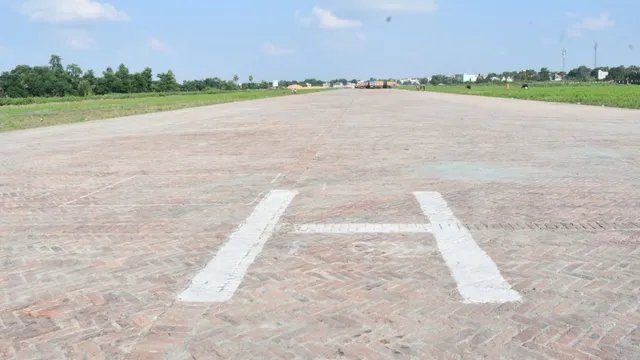
Expansion of air connectivity has always been a very sensitive and important issue for the common citizens of Bihar and the migrants living in the country and abroad. At present, there is a lot of pressure from passengers at active airports like Patna, Gaya and Darbhanga. The immense success of Patna’s Jaiprakash Narayan International Airport and North Bihar’s Darbhanga Airport has proved how huge the demand for air travel exists in the smaller districts of the state. Keeping this in view, now the State Government and the Civil Aviation Ministry of the Central Government have prepared a big blueprint to reactivate about 21 old, defense sector related and non-operational (Unserved/Underserved) airstrips spread across Bihar. With the speeding up of the process of testing the boundary walls, re-carpeting of runways and safety standards of these airstrips built since the Second World War till independence, once again strong hopes of cheap domestic flights have been raised in the entire state.
The network of these 21 airstrips identified in Bihar covers almost every division and border areas of the state. These include important strategic locations like Muzaffarpur (Patahi), Bhagalpur, Raxaul (East Champaran), Gopalganj (Sabeya Airfield), Munger (Safiabad), Saharsa, Purnia (Chunapur), Katihar, Birpur (Supaul), Chhapra, Begusarai, Valmikinagar (West Champaran), Madhubani and Bihta. Many of these airstrips are such where the basic infrastructure of the runway is already present and with a little repair and construction of terminal shed, operations of small 19 to 72 seater aircraft can be easily started. Starting air service at places like Raxaul and Valmikinagar bordering Nepal will not only strengthen national security but will also make the movement of business and international tourists much easier.
Direct participation of the states has now been decided under the ‘Modified UDAN Scheme’ launched by the Central Government. In this new framework, states have been given the freedom under ‘Challenge Mode’ to send proposals to the Center based on their own demands and priorities for those airstrips where immediate flights are possible. The Central Government has increased the period of Viability Gap Funding (VGF) for airlines to 5 years, so that airlines on short routes do not have to fear initial losses and flights remain sustainable in the long run. The Bihar government is also expediting the acquisition of additional land, approach roads, electricity-water arrangements and construction of security check posts required for these airstrips.
Lakhs of youth and working people of Bihar migrate to metros like Delhi-NCR, Mumbai, Kolkata, Bengaluru and Chennai for employment, higher education and health services. Whenever Chhath Puja, Diwali, Eid or wedding season arrives, long waiting lists in trains and skyrocketing fares on Patna-Darbhanga flights make people loose. If regional flights start operating from cities like Muzaffarpur, Purnia, Bhagalpur and Gopalganj, passengers will be free from jams and road bumps to reach Patna, 100-150 km away. Apart from this, the silk industry of Bhagalpur, litchi and cloth market of Muzaffarpur, industrial factories of Begusarai and rail-engineering works of Munger will be directly connected to the national markets, which will create thousands of new employment opportunities at the local level.
This revival of air connectivity will prove to be a game-changer for the tourism industry of the state. Apart from Gaya and Nalanda, Bihar has vast cultural heritage in Sitamarhi (Punaura Dham), Valmikinagar Tiger Reserve, Mandar Hill (Banka) and Mithila region. Foreign tourists and pilgrims will no longer have to waste the entire day in reaching from one district to another. Along with this, this regional air network will be able to work like ‘air ambulance’ for seriously ill patients, through which patients from remote rural and border districts can be transported in emergency situations to Patna AIIMS or major super-speciality hospitals of Delhi within the life-saving time (golden hour).
However, there are some practical and technical challenges in the way of restarting 21 airstrips. The biggest problem is the encroachment around many old airstrips and the limited length of runways. Large jet aircraft (such as the Airbus A320) require at least 2.5 km long runways and instrument landing systems (ILS) to land. Currently, the state government is planning to start initial operations using smaller turboprop aircraft (such as ATR-72 or Q-400), for which shorter runways are also sufficient. District Magistrates have been directed to remove encroachments and complete a joint survey with the respective Airports Authority of India (AAI) teams, so that the thunder of planes can once again echo on these air runways which have been closed for decades.