 look news india

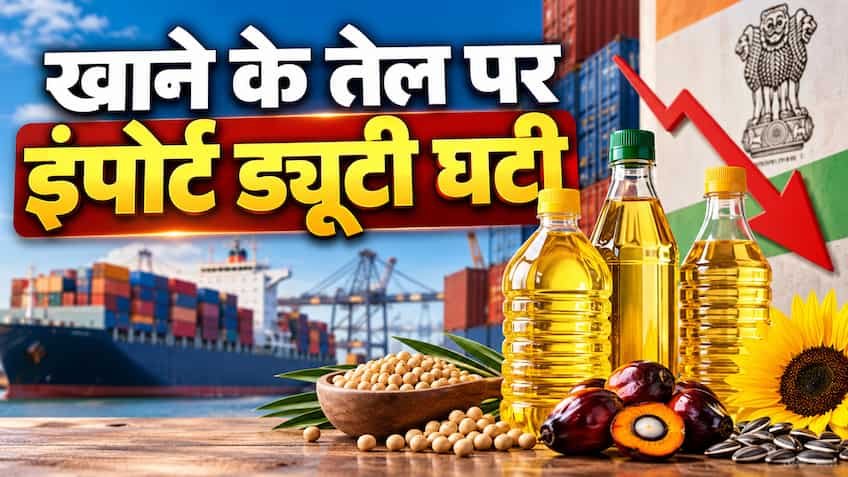
New Delhi. Just before the upcoming festive season i.e. Navratri, Dussehra and Diwali, the Central Government has given a huge gift on the inflation front to the common consumers, housewives and businessmen of the country. With the aim of balancing the kitchen budget and controlling food inflation, the Finance Ministry has issued an official notification to reduce the Basic Customs Duty (BCD) on import of various edible oils by 5% to 10%. As per the instructions issued by the Department of Revenue, Ministry of Finance, the revised new rates have been implemented with effect from today (24 September 2026) at all ports and custom posts across the country.
India is the largest importer of edible oils in the world, importing 55 to 60 percent of its total domestic consumption from abroad. For the last few months, there was a surge in the prices of soybean, palmolein and sunflower oil in the international commodity markets, due to which the prices of refined and mustard oil were continuously increasing in the domestic retail markets as well. Due to heavy consumption of sweets, namkeen, snacks and dishes during festivals, the demand for edible oils reaches its peak. This strategic decision of reducing import duty at such critical times will prove to be a game-changer in ensuring adequate availability in the domestic market and potentially bringing down retail prices.
Under the notification issued by the government, relief has been given in the basic custom duty of both Crude Edible Oils and Refined Edible Oils categories.
The revised duty structure of crude and refined oils is as follows:
| Edible Oil Type | old import duty | New Revised Tariff (Effective from today) | Net Reduction (%) |
| Crude Sunflower Oil | 10% | 0% (completely fee-free) | 10% discount |
| Crude Palm Oil (CPO) | 10% | 5% | 5% deduction |
| Crude Soyabean Oil | 10% | 5% | 5% deduction |
| Refined Sunflower Oil | 32.5% | 22.5% | 10% discount |
| Refined Palm Oil (RBD Palmolein) | 32.5% | 27.5% | 5% deduction |
| Refined Soyabean Oil | 32.5% | 27.5% | 5% deduction |
The biggest benefit in this duty revision has been to crude sunflower oil, on which the entire basic customs duty of 10 percent has been abolished and reduced to zero (Duty-Free). At the same time, there has been a huge direct reduction of 10% in customs duty on refined sunflower oil. Along with this, the duty differential between crude and refined oils has also been kept balanced so that the operations of the country’s domestic refineries also continue smoothly.
After the news of reduction in import duty, the biggest question in the minds of common consumers is that for how long will oil packets and tins be cheaper at the shops. According to Commodity Analysts and Solvent Extractors Association of India (SEA), the impact of the reduction in import duty will start becoming visible in the retail market within the coming 7 to 15 days:
-
Fall in import costs: Due to reduction in customs duty, the landed cost per tonne of imported oil at the ports will reduce significantly.
-
Possible relief of ₹5 to ₹10 per litre: Food and consumer affairs experts estimate that due to this policy decision, there may be a reduction of ₹ 5 to ₹ 10 in the per liter prices of soybean oil, palmolein and sunflower oil in the retail market.
-
Clearance of old stock: After the supply of old imported stock already available with oil companies and big wholesalers at normal rates, there is sure to be relief in retail MRP as soon as the shipments with new rates reach the markets.
On one hand, the Indian Government has the goal of providing cheap oil to the general public, on the other hand, protecting the interests of domestic oilseed producing farmers is also a big priority. At present, the time of harvesting and market arrival of Kharif oilseed crops – especially soybean and groundnut – is approaching in the country.
If there is unabated import of very cheap oil from abroad, there is a risk of soybean and mustard prices falling below the Minimum Support Price (MSP) in the domestic markets. To strike this balance, instead of completely abolishing the duty, the government has chosen the path of a balanced reduction so that the arrival of foreign oils can only meet the festive demand and the local farmers also get a fair price for their produce. The Consumer Affairs Ministry has directed all oil processing companies and brands to transfer the entire benefit of this tax cut given by the government to the end consumers with immediate effect.