 look news india

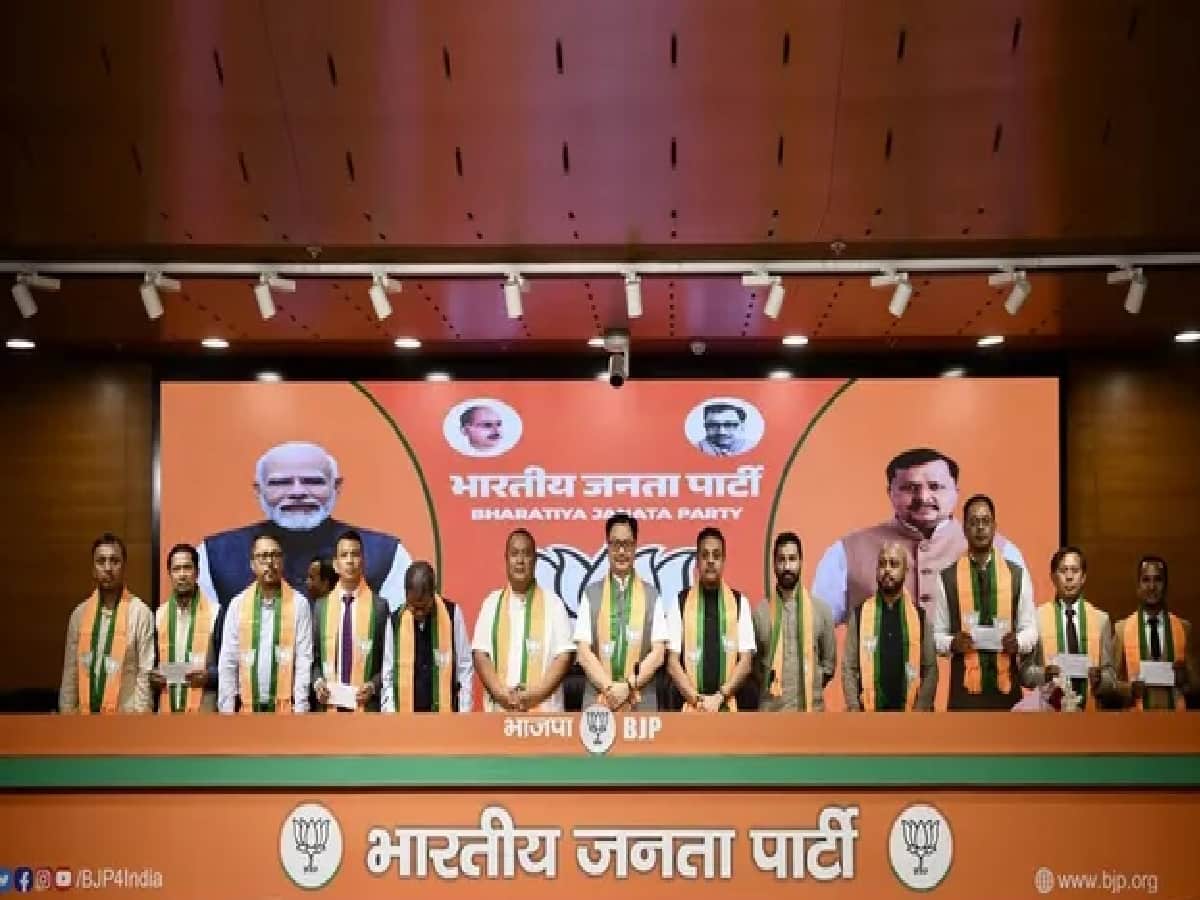
A very shocking and big news is coming out from Meghalaya Politics, a very sensitive and politically active state of North-East India. There was an uproar in the political circles of the state when eight MLAs of the United Democratic Party (UDP) left their parent party and officially merged with the Bharatiya Janata Party (BJP). This big political development has now been announced by Speaker of Meghalaya Assembly Thomas A. Legal and constitutional green signal has been given by Sangma. After this reshuffle, the equations in the state politics have completely changed and a fresh murmur has started within the ruling coalition. Let us know what is the whole story behind this political upheaval and what impact it will have on the future of the state.
Assembly Speaker Thomas A. Sangma approved the merger of eight MLAs
The speculations that have been going on in Meghalaya politics for the last few weeks have finally come to an end. According to the official notification issued by the Assembly Secretariat, Assembly Speaker Thomas A. Sangma has completely accepted the merger of eight UDP MLAs with the BJP. Officials informed that before taking any final decision on this sensitive matter, the Speaker had obtained detailed legal opinion from renowned legal experts and senior lawyers of the country, so that the provisions of the Constitution could be fully followed. After closely examining all the legal aspects, the Chairman approved the merger through a formal order on Friday.
This major political development started on September 23, when these eight rebel and veteran MLAs of UDP reached the country’s capital New Delhi and joined the Bharatiya Janata Party in the presence of the central leadership. Just two days later, on September 25, these MLAs informed the Meghalaya Assembly in writing and submitted a formal letter regarding the merger of their party with the BJP. From then till now, this matter has remained at the center of political and legal discussions, which has now been approved by the Speaker.
Protection given under Para-4 of the Tenth Schedule of the Constitution
The biggest question being raised in the political circles was whether the defection of MLAs on such a large scale would come under the purview of the Anti-Defection Law or not. Clarifying the situation on this, in the notification issued by the Assembly Speaker’s office, it was told that this entire merger Paragraph 4 of the Tenth Schedule of the Indian Constitution Has been considered valid and recognized under.
This specific provision of the Constitution provides legal immunity from disqualification of MLAs on the ground of defection in cases where two-thirds or more of the MLAs of a political party merge their parent party with some other party. In the case of UDP, this merger has been found technically safe within the ambit of law due to the defection of more than two-thirds of the MLAs.
Change in strength in Meghalaya Assembly, number of BJP MLAs increased to 10
After this major political upset, the party position within the 60-member Meghalaya Legislative Assembly has completely changed. Before this merger, Bharatiya Janata Party had only 2 MLAs in Meghalaya, but after the joining of UDP, 8 MLAs. Now the total number of BJP MLAs in the assembly has increased to 10..
On the other hand, after this setback, the strength of the United Democratic Party (UDP) has suffered a major loss. Eight MLAs of the party have changed sides, due to which now UDP has only 4 MLAs Only those are left in the assembly. Political analysts believe that the sudden increase in the number of MLAs has strengthened the organizational base and political stature of BJP in the state.
What will be the impact on the ruling ‘Meghalaya Democratic Alliance’
An interesting aspect of this political drama is that both the UDP and the BJP are part of the current ruling coalition led by the National People’s Party (NPP). ‘Meghalaya Democratic Alliance’ (MDA) Are part of. The government is running in the state under the leadership of NPP and both these parties are supporting the same government.
Since both the parties are partners in the same alliance, it is unlikely to have any immediate negative impact on the stability of the government. However, internal tension may definitely increase regarding political supremacy and seat equations within the alliance. The eight prominent MLAs who have left the UDP and joined the BJP include Lakhmen Rymbui, Pius Marven, Kirmen Shyalla, Myralbarn Siem, Mathew Beyondstar Kurbah, Olan Singh Suin, Balajid Kupar Sinrem and Sinshar Kupar Rai Lyngdoh Thabah. All these leaders have a strong hold in their respective areas, and with their arrival, BJP is expected to get a big edge in the upcoming election strategies.